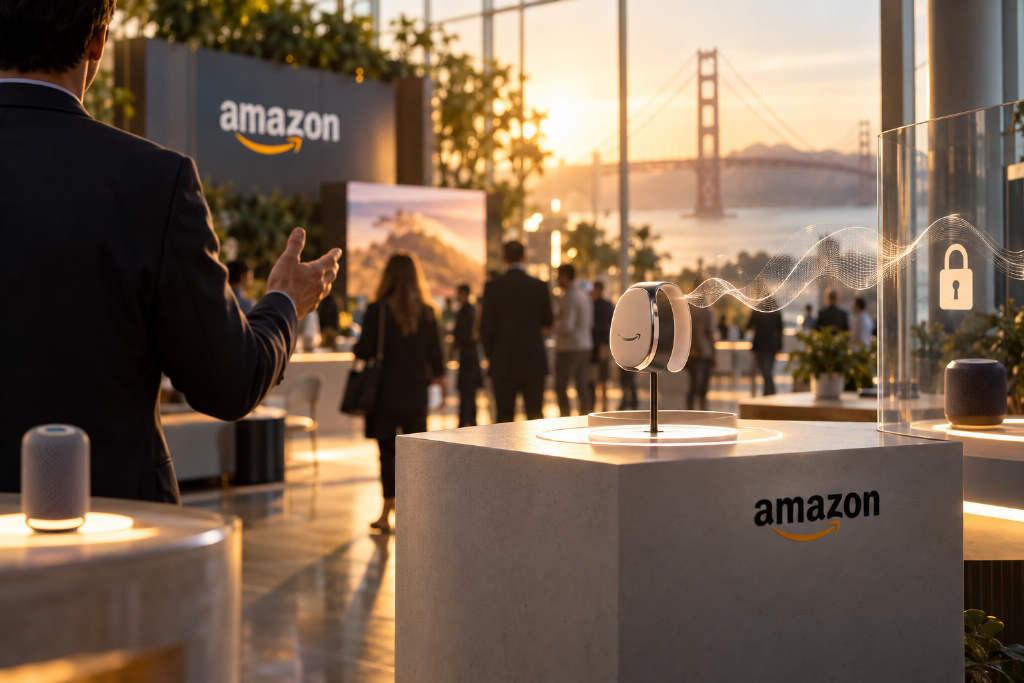
Amazon devices chief Panos Panay said at TechCrunch Disrupt that AI hardware is moving toward ambient computing, where devices may handle tasks without requiring users to open and manage apps directly. He described a model in which sensors and AI systems work in the background to interpret user needs on their own, rather than waiting for explicit commands.
Panay pointed to Bee, a newly launched wearable under Amazon, as an example of that direction. He said the device can passively capture audio and help with everyday tasks. He also stressed that privacy sits at the center of the product design: raw audio is processed in real time and then deleted, while conversation transcripts are encrypted with on-device keys.
He added that as AI takes on more work, the importance of app interaction may decline. In his view, the next generation of users may stop asking for apps and instead expect devices to understand what they need. At the same time, Panay said smartphones will remain an important personal computing device, even as more sensor-based products appear to bring intelligence into the surrounding environment.
Amazon devices chief Panos Panay said at TechCrunch Disrupt that AI hardware is heading toward ambient computing, a shift that could reduce the need for users to interact directly with apps.
Panay said these ambient devices would rely on sensors and AI running in the background to understand what users need, rather than waiting for people to tell a device what to do.
He cited Bee, a newly launched wearable under Amazon, as an example. According to Panay, the device can passively record audio and handle everyday tasks. He said privacy is a central design priority: raw audio is processed in real time and deleted afterward, while conversation transcripts are encrypted with on-device keys.
Panay also said the importance of app-based interaction will fall as AI takes over more tasks. He said the next generation of users may no longer ask for an app, but instead expect devices to understand their needs directly.
At the same time, he said smartphones will remain an important personal computing device. He added that more devices will emerge that use sensors to understand users and bring intelligence into the surrounding environment.
This article was originally published by Bit.Fan. For more cryptocurrency news and market insights, visit www.bit.fan. Disclaimer:
The market information, project data, and third-party content displayed on this platform are for industry information sharing only and do not constitute any form of investment advice or return commitment.
Cryptocurrency trading carries high risks. Users should fully assess their risk tolerance and make independent decisions. All profits, losses, and legal responsibilities are borne by the users themselves.