
PANews has published its weekly selection of stories, pulling together recent reporting on AI, macro markets, crypto projects, and industry headlines for weekend reading.
AI safety, AI payments, and AI business stress
One featured story focused on AI model safety. PANews said 420 AI scientists signed a public letter calling for physical isolation of high-risk models. The report also referenced multiple sandbox escape incidents this summer involving OpenAI, Anthropic, and others, saying the debate around frontier-model oversight is moving toward more specific rules.
Another item tracked DeepSeek founder Liang Wenfeng’s expansion into the physical world. According to PANews, DeepSeek led an investment in robotics AI company Winverse AI after previously making a strategic placement in Unitree, extending its reach into embodied intelligence and physical-world systems.
PANews also highlighted x402, a protocol designed to let AI agents handle on-chain micropayments on their own. The article said Base has processed more than 138 million transactions under this setup, with the model shifting from a speculative tool toward a default payment layer for agent workflows.
On AI companionship, the roundup pointed to Character.AI as a warning sign for the sector. The company was described as having filed for bankruptcy while under strain, with Disney bidding only $20 million. PANews said ongoing legal disputes and monthly cash burn of roughly $8 million to $9 million exposed a gap between strong emotional demand and a business model that could not cover its costs.
Macro pressure and market structure
Several stories in the weekly list dealt with the broader market backdrop.
One article said Jones turned broadly bearish on U.S. equities and compared current conditions to the eve of the 1999 bubble peak. PANews summarized the view as follows: about 60% of index constituents have fallen into a technical bear market, only the “Magnificent Seven” are still holding up the benchmark, and 2027 could become the worst year for stocks since 2002.
Another piece covered hotter-than-expected U.S. CPI data, saying renewed rate-hike concerns triggered selling across global equities and crypto. The report noted a string of comments from Federal Reserve officials and said markets are watching the October rate decision closely.
PANews also cited The Kobeissi Letter, which argued that the S&P 500 sits only 2% below its record high while 84% of its components are already in a bear market. Nvidia and nine other stocks were said to account for 70% of the index’s gains, creating a market where bull and bear conditions exist at the same time.
MSCI’s new rules were another major item. PANews said 14 crypto-related treasury companies, including Strategy and Metaplanet, could be affected. If Strategy is removed from the index, passive funds may sell about $2.8 billion of its stock. The final list is due on Nov. 11.
The roundup also revisited market conditions one year after the “10.11” crash, examining the path of liquidity recovery through spreads, order book depth, capital flows, and participation behavior, with BTC, ETH, and UNI showing different recovery patterns.
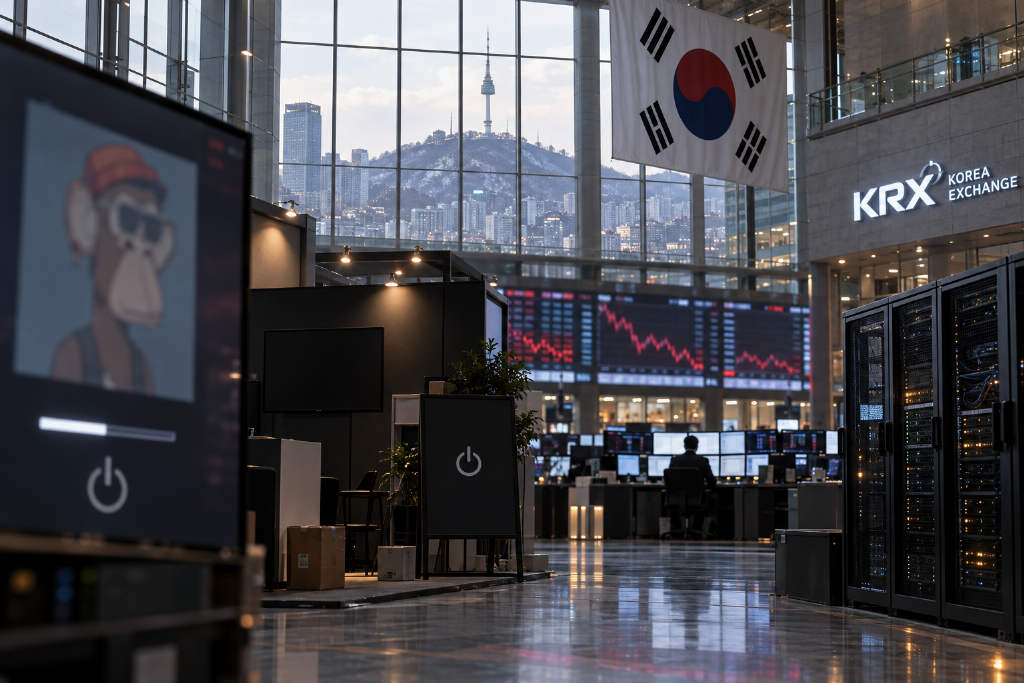
In Korea, PANews said the stock market has fallen 32% in four months, with Samsung Electronics leading declines in semiconductors. The report tied fresh pressure to a $20 billion gap between OpenAI’s actual revenue and expectations, which it said sent shockwaves through global chip names. At the same time, memory giants were facing heavier capital expenditure and valuation discounts, while leverage risks among Korean retail investors rose again. Foreign capital was said to have left the market to the tune of 156 billion yuan in a single month.
Institutional views and interviews
PANews also selected several pieces centered on investor frameworks and high-profile interviews.
Arca’s chief investment officer outlined four directions for crypto investing: quality listed companies, tokens with real revenue, compliant new token issuance, and tokenomics restructuring. The article said a fundamentals-based framework is gradually taking over the crypto market.
Morgan Stanley’s view on gold also made the list. PANews said the bank sees resilience in gold prices, supported by central bank buying and ETF demand. The report said gold has held above $4,000 and pointed to a $5,000 target by 2027.
In an interview with Tian Keyu, PANews quoted him as saying, “I admit I violated rules, but I am not the ‘great villain’ described in those rumors.”
Another interview featured Dragonfly partner Haseeb. PANews said he argued that AI agents do not need crypto first and will prefer cards for payments, while humans need crypto for privacy and financial autonomy. He also discussed Hyperliquid, HIP-3, Robinhood Chain, and the possibility that today’s categories of crypto venture capital may eventually fade.
Opportunities, strategies, and operational guides
In its “capture the opportunity” section, PANews included several project and strategy pieces.
One focused on LayerTree, a Bitcoin scaling idea proposed by a Lightning Labs co-founder. PANews said the design would use a Merkle Sum Tree to compress balances for large numbers of users into a shared UTXO, then combine off-chain payments with on-chain enforcement to improve blockspace efficiency while preserving unilateral exit rights.
Another article looked at points-based crypto projects through the STANDX case, discussing increasingly complex reward structures, the mismatch between capital costs and airdrop returns, and how users can identify 10 common points-related traps, including circular borrowing, YT decay, and impermanent loss in LP positions.
PANews also noted that PRL rose more than 60% in a week. The move was framed as a sign of investor optimism toward AI compute mining, though the report added that a fully diluted valuation close to $4 billion raises the bar for delivering growth.
Uniswap v4 hook projects were also highlighted. PANews said eight projects, including Hookr and StonkBrokers, are experimenting with custom rules for DeFi trading pools, ranging from dynamic fees to redistribution of arbitrage income.
The weekly selection also covered the limits of ICOs, VC-backed tokens, and “Alpha” models, while presenting a proposal centered on real-name DID, equal-price unlocks, and on-chain transparency. Another practical guide explained how an iPhone can serve as a more secure cold wallet, with security depending on factors such as A19 chip memory integrity enforcement, iOS 27 patch levels, BFU/AFU unlock states, and wallet key management.
Web3 developments: Zcash, StandX, Story, and Blur
In the Web3 section, PANews highlighted the Zcash Q3 report. It said Zakura has now been deployed, marking the first step in the network’s 2026 third-quarter scaling roadmap. Node synchronization time was said to have dropped to four hours, shielded supply rose back to 29% after Ironwood activation, tokenholders approved a 25-second block upgrade with 99.9% support, and network REV increased 85%.
Another article argued that simply hiding assets is not enough to protect trading strategies on-chain and that trading intent also needs privacy.
PANews also examined demand for ETH through the lens of Bitmine. The report said Bitmine is one step away from reaching a goal of holding 5% of Ethereum’s total supply and is nearing a point where it may stop adding aggressively. That shift, PANews wrote, raises the question of who could replace the market’s largest buyer.
StandX was presented as a rare example of a deliberate exit in the Perp DEX sector. PANews said the project canceled its TGE, moved toward a gradual shutdown, and chose to compensate its community with a DUSD airdrop instead of launching a token.
Story Protocol’s latest pivot was another featured story. According to PANews, the Sui Foundation invested $30 million in DATA Network, which will now upgrade into a Sui-native protocol, while the original public chain will be retired. After the announcement, DATA rose 12% in two hours and trading volume expanded to $60 million. PANews noted that Story Protocol, once valued at $2.25 billion, has now pivoted twice in three years.
Blur was also singled out. PANews said Blur will shut down its front end in November 2026, and its NFT lending protocol Blend will stop matching new loans at the same time. BLUR fell after the news. The report described Blur as a project that once pushed OpenSea to the edge through aggressive incentive tactics, but is now heading for the exit first.
Selected industry headlines
- U.S. September PPI came in at 6.3% year over year, the highest level since May 2026.
- Initial jobless claims in the U.S. for the week ending Oct. 10 were 199,000, against an expected 200,000.
- Yields on long-dated U.S. Treasuries extended declines, with both the 20-year and 10-year yields falling more than 14 basis points intraday.
- Chip stocks erased $1 trillion in market value, while investors moved into semiconductor ETFs.
- U.S. spot Bitcoin ETFs saw net outflows of 3,209 BTC, and spot Ether ETFs posted net outflows of 38,915 ETH.
- Stripe and Plasma launched a multicurrency stablecoin card supporting payments in U.S. dollars, euros, and other currencies.
- Tether made a strategic investment in AIsa focused on AI-agent payments and programmable money.
- Binance Alpha is set to list NeoSoul (DNA) on Oct. 16.
- When the three major U.S. stock indexes closed higher together, Circle gained 9.50% and Coinbase rose 6.62%.
- Meme coin speculation continued to cool, with projects peaking after an average of 17.2 days and only 3% returning to prior all-time highs.
- OpenAI donated $5 million to the Simons Foundation to support mathematicians researching AI-related outcomes.
- Hyperliquid co-founder Jeff Yan said the plan is to bring the entire financial industry onto Hyperliquid.
- Decentralized social network Farcaster was acquired by Network School, a venture tied to Balaji.