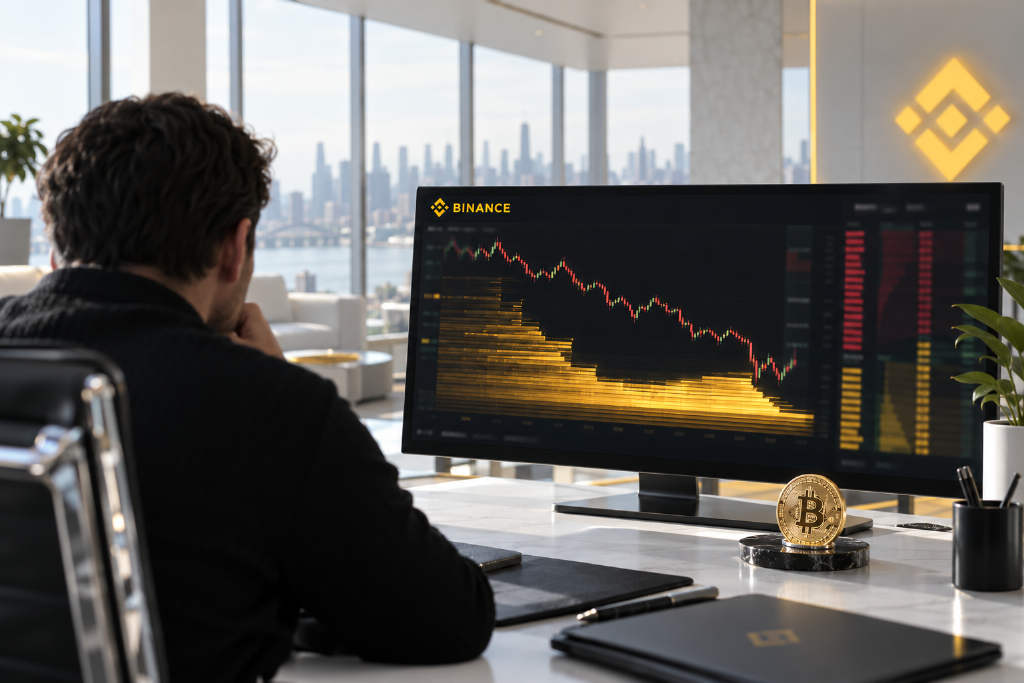
Odaily reported that analyst Murphy said on X that buy-side liquidity tends to build when Bitcoin falls, as market makers skew liquidity toward bids and traders place orders at lower prices. He cited Binance spot order book data showing that the 5% depth imbalance briefly reached $80 million when Bitcoin dropped to about $83,000. Based on that $83,000 reference price, bids within the 5% depth range roughly extended down to $79,000, suggesting relatively thick buy-side support between $83,000 and $79,000. Murphy also pointed to a continued rise in the gap between Binance taker buy volume and taker sell volume, which he said shows more aggressive buying and less aggressive selling during the move. The remarks focus on order-book structure and execution flow rather than a price forecast, highlighting where buyers were concentrated as Bitcoin pulled lower.
According to Odaily, Murphy said in a post on X that when Bitcoin declines, liquidity provided by market makers tends to lean toward the buy side, while traders also place orders at lower price levels.
He said data showed the 5% depth imbalance on the Binance spot order book briefly reached $80 million when Bitcoin fell to about $83,000. Using $83,000 as the reference price, bids within the 5% depth range roughly extended down to $79,000, indicating thicker buy-side support between $83,000 and $79,000.
At the same time, the gap between Binance taker buy volume and taker sell volume kept rising, pointing to an increase in aggressive buying and a decline in aggressive selling.
This article was originally published by Bit.Fan. For more cryptocurrency news and market insights, visit www.bit.fan. Disclaimer:
The market information, project data, and third-party content displayed on this platform are for industry information sharing only and do not constitute any form of investment advice or return commitment.
Cryptocurrency trading carries high risks. Users should fully assess their risk tolerance and make independent decisions. All profits, losses, and legal responsibilities are borne by the users themselves.