
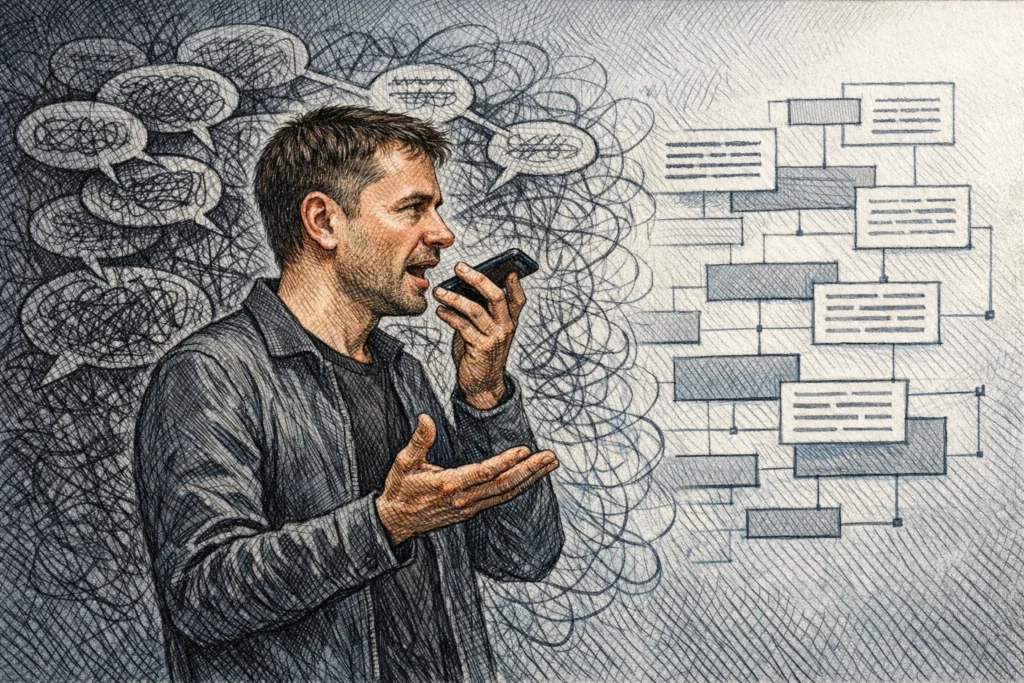
Andrej Karpathy, an OpenAI founding member now on Anthropic’s pretraining team, said Tuesday, July 21, that he has a repeatable way of working with large language models when a task gets too complicated to explain by typing: he switches to voice input and talks for about 10 minutes.
In a post on X, Karpathy said he uses the method when the model needs more background to understand what he is trying to achieve, but typing out all of that context feels too slow. Rather than organize the prompt first, he leans back, opens /voice, and starts talking. The input can be scattered, messy, and stream-of-consciousness.
He wrote: “One pattern I find useful for working with LLMs is a nice long ramble session. Sometimes the LLM needs more bits to understand what you're trying to achieve, but you're too lazy to type them. In these cases I like to lean back, switch to /voice and just ramble for like 10…”
Karpathy added that he will sometimes tell the model up front that he has switched to speech recognition and apologize in advance for transcription mistakes. At other times, he turns the monologue into a short interview, letting the model ask a few rounds of follow-up questions so it can pull together the scattered clues.
The point is not voice itself, but input volume
Voice input is not the new part of the idea. Karpathy’s emphasis is on how much context gets delivered at the start. Instead of spending effort turning a half-formed thought into a clean prompt, he sends the whole bundle and lets the model split it apart, reorganize it, and hand back a clearer version.
His reasoning was blunt. In his view, LLMs are unusually good at reconstructing a long and incoherent monologue, and the version they echo back is often cleaner than the original train of thought. He said that this improves “mind meld,” his term for the point where the model and the user become more closely aligned on intent. Once that alignment is there, he said, there is usually less to correct later.
Front-load the cost, reduce the back-and-forth
The structure behind the method is to push more of the effort to the front of the interaction. Many users save time at the start by typing less, then spend that time later clarifying what they really meant across several rounds. Karpathy’s approach does the opposite: pack the context, assumptions, and loose thinking into the first 10 minutes, then cut down on the “that’s not what I meant” phase afterward.
As framed in the original article, the trade-off is simple. One high-volume dump of background information up front can replace several rounds of revision and explanation later on.
X replies split into supporters and critics
Replies on X broadly broke into two camps. Supporters said the approach already accounts for around 80% of their prompt use. Some described output efficiency gains of 5x to 8x after moving to a voice-heavy workflow. Multilingual users also said they liked the fact that the method is not tied to a single language.
Critics focused on a different concern: if the work of making an idea clear is handed off to the model, personal organization and writing skills could erode over time. One compromise suggested in the replies was to let the model do the first pass, then manually distill the result rather than accepting it as-is.
More mirror than ghostwriter
The article’s framing is that Karpathy is not using the model as a ghostwriter. He is using it more like a mirror that can impose structure. The workflow starts by dumping out thoughts before they are fully formed, then checking whether the organized version actually matches the intended meaning.
The difference lies in whether the user reads that cleaned-up output back critically and keeps making the final judgment.