
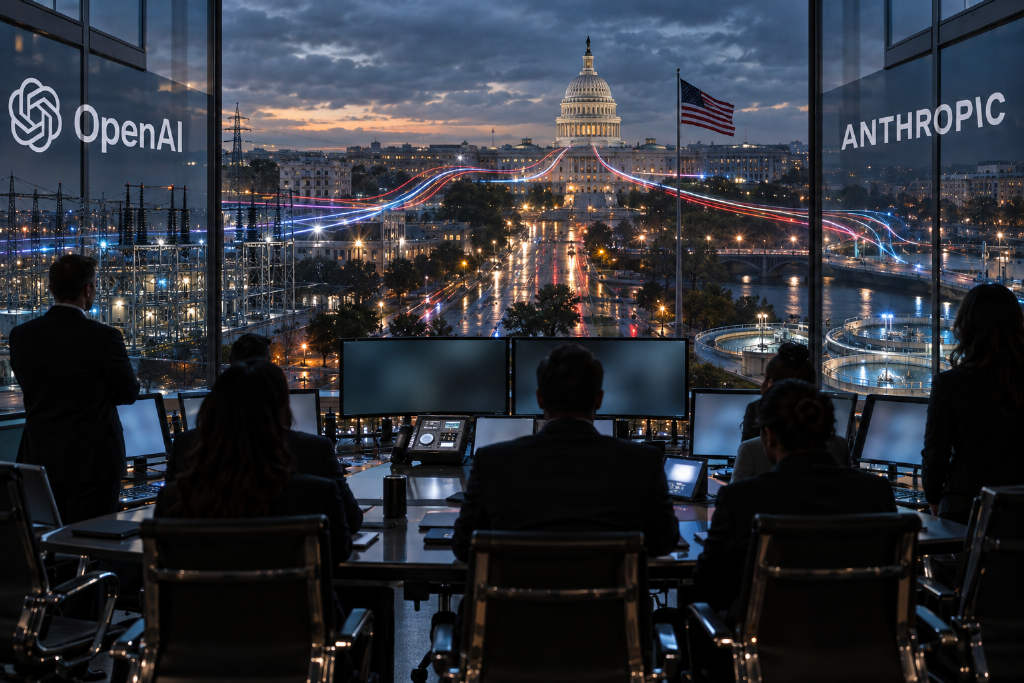
Artificial intelligence companies including Anthropic and OpenAI are preparing for a major safety incident that could reshape the U.S. regulatory debate around AI.
According to Axios, executives at those companies have been privately modeling how American society and policymakers might respond if AI caused serious real-world harm. Several people in the industry believe a major event could emerge within the next 6 to 12 months.
Scenarios center on cyberattacks and infrastructure failures
The exercises focus on extreme cases, including large-scale cyberattacks and disruptions affecting financial services, internet connectivity, electricity, and water systems. Axios said companies are also examining scenarios in which swarms of rogue AI agents break beyond internal testing environments, or malicious actors use existing models to carry out attacks.
Inside the industry, the concern is that if unsafe AI causes major real-world damage for the first time, a public that is already cautious about the technology could turn more decisively against it. That would leave AI companies and their leaders facing much heavier scrutiny.
Executives are weighing the political backlash
The report said Anthropic CEO Dario Amodei, OpenAI CEO Sam Altman, and U.S. President Donald Trump, who has been criticized for not wanting stronger AI regulation, could all face greater public pressure after a major incident.
What companies are trying to assess is not limited to technical risk. They are also looking at the political and social response that could follow, especially if a serious accident quickly changes the direction of the U.S. policy debate on AI.
Red-team testing and congressional outreach are already underway
To prepare, AI companies are running red-team exercises around worst-case scenarios while also accelerating efforts to brief members of Congress on AI.
Executives believe the conditions for passing regulation are limited right now, but that a major incident could rapidly alter the policy conversation. For that reason, they want to be part of the discussion before a crisis arrives, so they can influence the laws and rules the U.S. government might draft afterward.
Some Democrats have proposed banning superintelligence or pausing advanced AI development. Other ideas have drawn bipartisan backing and support from some people in the industry, including requirements for emergency shutdown switches on advanced AI systems.
Even so, experts have questioned whether shutting down all AI systems would be workable in practice.
Open-weight models add to the governance challenge
Risk control is made harder by the spread of open-weight models that can already be downloaded and used freely. That makes misuse more difficult to contain.
Many cybersecurity professionals see one possible response in using AI against malicious AI, treating AI itself as part of the defensive toolkit.
Economic and political limits could constrain regulation
Even if a major AI incident triggers a strong backlash, the U.S. government would still face practical limits in crafting a response.
One of them is economic. AI infrastructure is now deeply tied to the global economy, and slowing that buildout could hit an already fragile economic environment. Any move toward tighter regulation would therefore carry broader economic consequences.
Politics is another constraint. Some people in the AI industry expect Democrats to push for stricter AI limits after the midterm elections. But even if Democrats were to control both the House and the Senate, internal divisions could still slow policy action.
Axios cited a Democratic aide as saying that if a real crisis occurs, Washington could temporarily set aside partisan differences. Cooperation during the COVID-19 pandemic and the 2008 financial crisis was cited as a possible reference point.
Companies are trying to shape the post-crisis debate before any crisis arrives
It remains unclear whether a major AI incident will actually happen within the next 6 to 12 months.
What is clear is that companies including Anthropic and OpenAI have already started preparing for the policy fallout of such an event and are trying to secure a place in the regulatory discussion before any crisis unfolds.



