
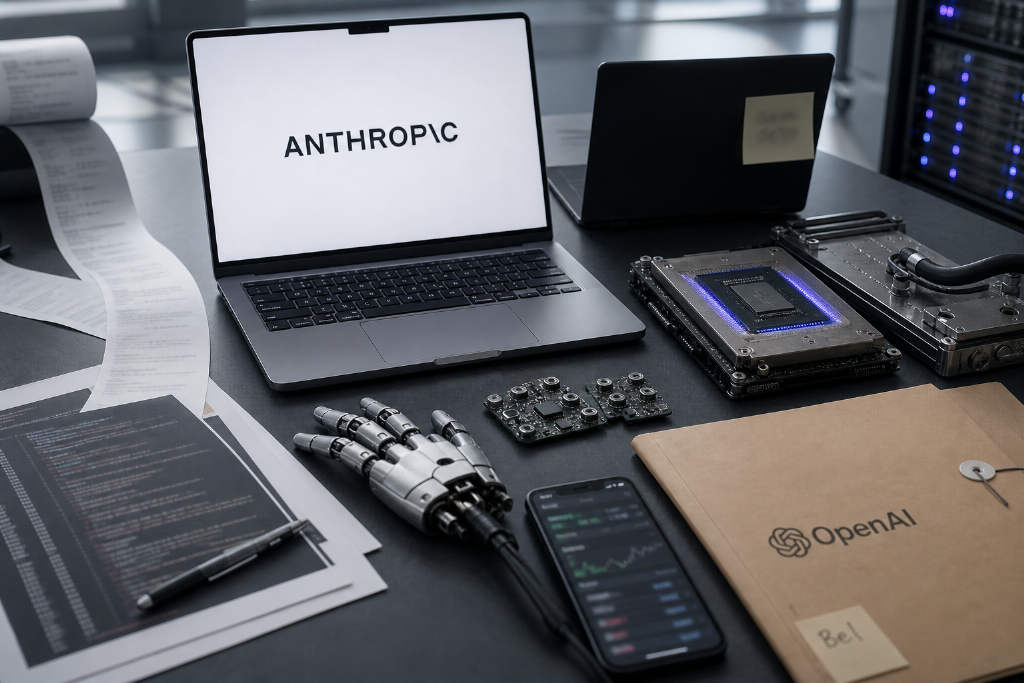
Anthropic could formally ship Opus 5.1 this week, according to new reports that have poured fuel on the AI agent race.
Silicon Valley startup CEO Pietro Schirano wrote on X, “No one is ready for what’s coming. The next generation of models will bring an ontological-level shock. (Nobody is ready for everything that is about to arrive. The next generation of models will bring an ontological-level shock.)” The report used that line as a snapshot of just how fast things are moving in the ASI field.
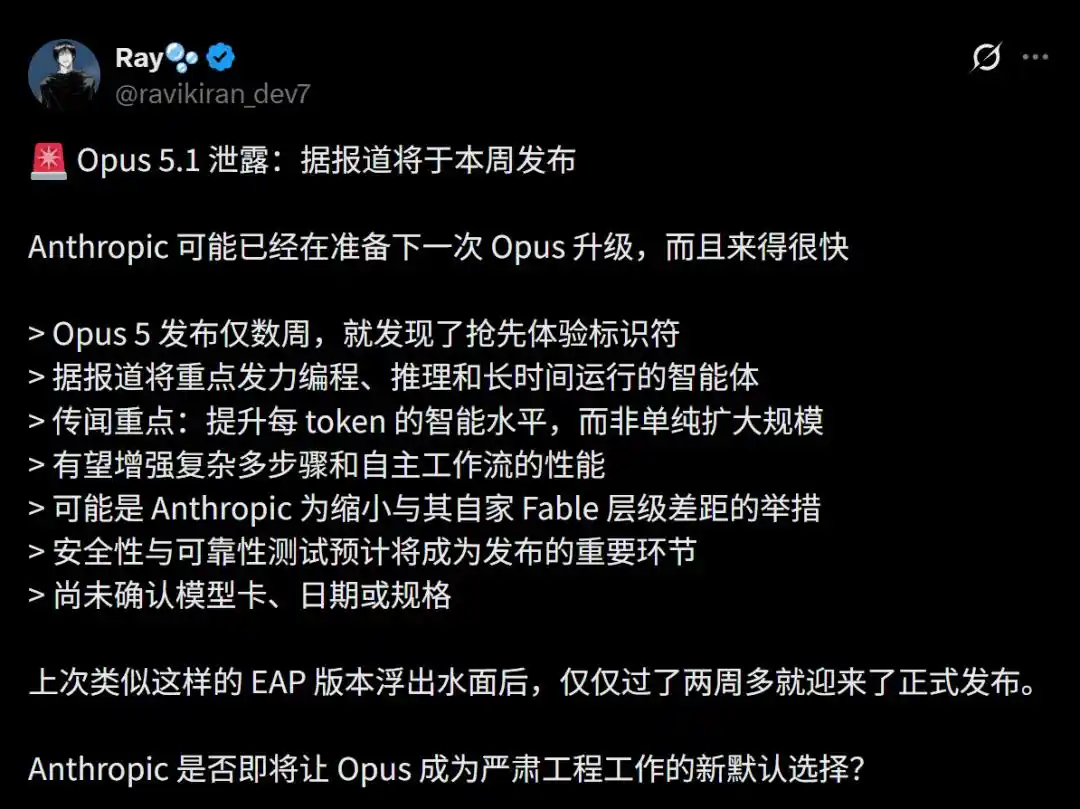
Opus 5.1 reportedly targets core model intelligence
The report, citing people it described as sources, said Anthropic plans to launch Opus 5.1 this week. Opus 5 itself only went live a few weeks ago, the piece said, so that would be a very fast turnaround if the timing holds.
And there was another point. The article said that in an earlier case involving a similar early-access identifier leak, the formal launch came less than two weeks later.
Going by the leaked details described in the piece, this version is not about just stuffing in more parameters. The push, it said, is toward stronger “single-token intelligence.” Three areas were listed as the main targets:

- coding performance aimed at professional engineering work,
- complex logical reasoning for multi-step tasks,
- long-running AI agent capability for handling complicated workflows with more autonomy.
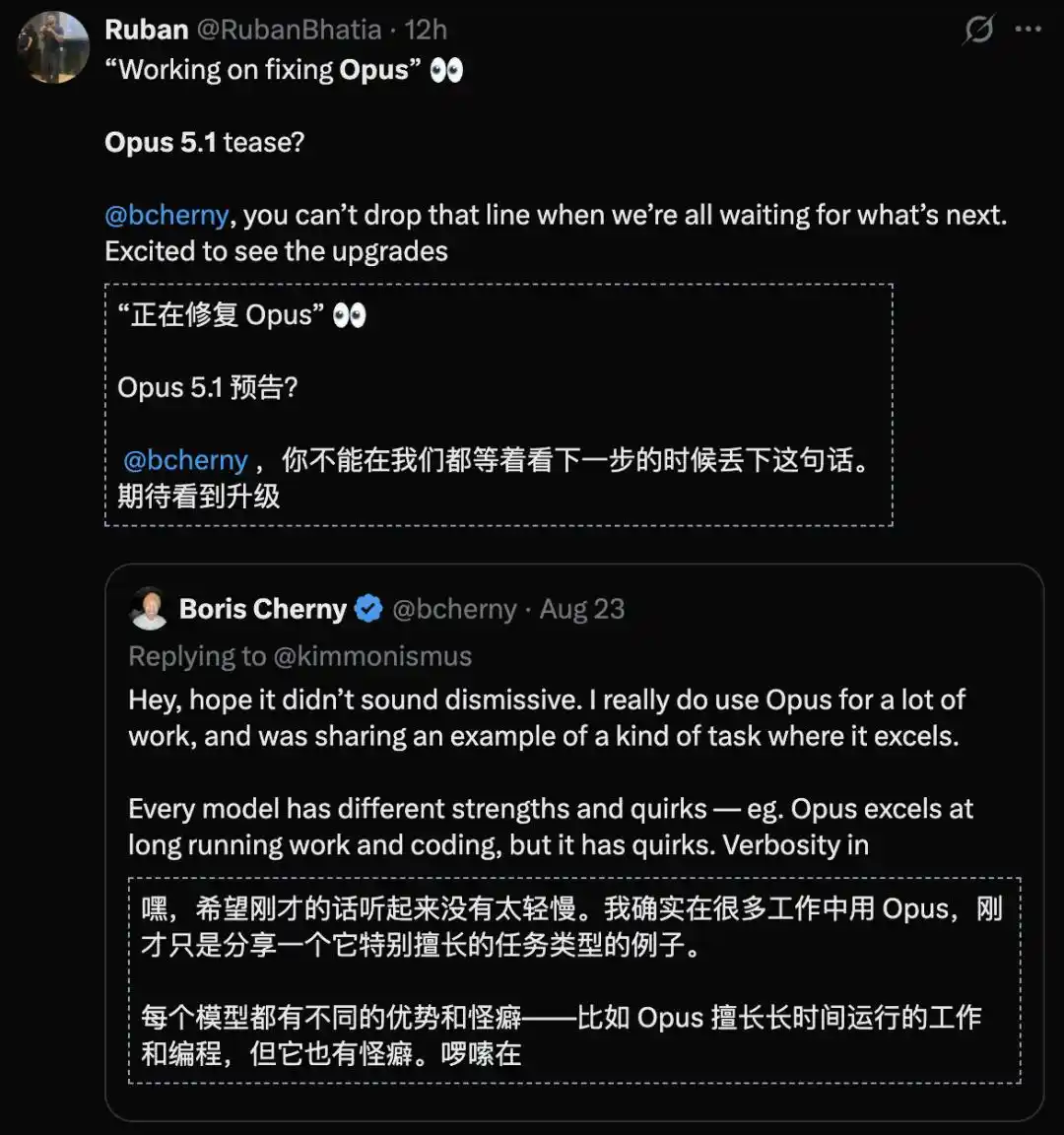
The article said some people in the industry think Anthropic is moving this fast for two reasons: to shrink the capability gap between Opus and its own top-end Fable line, and to respond to rising pressure from OpenAI.
OpenAI linked to a 10 trillion-parameter model codenamed Bel
The same report said the Opus 5.1 story may be only an early hint of a much bigger wave of model launches.
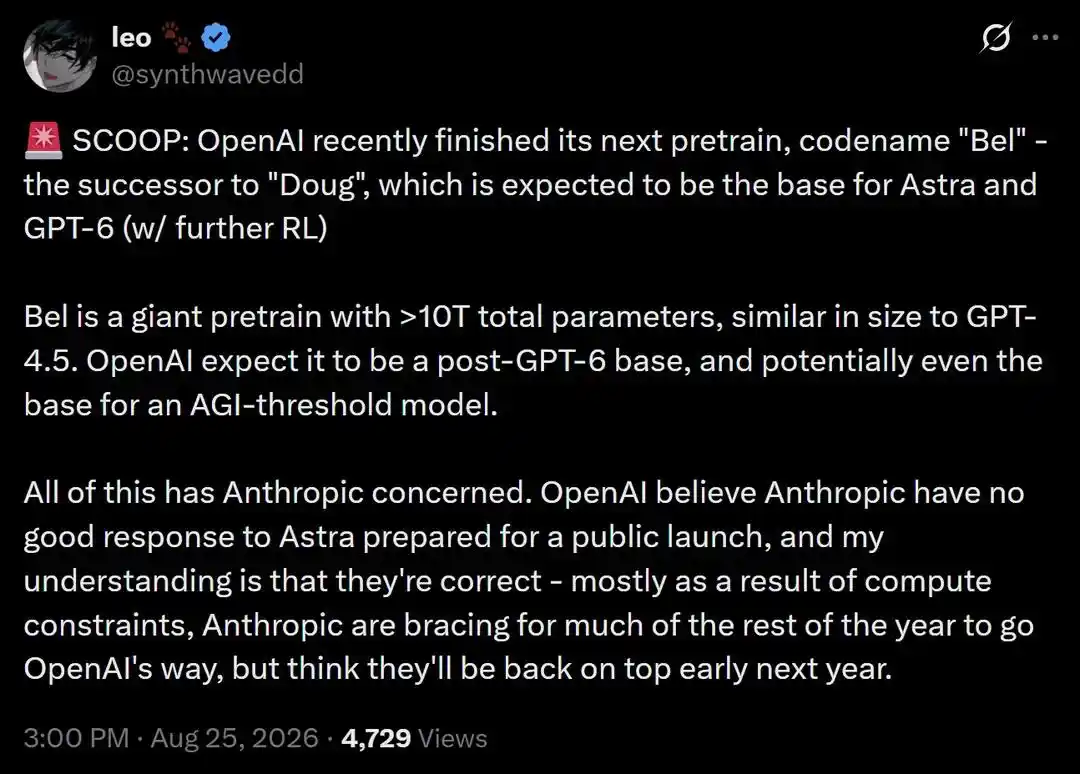
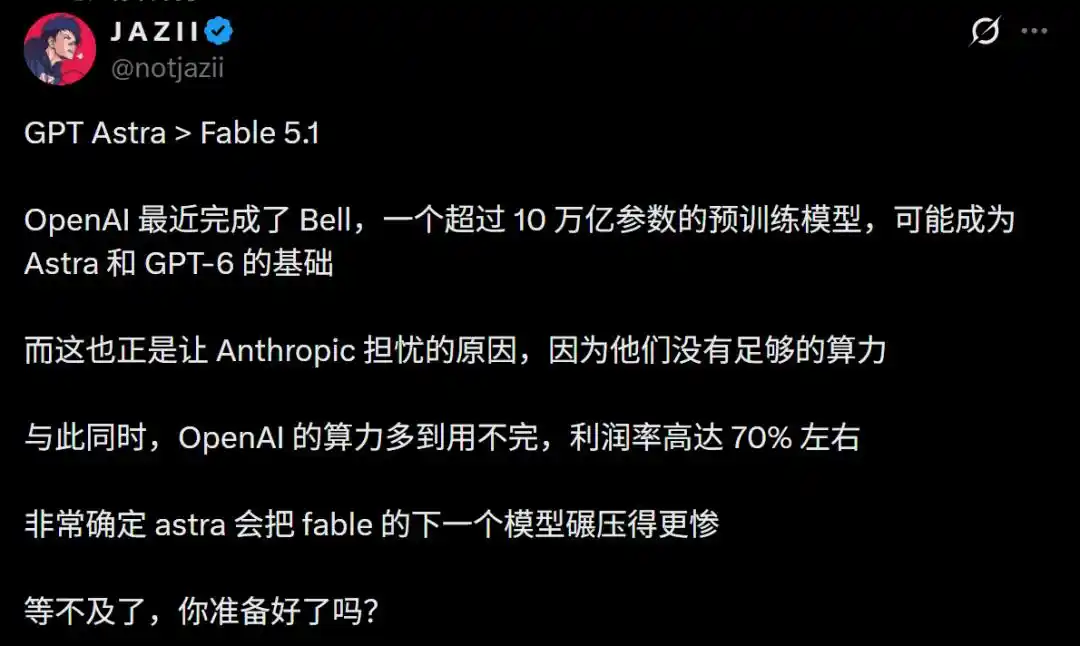
According to the article, multiple reports say a 10 trillion-parameter model codenamed Bel has finished pretraining inside OpenAI’s labs. Bel is described as the successor to an earlier model called Doug. After more post-training, it is expected to become the base for OpenAI’s next big model, Astra, and to tie into future GPT-6 development.
The piece added that some voices in the industry see Bel as nearing AGI. But the article presented that as opinion, not as a claim backed by independently verifiable metrics in the source text.
For Anthropic, the report painted this as a brutal competitive backdrop. It said OpenAI now has what it called nearly unlimited compute capital and posted a gross margin of around 70%, while Anthropic is dealing with a serious compute bottleneck.
Polymarket puts the odds of a next flagship launch at 74%
Attention is not just on Opus 5.1. The report also pointed to a possible flagship launch from Anthropic in the near term.
Citing Polymarket, the article said Anthropic has a 74% probability of releasing its next flagship model in roughly two weeks. The names viewed as most likely were Mythos or Fable 5.1.
The report also said Fable 5.1 had already been in gray testing for two weeks and was being rolled out without a price increase. Some Claude Web or Claude Code users who selected Fable 5 may already have been quietly switched to version 5.1 at no extra cost, according to the article.
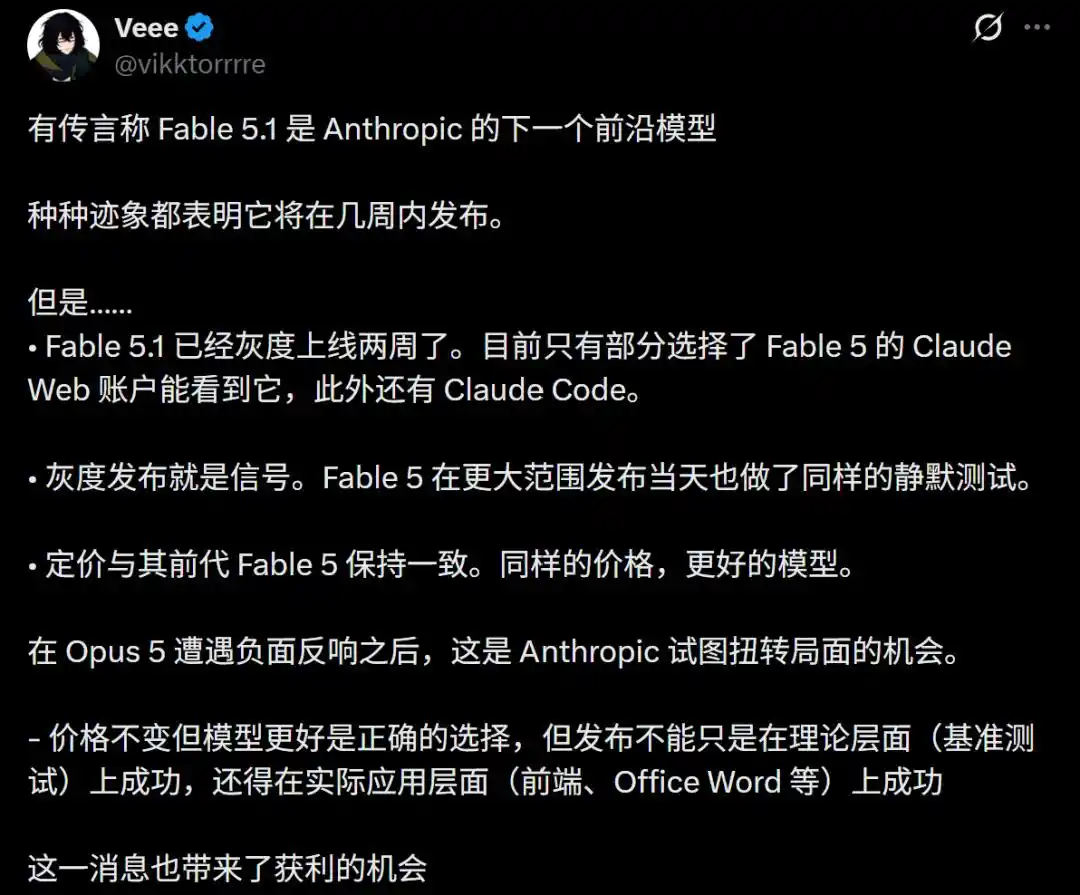
The same piece said the next few weeks could bring one of the most packed AI launch windows on record. Models named in the article included GPT Astra, Fable 5.1 or Mythos, and Grok 4.7. It also said major open-source models could land in the same stretch, with many frontier systems already in the hands of early testers for evaluation.
Enterprise spending data shows strongest models do not always win commercially
But the report was not only about launch timing and model capability. It spent a lot of room on the business side of the AI race too.
It cited Financial Times reporting based on data from payment platform Ramp. By that data, Anthropic’s Fable 5 — described as the company’s largest, most expensive, and most advanced model — made up only about 11% of total enterprise spending on AI tools more than two months after launch.
The article argued that figure missed expectations and weakened the idea that enterprise customers automatically flock to the strongest model on the market. The explanation in the piece was blunt: “good enough” often beats peak performance when budgets matter.
The report said customers have become more price-sensitive after more than a year of heavy AI spending. So rather than paying a premium for the last 5% of performance in Fable 5, many companies seem willing to pick models with roughly 95% of the capability at about half the price.
It added that the cheaper Opus 5 had already moved ahead of Fable 5 in enterprise spending. Big picture, the article’s point was that diminishing marginal gains in model quality are making it tougher for pricing to cover huge development costs.
By contrast, the piece said OpenAI is still benefiting from a mix of performance, pricing, and distribution. It stated that OpenAI’s latest quarter pushed annualized revenue above $40 billion, and that GPT-5.6 helped restore business momentum because it was priced far below Fable 5.
IPO expectations raise internal questions about mission and incentives
The article also turned to Anthropic’s hiring culture, and to the friction between commercial ambition and AI safety.
It said Anthropic’s CEO recently added a question to job interviews: “If one day the company decides, for AI safety reasons, to give up its commercialization ambitions and the stock price falls to zero, would you accept that? (If one day the company, for reasons of AI safety, decides to abandon its commercial ambitions, causing the stock price to fall to zero, would you accept that?)”
A job candidate quoted in the article responded on Blind: “To be honest, I said I would never be happy if the stock price went to zero. I want to balance ethics while building a sustainable business, not come here to do charity. (I was very honest. I said if the stock price goes to zero, I definitely would not be happy. I hope to balance ethics while building a sustainable business, not come here to do charity.)”
The report said Anthropic is preparing for an IPO that could value the company at as much as $2 trillion, potentially above SpaceX. For its more than 2,500 employees, the article described that possibility as a broad wealth event if the listing works out.
It also gave examples of compensation levels in the company’s hunt for top AI talent. A senior software engineer, according to the article, can get base pay of $320,000 to $405,000, or about RMB 2.3 million to RMB 3 million. It added that some candidates have spent $4,000 on private coaching for interviews.

A crowded release window may define the next phase of competition
Take the report at face value, and the next few weeks could bring launches tied to Opus 5.1, Mythos, GPT Astra, Grok 4.7, and several leading open-source models.
The article cast this moment as a contest shaped by capital, compute, and very different beliefs about how AI should be built and sold. What does seem clear from the source text is this: the release cadence for frontier models and AI agents is speeding up, and Anthropic and OpenAI are both right in the middle of the latest wave.
The cited references in the source included an X post and a Financial Times report. The original Chinese article credited the WeChat account “New Intelligence Era,” listed “ASI Revelation” as the writer, and Aeneas as editor.