
Anthropic reinforcement learning lead Sholto Douglas said models with capabilities equal to or beyond all humans could appear within the next few years, laying out one of the clearest timelines yet from inside the company for the arrival of highly capable AI systems.
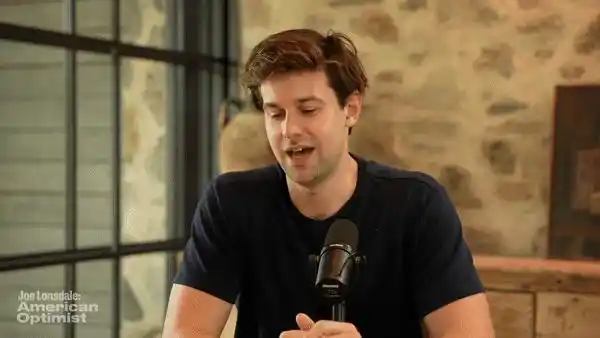
The remarks came in an interview recorded in August and released on Oct. 2. Host Joe Lonsdale said the video was delayed because Anthropic public relations staff opposed releasing some of the material. After publication, clips from the discussion spread quickly on X.
Douglas ties AGI to computer-based human work
Asked about Anthropic’s mission, Douglas said: 「We think AGI can be achieved within the next few years: models with capabilities equal to or exceeding all humans are likely to appear within the next few years.」
He then explained what he meant. In his view, such a system would be able to do everything humans can do on computers. Once robots become capable enough, he said, the same shift would extend into physical-world labor.
That position is notable because only a month earlier, when OpenAI was talking about an "AGI era," Douglas pushed back on X, writing that "AGI has obviously not been achieved." Even so, he does not appear to see AGI as distant. He defined the threshold as AI being able to do all work humans can do on computers, and said that point may now be only a few years away.
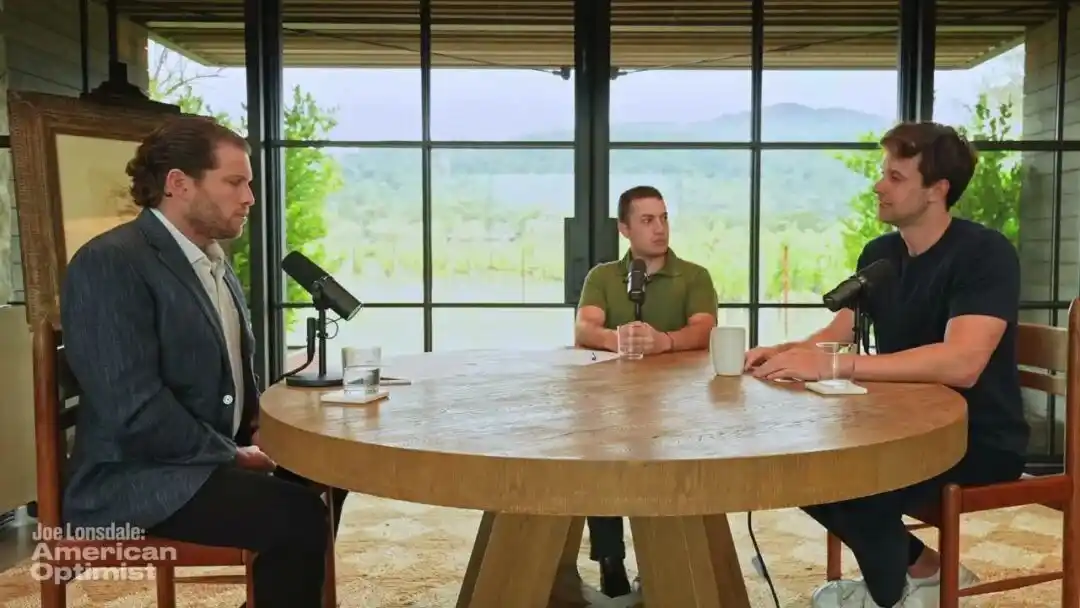
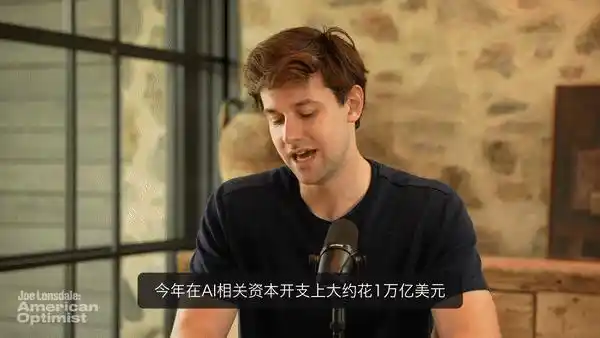
Douglas appeared alongside Nick Marwell, who leads work on long-horizon tasks, or research into how AI can keep advancing through complex assignments over time. The interview was recorded at a winery in Napa, California. From left to right, the participants were host Joe Lonsdale, Marwell and Douglas. Lonsdale is also a co-founder of Palantir.
Not long after the interview was recorded, OpenAI released GPT-6 Astra. OpenAI President Greg Brockman said the industry was entering the AGI era, and Jensen Huang posted on X that "AGI has arrived."
On Sept. 23, an X user asked why Anthropic still had not declared AGI achieved, questioning whether the company had a higher bar or was avoiding a clash with its own calls to slow AI development. Douglas replied with a single line: 「AGI has obviously not been achieved.」

Shortly after that, Anthropic fine-tuning colleague Jackson Kernion replied in the same thread that if today’s models had been shown to experts 10 years ago, they would have declared them AGI on the spot. The exchange highlighted that even within the same lab, views differ on whether AGI has already arrived.
He points to changes in his own workflow
Douglas said his view is grounded in what has changed in his day-to-day work.
Eighteen months ago, every line of code he wrote was typed by hand. A few months after joining Anthropic, models could help write code, but he still had to step in every few minutes. By the time this interview was recorded, he said he could hand over one or two full days of work to a model, describing it as "basically like a junior team member."
When Lonsdale asked whether AI was working for him while they were speaking, Douglas answered: 「Yes, there are a bunch of things working for me right now.」
He also pointed to a sharp jump in mathematical performance. Using FrontierMath as an example, he said model scores on the professor-written benchmark rose from 0% to more than 60% in a year.
$1 trillion, $2 trillion, then $4 trillion
Douglas also tried to put a price tag on building AI that surpasses all humans.
By his estimate, compute devoted to AI has grown by roughly 2x to 3x a year over the past four to five years. This year, he said, AI-related capital expenditure across several hyperscale cloud companies totals about $1 trillion.
From there, he asked whether the trend line could continue: perhaps $2 trillion next year, then $4 trillion in 2028.
His answer was that if investment growth broadly holds, annual AI capital expenditure could reach $4 trillion by 2028. Add robotics to that picture, he said, and global GDP could double in the early 2030s.
Douglas acknowledged that a doubling of GDP sounds "a bit ridiculous" and would require many things to go right. He also made clear this was not a new thought. On Aug. 14, he wrote on X that, however crazy it sounds now, it is worth building a doubling of the economy into expectations for the 2030s.
Nvidia had previously estimated that annual global spending on AI infrastructure could reach $3 trillion to $4 trillion by 2030. Douglas effectively pulled that timetable forward by two years.
Marwell offered another set of numbers, this time on training costs. A single future model training run, he said, could cost $10 billion, $100 billion or even $1 trillion.
He argued that the economic return on intelligence is exponential. From tab completion to Claude Code handling work independently, each capability jump could create far more value than the last generation did.
Douglas added that total global AI revenue today is only a little over $100 billion, still a small slice of a global economy measured in the tens of trillions of dollars. In that framing, the trillions being spent now are only a down payment.

Backlash on X followed quickly
The spending and GDP claims drew immediate criticism on X.
Gary Marcus, the NYU emeritus professor known for his skepticism toward AI hype, called the remarks crazy. He argued that the rhetoric starts with something relatively plausible, capital expenditure rising to $4 trillion, then slides into something he sees as close to impossible, a doubling of GDP in less than a decade, while presenting both as if they were equally credible.
Jürgen Schmidhuber, often described as the father of LSTM, also weighed in. He said that with current inflation, doubling nominal GDP by the early 2030s would not be hard.
A post-scarcity future, in Douglas’s telling
Douglas said spending on that scale could lead to what he described as a post-scarcity world.
With today’s population, he said, technologies that would normally take centuries to develop could arrive within the next 10 to 20 years. Human productive mental and physical labor could double. The cost of many goods and services could eventually fall toward the cost of energy, including housing construction.
Lonsdale extended that vision by saying the middle class could one day build 500,000-square-foot homes in the mountains.
Douglas’s version of the future also includes curing disease and even defeating aging. 「Every person on Earth could enjoy a level of abundance that even the richest person in the world today cannot access. That is the world we are working toward,」 he said.

The phrase "post-scarcity" has long belonged more to science fiction than to corporate interviews. Here, it came from a researcher training Claude inside a company described in the source material as being valued at nearly $1 trillion.
Marwell says the real tension starts when humans are no longer needed
For all the abundance Douglas described, Marwell offered a more uneasy view of what comes next.
Douglas said he has seen employment rise, not fall, in outsourced call centers in the Philippines, and software engineering jobs also increase. His reading is that AI raises human productivity and gives companies a reason to hire more people.
Marwell said that good period depends on one condition: humans still matter as a key part of getting the best out of AI.
In their view, though, the world will eventually move from a stage where a person paired with AI delivers the most value to one where that is no longer true. When that happens, Marwell said, 「we will start to feel very nervous about the consequences.」
Lonsdale compared the shift to chess. For 30 years, the strongest player was a human plus a machine; now machines are far ahead. Marwell said the period in which human-machine teams remain superior may be much shorter this time.
Anthropic’s slowdown debate
Anthropic has faced criticism for warning that AI could become powerful enough to displace workers while also calling for the industry to slow down.
Lonsdale put the criticism directly: some in tech believe Anthropic co-founder Dario is scaring everyone in order to create rules that slow rivals and then control those rules himself.
Douglas replied: 「So far, the party we have slowed down the most is ourselves.」
Marwell pointed to Fable as an example. By his account, Anthropic had a clearly leading model at the time but chose to work with the government first and launch it in a government-approved way, giving up several months of competitive advantage.
Lonsdale said he had been told that, to secure government approval, some capabilities that could have been used for cyber defense were weakened. 「I think that was a mistake,」 he said.
In June this year, Fable 5 was taken offline globally just three days after launch because of U.S. export controls. Anthropic publicly opposed that move. When access was restored, the model included an added safety classifier, at the cost of more false positives on normal coding requests.
The source material says that episode reflected both Anthropic’s own choices and mandatory government requirements, so it cannot be treated as a purely voluntary slowdown.
Douglas made the "we slowed ourselves the most" remark when the interview was recorded in August. By the time the episode aired in October, the company hitting the brakes was OpenAI instead.
Reuters reported on Sept. 28 that OpenAI dropped plans to release GPT-6.1 Astra over safety concerns. On the same day, Anthropic released Sonnet 5.5, just six days after Opus 5.5.
Douglas’s own timeline has not softened
Douglas’s personal path also mirrors the acceleration he describes.
He grew up in Sydney, studied robotics as an undergraduate, and nearly made the Tokyo Olympics as a foil fencer. Around 2020, after reading blogs and papers, he became convinced that scaling could bring AGI in the 2020s. He then used nights and weekends to teach himself and try to break into a top AI lab.
He later joined DeepMind. After only a year and a half in the field, Noam Brown described him as one of the most important people behind Gemini’s success.
When Douglas joined Anthropic in February 2025, he posted that the world was on a trend line toward AGI in 2027. A year and a half later, that view had not changed.
He said households could have tens of thousands of humanoid robots folding clothes and doing basic cleaning by 2028. He also said it is quite possible that AI will win a Fields Medal and receive a Nobel Prize before the end of this decade.
From reading blogs and papers in 2020 and betting on AGI, to now saying AI could surpass all humans within years, Douglas has taken six years to arrive at this point. On the curve he laid out, each of the next few years would also require humanity to keep doubling the money going into AI.