Who Gets the Profit from a Single iPhone?
A recent post by tech blogger @BluthCapital, written in the voice of Micron's CEO, went viral: "For over a decade, Apple bought chips from us for $5, put them in metal boxes, and sold them for $99. When we tried to raise the price to $7, they mocked us. Now we charge $50, and they've raised the product price by $250." The post sparked a heated discussion about the profit split between Apple and its memory suppliers.
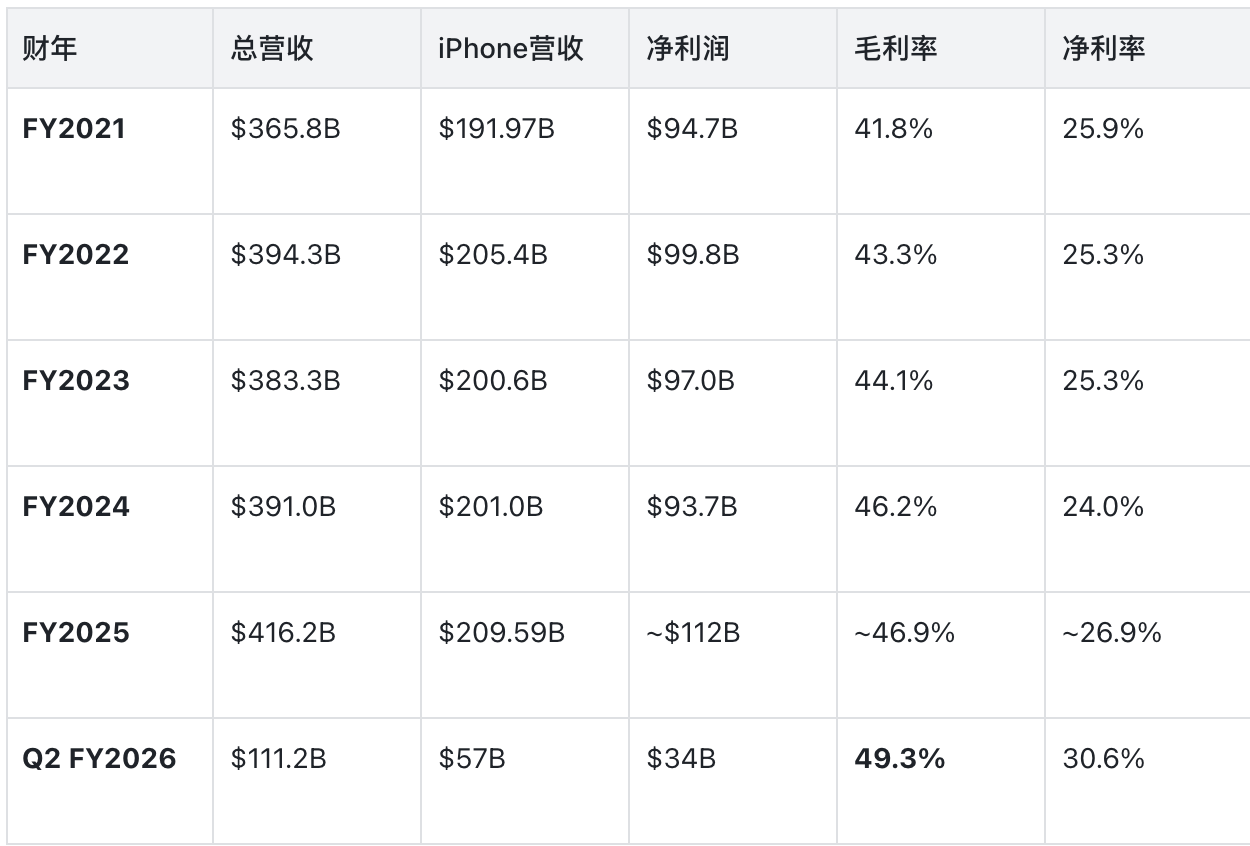
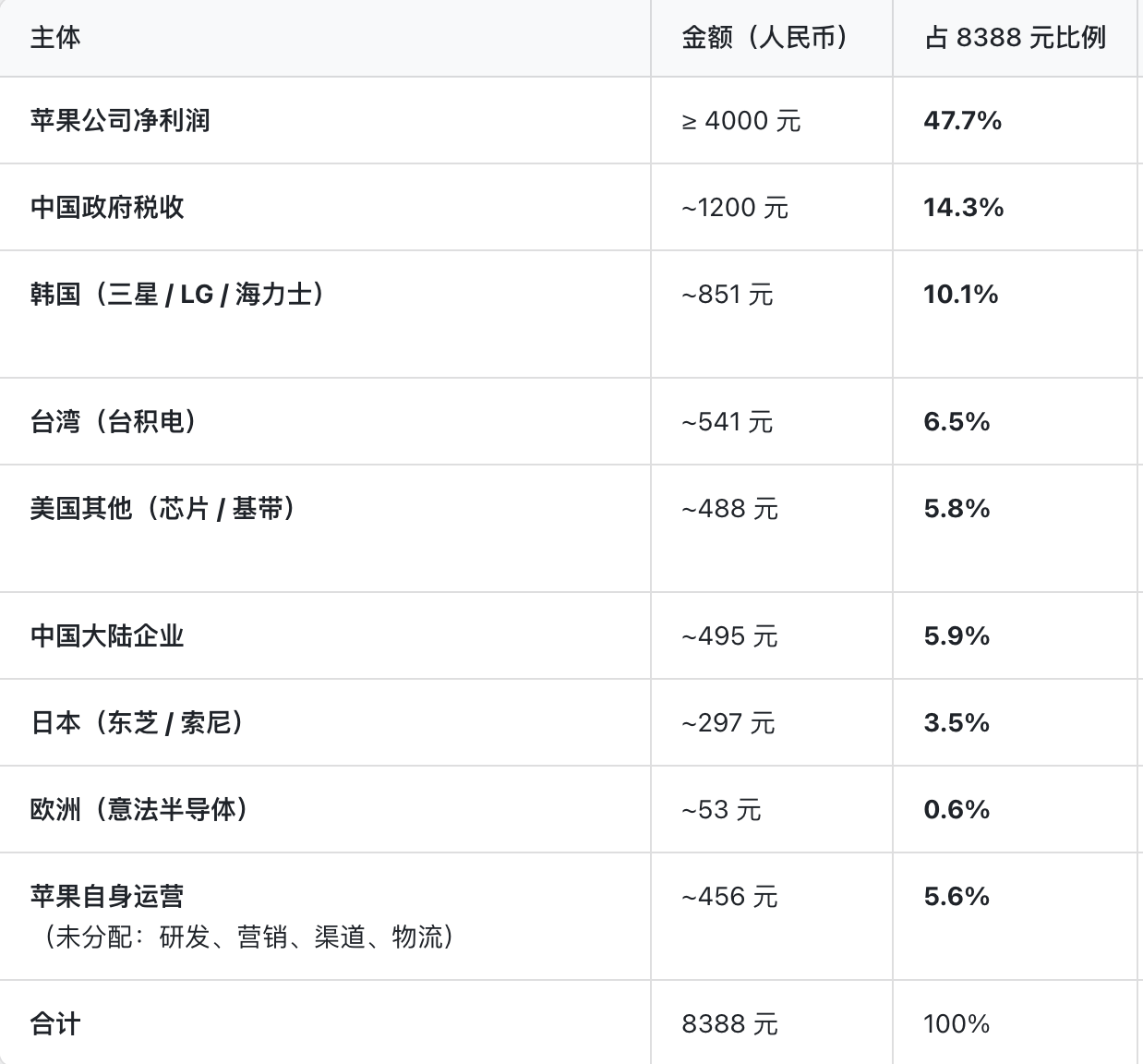
It is estimated that Apple takes about one-quarter of the profit from each iPhone, memory giants take only about one-thirtieth, and TSMC—thanks to its monopoly—captures 4%–5%. The rest is absorbed by other hardware suppliers, distribution, R&D, and taxes. According to Counterpoint, Apple has long captured nearly 50% of the global smartphone market's operating profit. IDC data for 2025 shows Apple generated about 75% of the industry's total profit with just an 18% market share. Based on Apple's Q2 2026 earnings, iPhone revenue was $57 billion, net profit $34 billion, and shipments roughly 61 million units. That implies a net profit per iPhone of around $320–$340 and a net margin of 33%–36%.
Three Eras of Memory Cost: From "Trivial Component" to "Crucial Part"
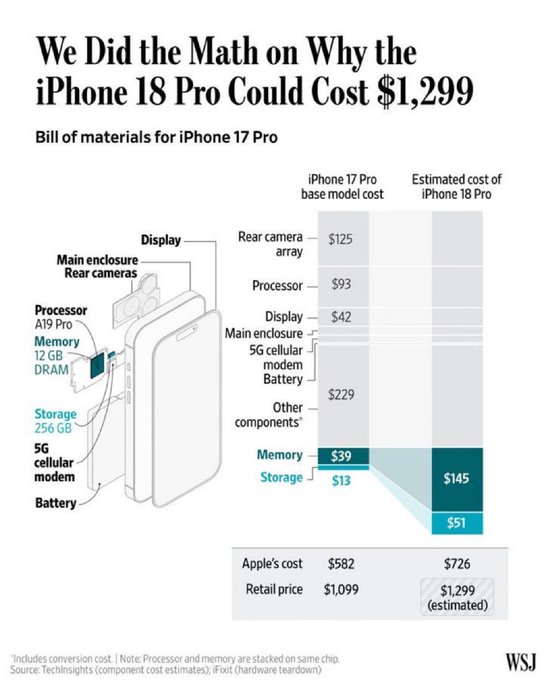
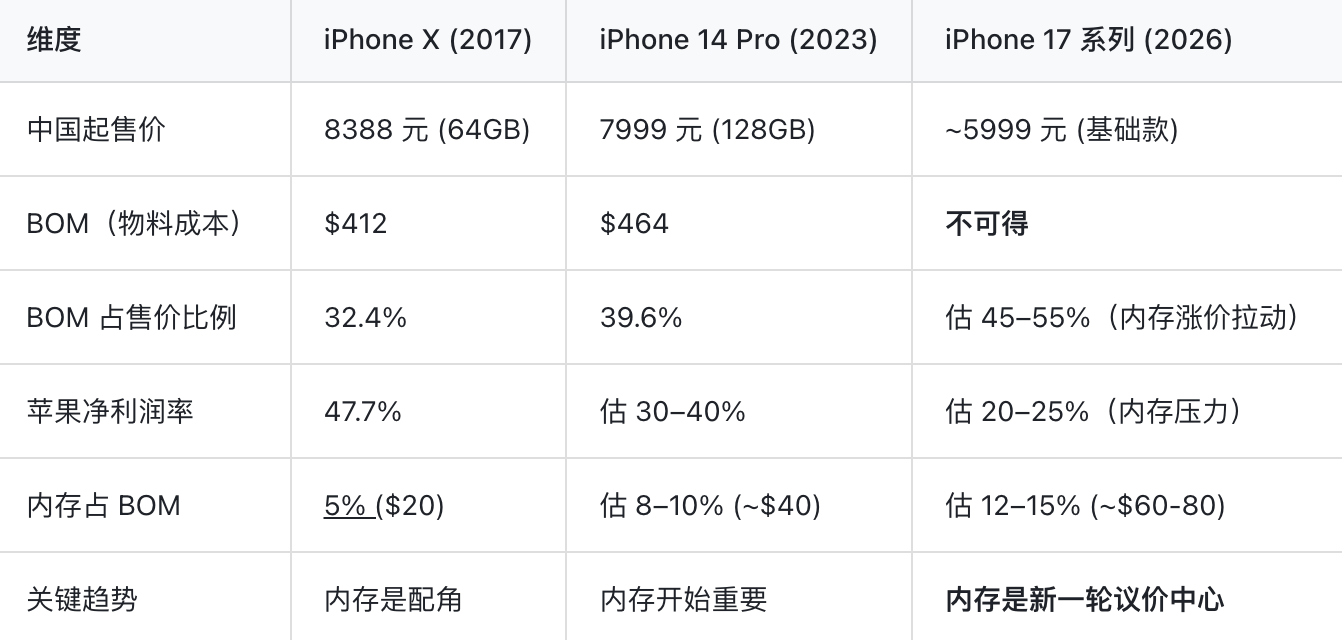
During the iPhone X era (2017), memory cost accounted for only 1.6%–2.3% of the retail price (about $20–$28), and Apple's net margin was close to 50%. Memory was a trivial component. By the iPhone 14 Pro (2023), the BOM cost had risen to about $464 (roughly ¥3,170), representing nearly 40% of the price. Apple's net margin still hovered around 40%, but memory's share was not yet prominent.
Enter the iPhone 17 series (2025–2026): memory costs have doubled, now representing 12%–15% of the BOM, or about $60–$80. TrendForce data shows that in Q1 2026, general DRAM contract prices surged 93%–98% quarter-on-quarter, and Citigroup expects full-year 2026 DRAM average price growth of 88% — fully consistent with the cost escalation.
Cook's Pivot and Apple's Full-Line Price Hike
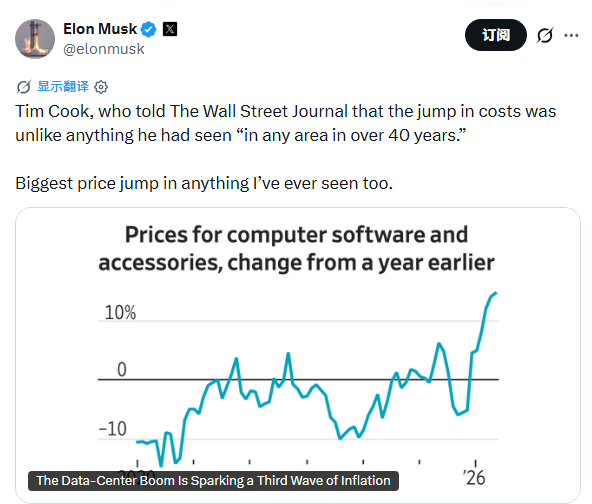
On June 17, Apple CEO Tim Cook told the Wall Street Journal that "memory makers are passing on enormous price pressure" and that Apple needed "DRAM pricing and supply to return to reasonable levels for consumer products." However, less than a week later, Cook changed his tone, calling the cost shock a "once-in-a-century flood." Apple then announced price increases across Mac, iPad, HomePod, Apple TV, and Vision Pro. The news triggered a 6% drop in Apple's stock, wiping out $263 billion in market value — the biggest single-day decline since April 2025. Elon Musk quickly agreed, saying, "It's the most violent price jump I've ever seen."
AI Demand: The Root Cause of the Memory Bull Market
The memory price surge is fundamentally driven by the AI boom. Every AI server requires roughly 8 times more DRAM and 3 times more NAND than a standard server. The Big Three memory makers — Samsung, SK Hynix, and Micron — have been shifting advanced process capacity to high-margin HBM (High Bandwidth Memory) and DDR5, while aggressively cutting output of DDR4 and other consumer-grade products, creating a shortage of general-purpose DRAM. Micron's Q3 earnings report showed a stunning gross margin of 84.6% and revenue of $41.46 billion, up 346% year-over-year. SK Hynix recently announced a U.S. listing plan, seeking to raise about $29 billion to further capitalize on memory demand. One Nvidia Vera Rubin AI server uses roughly 14,500 times the memory of a MacBook Neo — a stark illustration of the supply-demand imbalance.

Supply Chain Chess Game and ChangXin Memory's IPO Opportunity
Facing the memory oligopoly, Apple has been actively lobbying the Trump administration for permission to purchase memory chips from Chinese manufacturer ChangXin Memory Technologies (CXMT), as a potential move to break the dominance of Samsung, SK Hynix, and Micron. For CXMT, which is about to go public next month, this is a golden ticket to sit at the table — and a test of whether it can replicate the wealth-creation miracles of SK Hynix and Micron. The memory market's pie is still growing, but the balance of power in the supply chain has already shifted.