
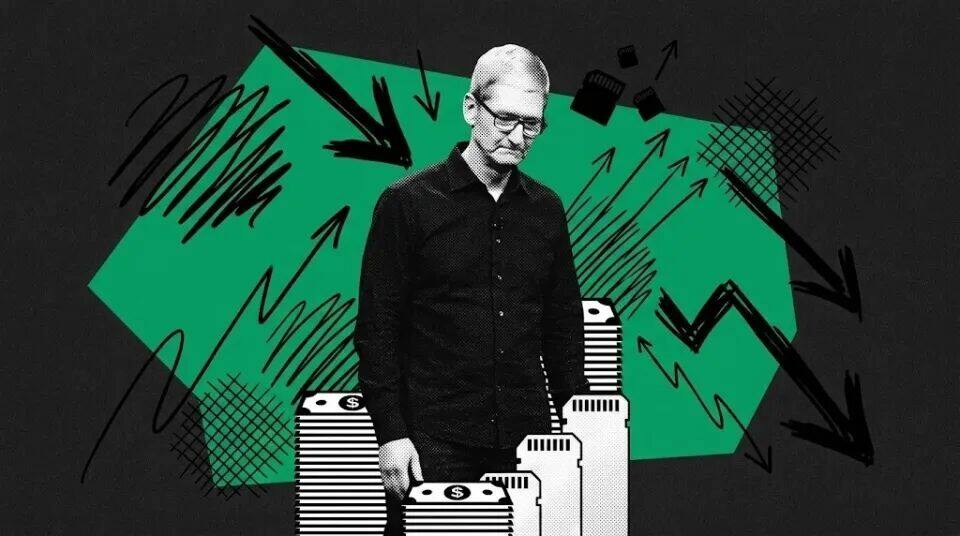
Apple's Profit Distribution: Who Takes the Lion's Share?
Overseas tech blogger @BluthCapital, speaking in the voice of Micron's CEO, satirized Apple's business model: Apple buys chips from Micron for $5, puts them in a metal box, and sells them to consumers for $99. When Micron tried to raise the price to $7, Apple mocked them. Now that memory costs have risen to $50, Apple simply hikes the product price by $250. This sharp contrast highlights the vast profit disparity between Apple and its supply chain.
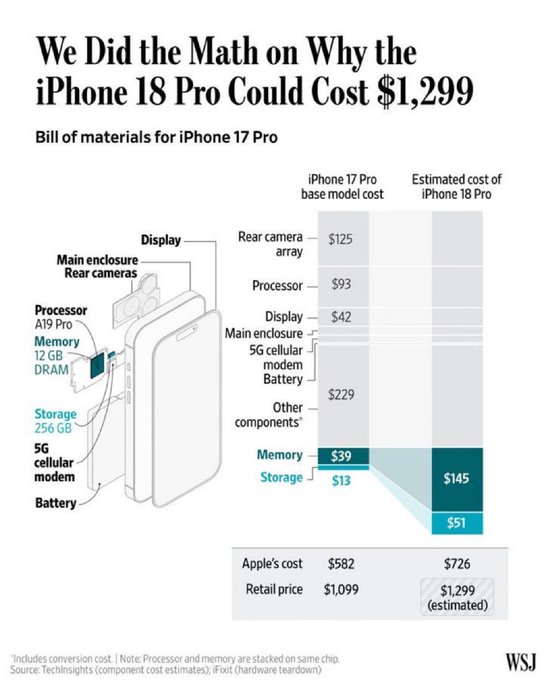
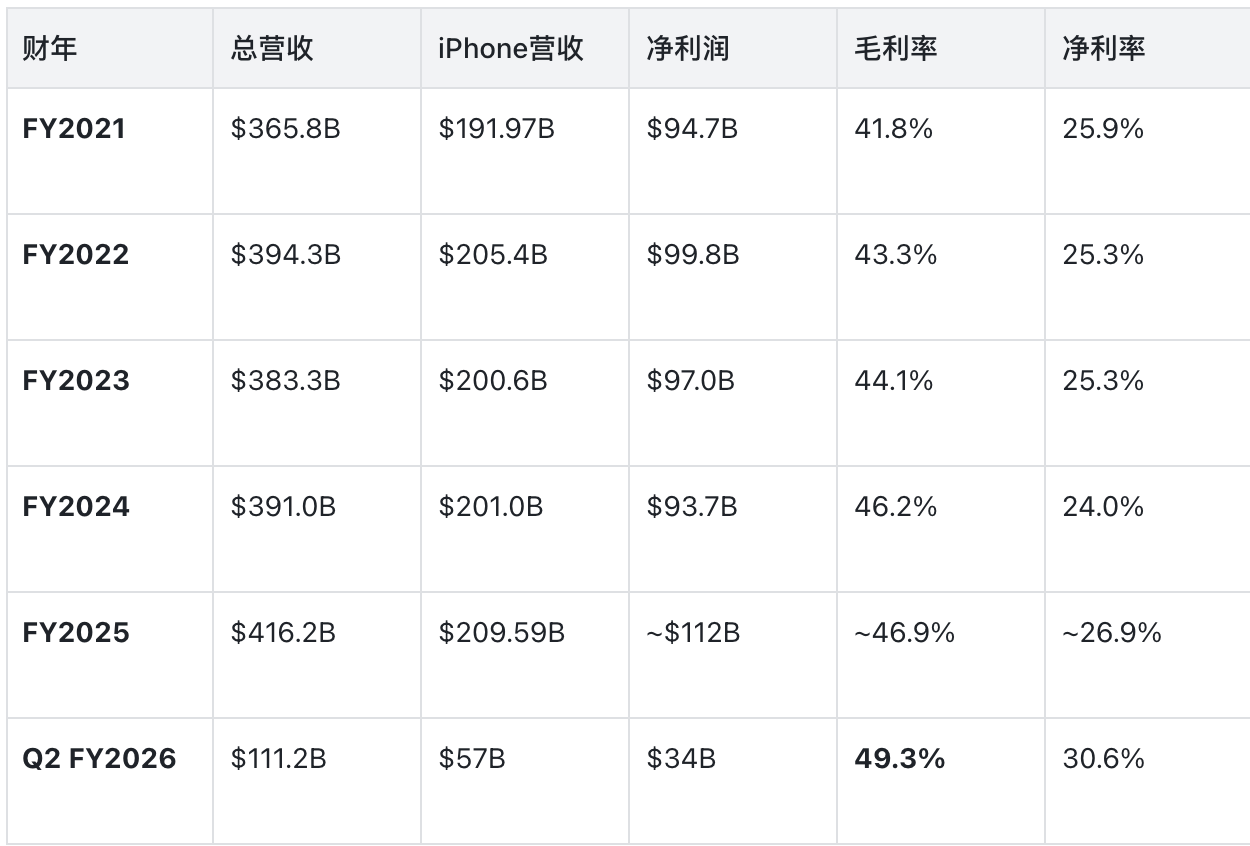
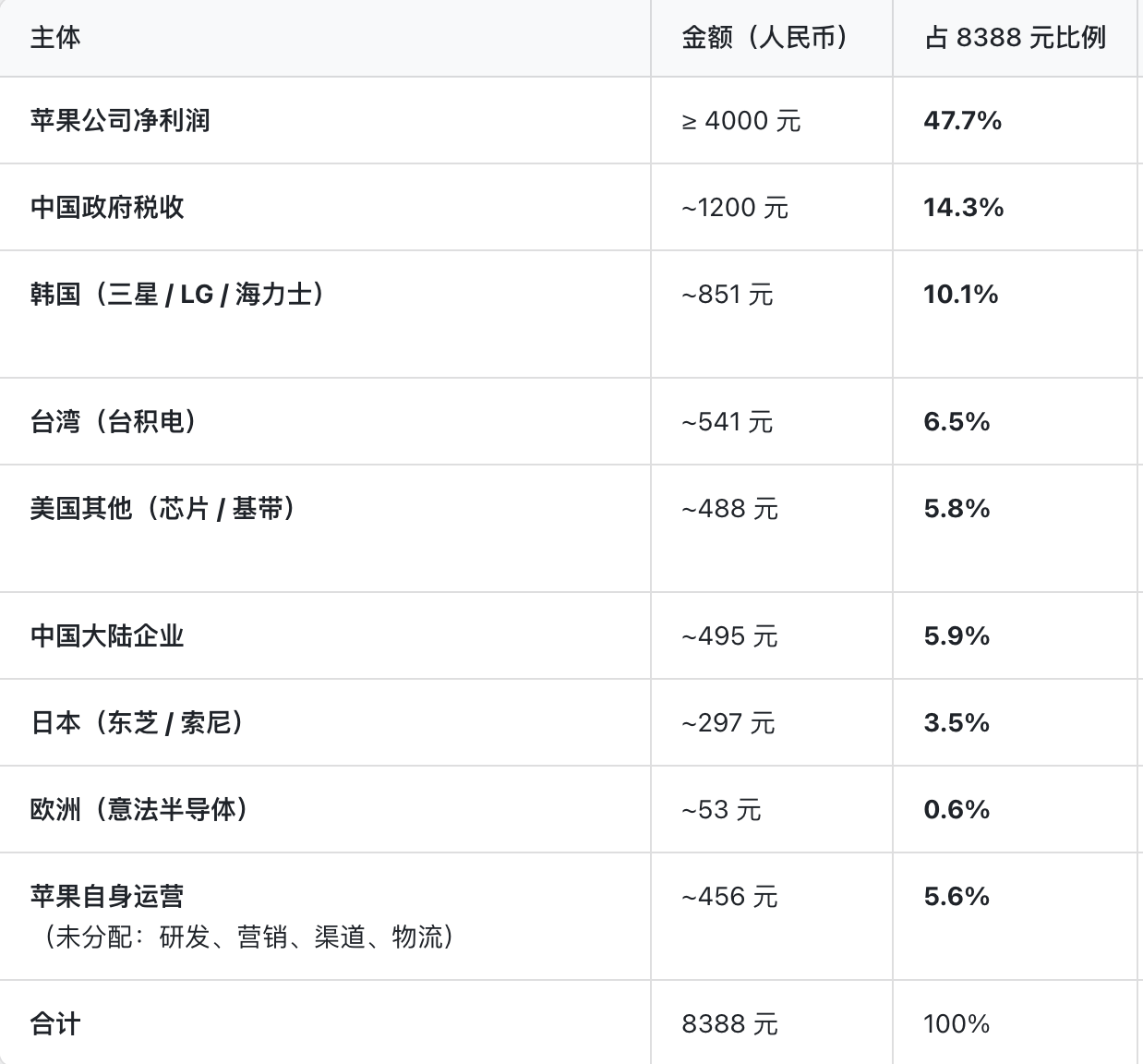
Estimates suggest that Apple captures about one-quarter of the profit from each iPhone (net profit of $320–340 per unit, net margin 33%–36%), TSMC takes 4%–5% due to its monopoly position, while memory giants get only about one-thirtieth (approximately 3%). Counterpoint data shows Apple has long held nearly 50% of global smartphone operating profit; IDC 2025 data reveals Apple captured about 75% of total industry profit with just 18% market share.
Historical Evolution of Memory Costs: From Negligible to Critical
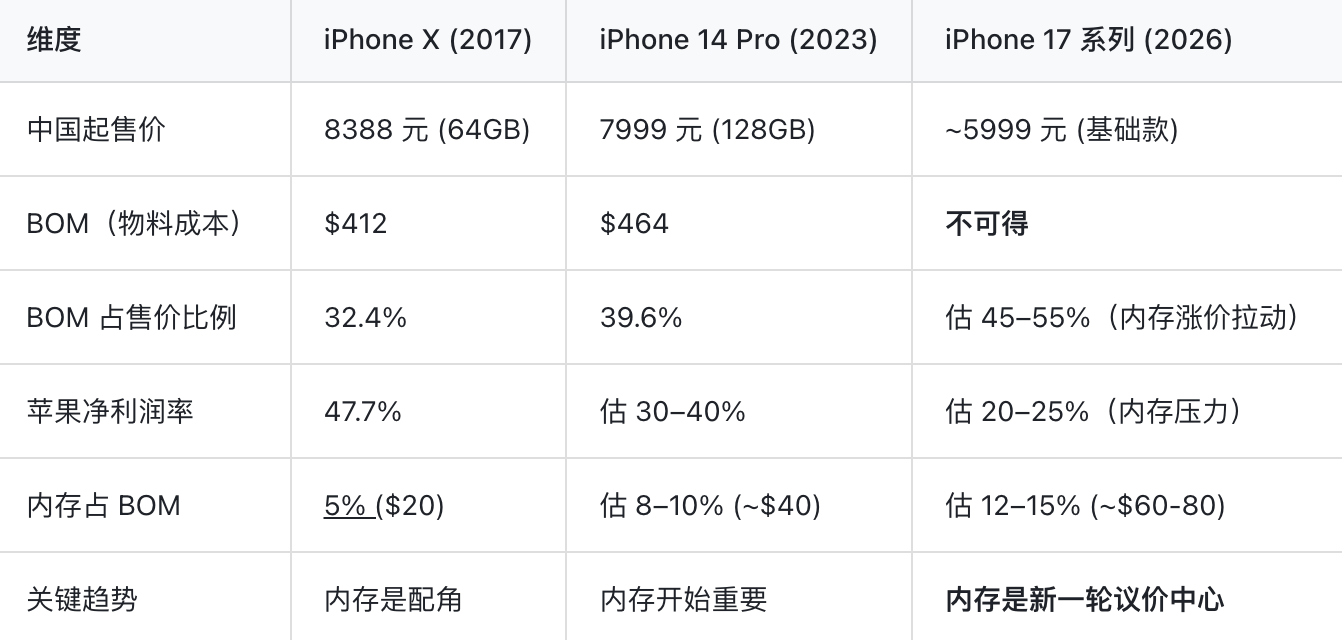
Memory cost in the iPhone has gone through three phases: negligible (iPhone X era ~2%), significant (iPhone 14 Pro ~4%), and now critical (iPhone 17 series ~12%–15%). Key data points:
| Model | Price | BOM Cost | Memory Cost | Memory Share |
|---|---|---|---|---|
| iPhone X (2017) | ~$999 | ~$370 | ~$20 | 1.6%–2.3% |
| iPhone 14 Pro (2023) | ~$999 | ~$464 | ~$18 | ~3.9% |
| iPhone 17 Series (2025–2026) | N/A | ~$400–500 | $60–80 | 12%–15% |
Memory share jumping from 2% to 15% has fundamentally changed Apple's profit structure. TrendForce data shows Q1 2026 general DRAM contract prices increased 93%–98% quarter-on-quarter; Citi expects full-year 2026 DRAM average price growth of 88%.
AI Demand Triggers Memory Bull Market, Apple Forced to Raise Prices Across the Board
The root driver of this memory bull run is the AI industry's insatiable demand for HBM (High Bandwidth Memory) and premium DDR5. Industry estimates indicate that each AI server requires 8x more DRAM and 3x more NAND than a standard server. Samsung, SK Hynix, and Micron have shifted advanced fab capacity to high-margin HBM products, actively cutting consumer-grade DRAM lines, leading to a shortage of commodity DRAM.
Micron's Q3 earnings showed a staggering 84.6% gross margin and revenue of $41.46 billion, up 346% year-over-year. SK Hynix announced a U.S. listing plan seeking ~$29 billion to capitalize further on memory demand. One Nvidia Vera Rubin AI server uses memory equivalent to about 14,500 MacBook Neo units—a 1:14,500 ratio illustrating the severe supply-demand imbalance.
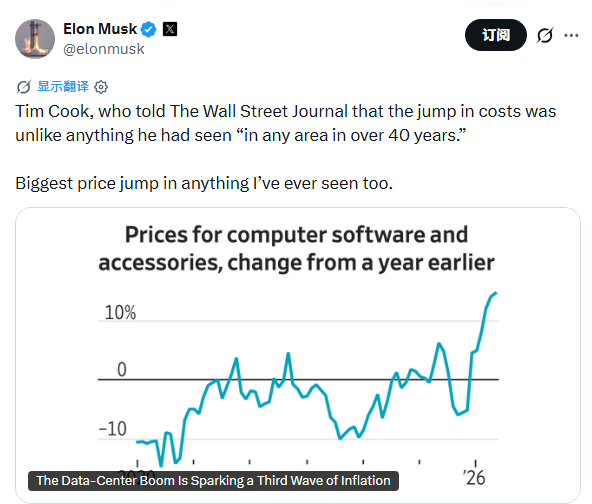
Facing cost shocks, Apple CEO Tim Cook told the Wall Street Journal on June 17 that he "absolutely needs memory pricing to return to reasonable levels." But on June 25, he changed his tone, calling it a "once-in-a-century flood" and announcing price hikes across Mac, iPad, HomePod, Apple TV, and Vision Pro. Apple's stock fell 6% on the news, wiping out $263 billion in market value. Elon Musk later echoed Cook, calling it "the most violent price surge I've ever seen."

Power Shift: Apple Lobbies to Buy from Chinese Memory Startup CXMT
Memory suppliers have transformed from price-taking victims to price-setting powerhouses. Apple is actively lobbying the Trump administration for approval to purchase memory chips from Chinese company ChangXin Memory Technologies (CXMT) to break the Samsung-SK Hynix-Micron oligopoly. CXMT is expected to IPO next month. Whether it can replicate the wealth-creation miracles of SK Hynix and Micron will determine if it can secure a seat at the table.

This classic "big customer vs. big supplier" dilemma is entering a new phase as AI demand continues to intensify. The memory market cake is still growing, and CXMT's IPO results will soon reveal the answer.