
The Power Rebalance Between Apple and Memory Giants: A Decade-Long Profit Struggle
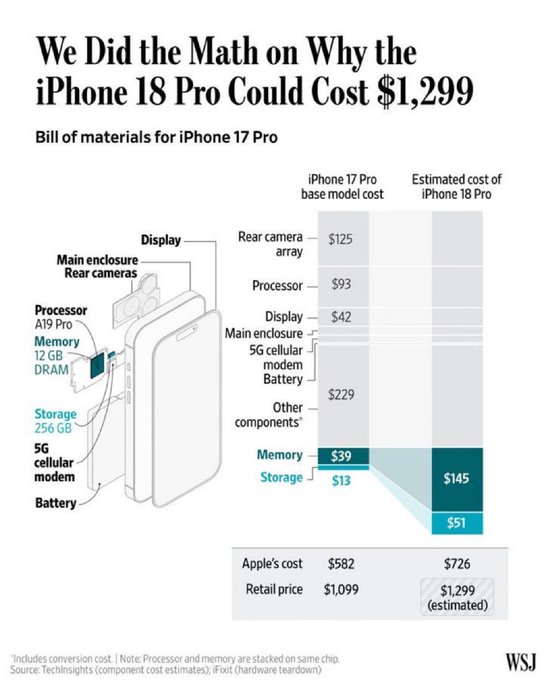
A recent viral post by tech blogger @BluthCapital, voiced as Micron's CEO, sarcastically depicted Apple's supply chain history: Apple bought chips from Micron for $5, put them in metal boxes, and sold them for $99; when Micron tried to raise the price to $7, Apple mocked them; now that Micron charges $50, Apple simply hikes the product price by $250. The post included a cost structure chart for an iPhone 18, showing Apple capturing about a quarter of the profit while memory giants get roughly one-thirtieth.
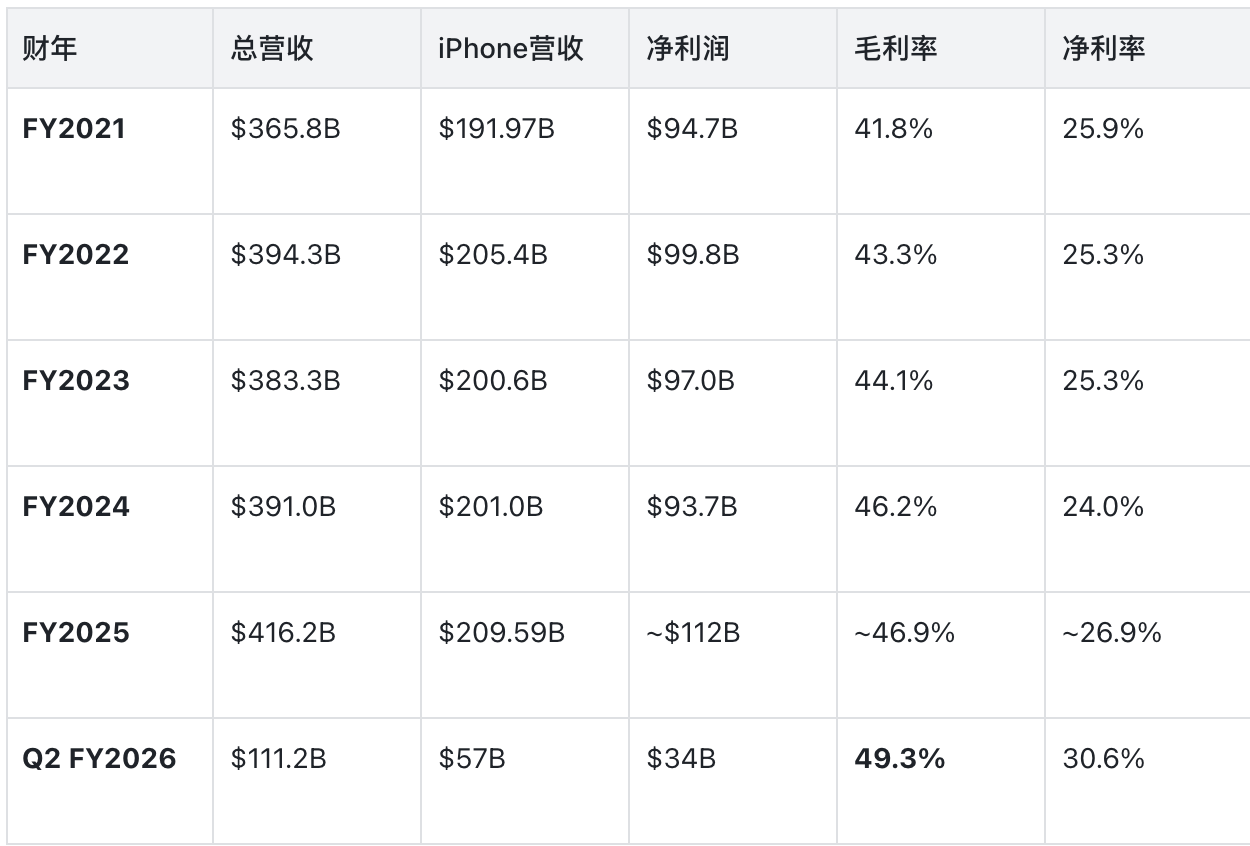
According to Counterpoint and IDC data, Apple has long captured nearly 50% of global smartphone operating profits. In 2025, with an 18% market share, Apple took about 75% of industry net profits. Based on Apple's Q2 2026 fiscal report (iPhone revenue $57B, net profit $34B, shipments ~61M units), per-unit net profit is estimated at $320-340, with net margin of 33%-36%. Over the past five years, iPhone revenue has remained stable, net profit growing from ~$94B in 2021 to ~$112B in 2025, with net margins around 25%.
Three Historical Phases of Memory Cost: From Negligible to Critical
Memory cost in iPhones evolved through three phases: initially a 'side component', later becoming 'important', and now a 'critical component'.
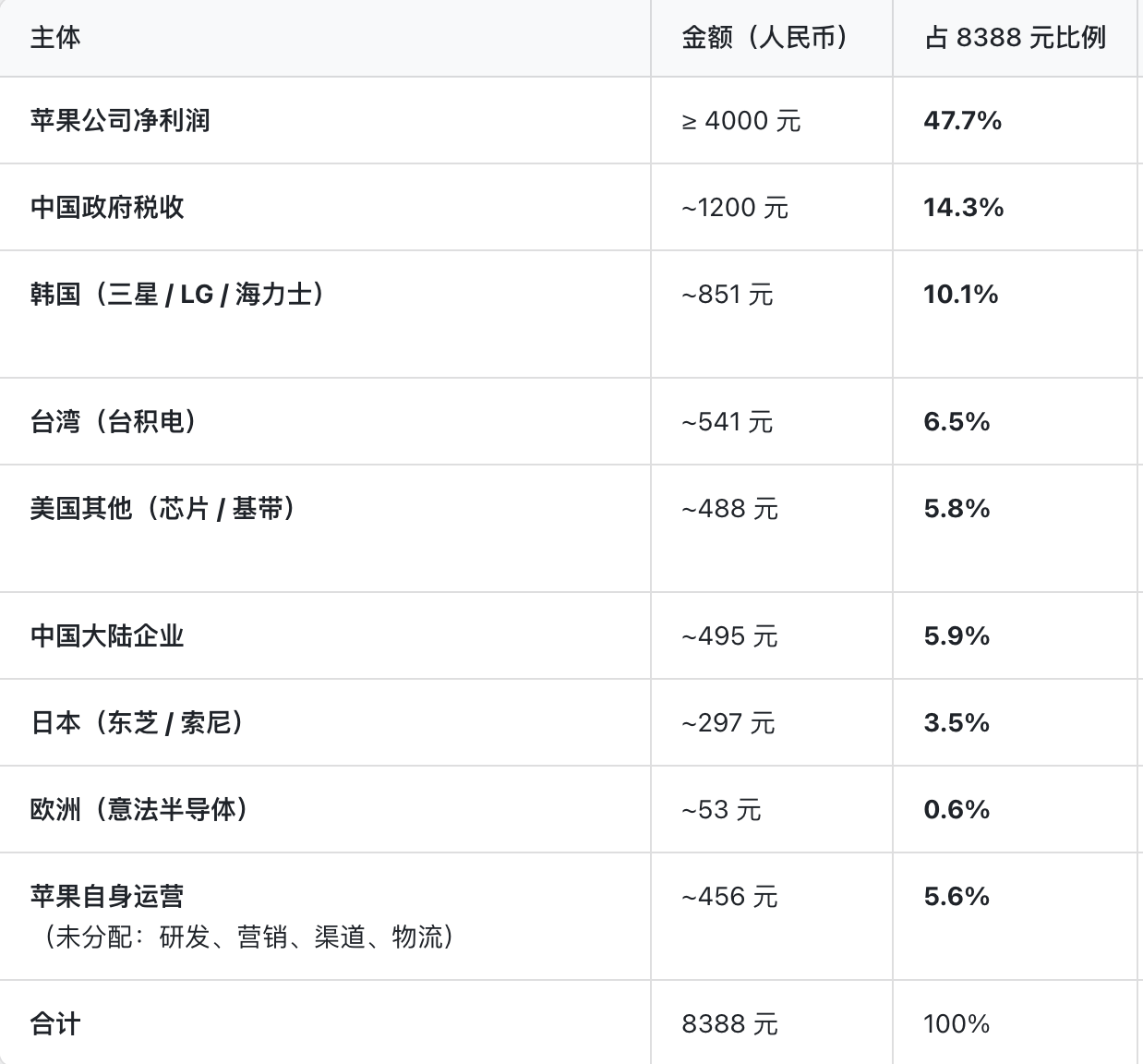
iPhone X era (2017): Apple's net profit margin approached 50%, while memory suppliers like Samsung and SK Hynix earned only about 135-195 RMB per unit, or 1.6%-2.3% of the $1,199 retail price. Memory cost was ~2%, the least of Apple's concerns.
iPhone 14 Pro era (2023): BOM cost reached ~$464 (40% of retail), Apple's net margin still around 40%. Camera and processor price increases led to a 3.7% profit decline vs iPhone 13 Pro. Memory cost share remained below 4%.
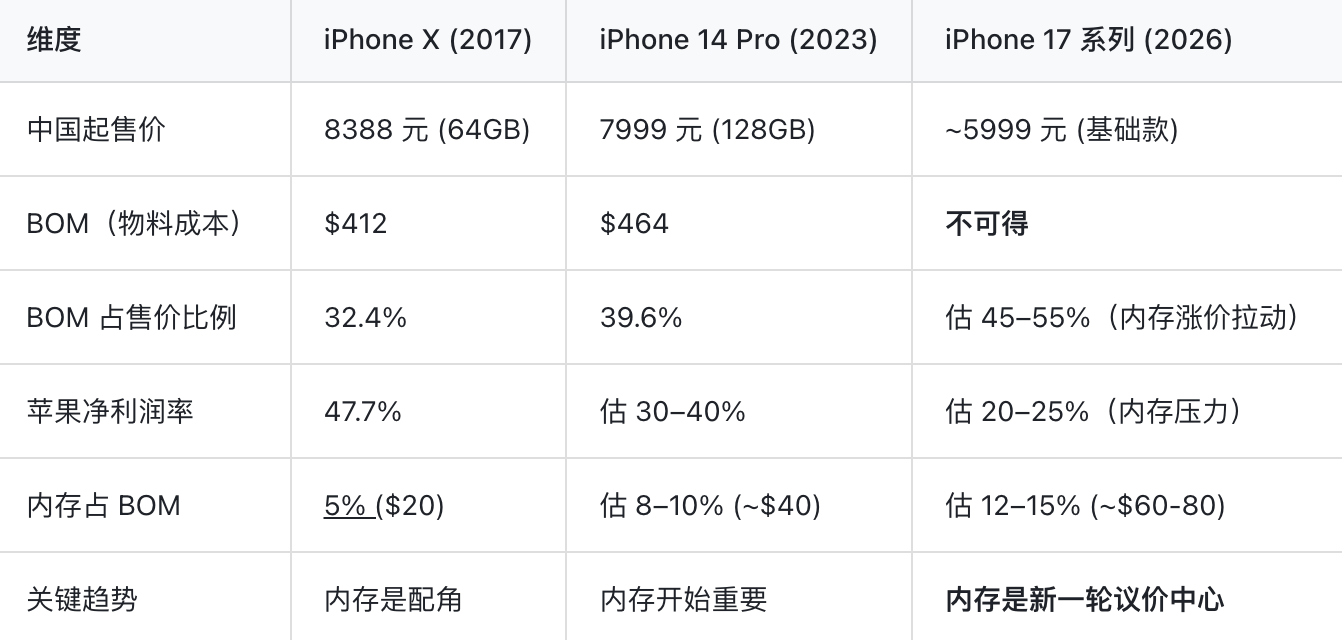
iPhone 17 series era (2025-2026): Memory costs doubled, rising from 4% to 12%-15% of BOM, about $60-80. TrendForce reported DRAM contract price hikes of 93%-98% QoQ in Q1 2026, with Citi forecasting 88% annual increase for 2026.
AI Boom Drives Memory Supercycle: Supply Crunch and Power Shift
The core driver is AI demand. Industry estimates say each AI server requires 8x more DRAM and 3x more NAND than a standard server. Samsung, SK Hynix, and Micron shifted advanced capacity to HBM and high-end DDR5, cutting DDR4 output, leading to spot shortages.
Micron's Q3 fiscal report showed gross margin of 84.6%, revenue growth 346% YoY to $41.46B. SK Hynix announced a U.S. IPO targeting ~$29B. One Nvidia Vera Rubin server uses as much memory as ~14,500 MacBook Neos, illustrating the imbalance.

Apple's '100-Year Flood': Cook's Reversal and Across-the-Board Price Hikes
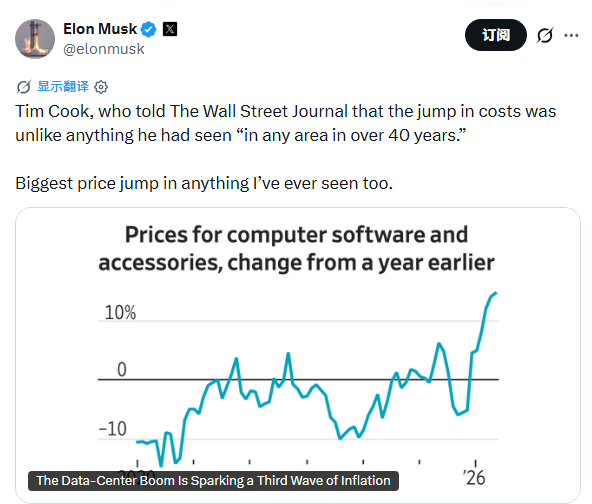
On June 17, Apple CEO Tim Cook told the Wall Street Journal he 'absolutely needs memory pricing and supply to return to reasonable levels'. Less than a week later, on June 25, he called the cost surge a 'once-in-a-century flood', adding he'd 'never seen anything like it in 40+ years'. Apple then announced price increases across Mac, iPad, HomePod, Apple TV, and Vision Pro. Apple's stock plunged 6%, erasing $263 billion in market cap—the worst single-day drop since April 2025.
Elon Musk chimed in: 'Cook told WSJ this cost spike is the worst he's seen in 40 years. Same here. It's the most violent price jump I've ever witnessed.'

Next Inflection: CXMT IPO and Apple's Counter-Strategy
Facing memory monopoly pricing, Apple has been lobbying the Trump administration to approve purchases from Chinese chipmaker CXMT (ChangXin Memory Technologies) to break the Samsung-Hynix-Micron stranglehold. CXMT is expected to IPO next month. Its ability to gain a foothold will partly determine the future landscape. Memory market growth continues, and whether CXMT can replicate the wealth miracle of SK Hynix and Micron remains to be seen.