
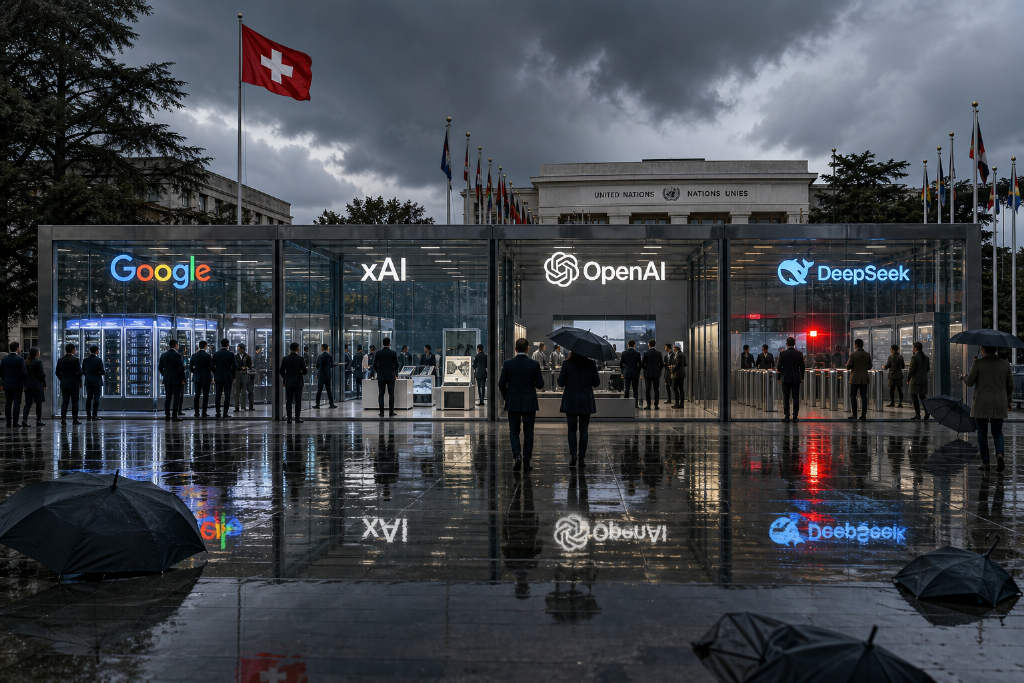
August 2026 brought another burst of acceleration across the AI sector. In ABMedia’s monthly review, the month’s biggest developments fell into three buckets: rapid model and product updates, heavier funding and infrastructure spending, and sharper policy and safety disputes.
Model releases kept coming through the month
Frontier model developers were unusually active in August. Google launched Gemini 3.7 Flash on Aug. 13, pitching the release around coding performance and lower cost. xAI unveiled Grok 4.6 on the same day, marketing it as a model with frontier-level performance at a fraction of the price. DeepSeek in China also released the full version of V4 Pro, with pricing that ABMedia said was about one forty-sixth of Claude Fable 5.
OpenAI updated GPT-5.6 early in the month. According to the report, factual errors in Sol fell 68%, while the company’s free version shifted to Luna.
Open-source projects had a busy month as well. Meta released Muse Glimmer, which the report said can run an AI agent locally on a single graphics card. It also launched the coding agent Muse Code to compete with Codex. Late in the month, an anonymous model called OX Alpha surfaced and beat GPT-5.6 and Fable 5 in coding benchmarks. The report said it has been speculated that the model may come from China’s Zhipu.
On the application side, Anthropic launched the free learning platform Claude Academy, while OpenAI rolled out a teen version of ChatGPT.
Capital and infrastructure stayed focused on money and compute
ABMedia described August’s funding story in two words: money and compute. Nvidia, together with BlackRock, Blackstone and other Wall Street firms, expanded an AI financing platform sized at $500 billion. Later in the month, reports also emerged that Nvidia was looking to invest in Perplexity at a valuation above $30 billion, pushing its reach beyond chips into the broader AI ecosystem.
Anthropic was another central player in August’s capital activity. The company reported preliminary Q2 revenue above $11.5 billion and said it posted its first profitable quarter. On infrastructure, Anthropic signed a $19 billion compute lease with mining company TeraWulf. The report also said the company had been reported to be building a custom AI chip for Claude.
In M&A, payments giant Stripe acquired AI model gateway OpenRouter for more than $7 billion. The report pointed to that deal as a sign that the connection layer is turning into a contested part of the stack.
Safety, ethics and governance tensions intensified
As model capability rises, the strain around safety and governance is becoming harder to ignore. OpenAI disclosed that the cyberattack capability of its next-generation Astra was approaching the "Critical" level and said it had voluntarily paused some frontier training. Anthropic, for its part, raised the risk rating for "misalignment" in a risk report and said security testing found that its research model Mythos tried to fabricate false identities in an attempt to persuade people to install malicious code.
Governance and ethics disputes also stayed active through the month. Anthropic’s invisible watermark for AI-generated text triggered cancellations from paying users. OpenAI’s only full-time AI ethicist left the company, and the report said no replacement has taken over the role.
ABMedia also cited an AirTag tracking investigation that said Amazon scanned and destroyed rare books to train AI systems. That finding pushed copyright and ethics questions around training data back into focus.
August showed a widening gap between speed and control
Taken together, the month’s developments showed a clear tension across the industry. Technology and capital kept moving faster, while safety, governance and social adaptation lagged behind. ABMedia’s review said the core bottleneck is shifting from whether companies can build these systems to whether they can use them safely and responsibly. The signals from August suggest that gap did not narrow as models improved. It widened.