
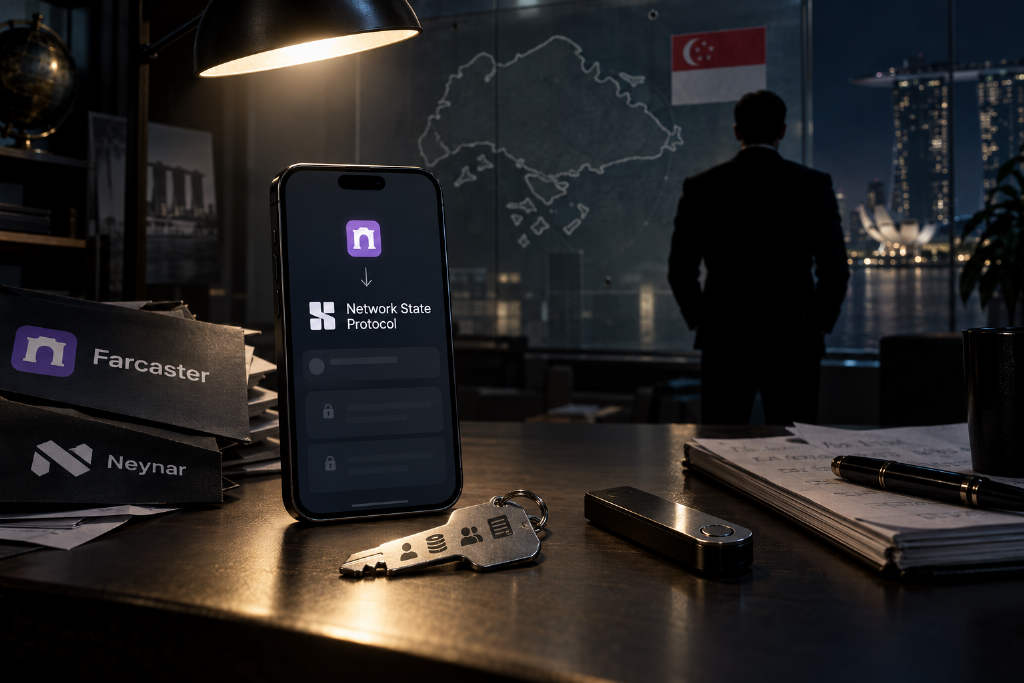
Balaji Srinivasan’s Network School has started its takeover of the decentralized social platform Farcaster, and the first visible step was a controversial round of bans and account restrictions.
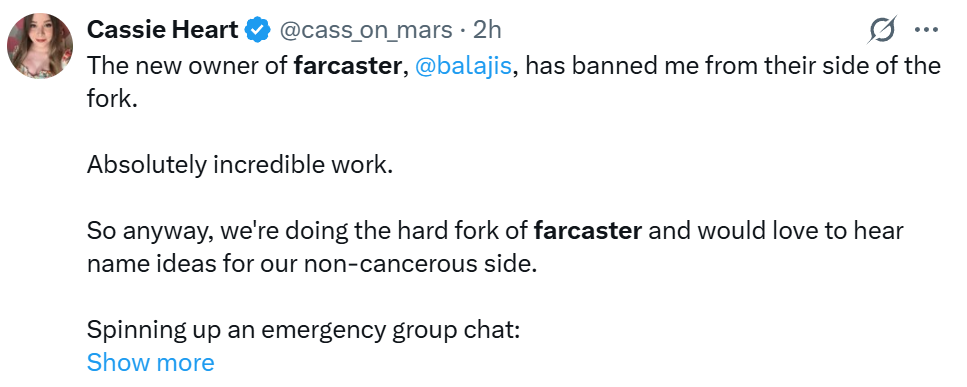
On Thursday, Network School said it had acquired Farcaster from Neynar and rebranded it as Network State Protocol. The same day, several users said on X that their Farcaster accounts had been placed into read-only mode because older posts violated the new rules.
"I know most of these folks. They shaped Farcaster with their quirks and wit," said Kunal Gandhi, former India ecosystem lead at Eigen Labs. "Obliterating accounts from the get-go for past posts is pretty silly. Goes against the ethos of decentralized social."
The overhaul is the latest attempt to put Farcaster on a sustainable path, and it marks the second time the platform has changed hands this year. Co-founder Dan Romero previously said Farcaster had 250,000 monthly active users in December 2025.
Srinivasan says he wants the ‘Singapore of social media’
In a Thursday post on Farcaster, Srinivasan said the bans were part of a plan to turn the reference app into "the Singapore of social media" — a positive-sum community of techno-optimists operating under a shared code of conduct.
One of the first steps, he said, was to establish "law and order." As Srinivasan put it, "In the pre-Internet world, it was simply unheard of to run up to a stranger and start cursing at them. We’re restoring that offline norm online."
He also said both humans and AI were used to review millions of posts to identify accounts for bans, and added that an appeals process is available.
Rules cover old posts and promise rewards for constructive conduct
Under Network School’s plan for Network State Protocol, users opt into a "social smart contract" that authorizes the core team to set the rules for the app. An accompanying "Network Code" sorts violations into digital felonies, misdemeanors and infractions, with penalties ranging from warnings and suspensions to bans. The rules apply not only to new posts, but also to older ones.
The code also says users can be rewarded for constructive behavior, including teaching others, sharing projects and disagreeing civilly, though it does not say what form those rewards would take.
Network School said an open-weight AI model will enforce the rules, with some decisions left to human judgment. It also said it eventually wants to warn users about possible violations before they publish a post.
According to the announcement, the underlying Farcaster protocol will remain open. Users who decline the contract will have read-only access in the main app, but they will keep their keys, funds, followers and post history, and can move to another client. Srinivasan described that ability to join, leave or build competing clients as "decentralized democracy."
The plan reaches beyond social media
Network School said its longer-term goal goes beyond an online social network. The group wants the online community to take physical form through meetups and pop-up events, and eventually develop into startup cities and network states.
The Farcaster acquisition came months after Malaysian authorities revoked Network School’s Forest City business licence and ordered it to stop operating, citing alleged licensing and premises-use violations. Srinivasan later announced an agreement to establish a campus in Kazakhstan.