


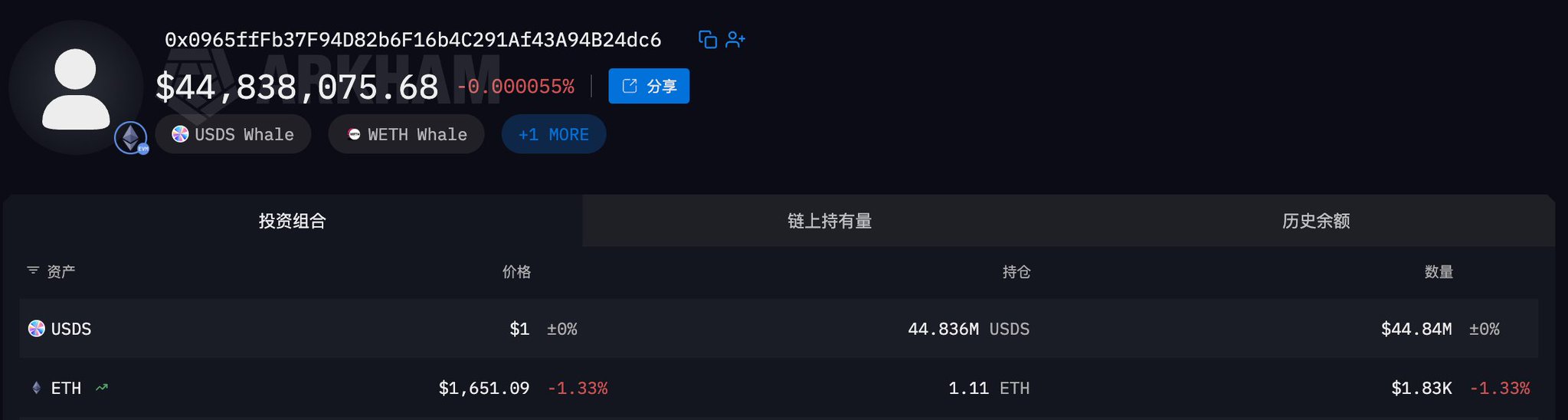
According to on-chain data analysis, a whale who participated in the Basic Attention Token (BAT) Initial Coin Offering (ICO) in 2017 — and ultimately realized a profit of $23.77 million from that investment — has suddenly become active after six years of dormancy. In less than two days, the address completely liquidated its entire holdings of 27,586 ETH, receiving approximately 44.836 million USDS in return. The move has sparked widespread discussion within the crypto community, as observers note the whale's astonishing gains and the long-term holding period before cashing out.
Background: The BAT ICO Whale's Identity and Profits
The whale participated in the BAT ICO in May 2017 (about nine years ago), acquiring tokens at the ICO price of roughly $0.03 per BAT. Through subsequent on-chain sales of 35 million BAT tokens between 2017 and 2019, the whale converted the proceeds into 27,586 ETH. The address then remained completely inactive for nearly six years until June 25, 2026. During the bear market, the whale held these ETH without any transactions, making it a classic example of a long-term hodler.
Liquidation Timeline: Two Batches Over Two Days
The on-chain analytics platform EmberCN (operated by analyst @EmberCN) tracked the whale's movements in detail. The liquidation process unfolded in two distinct stages:
- Stage 1 (first two days): The whale sold 12,586 ETH for 20.59 million USDS, at an average price of $1,636 per ETH.
- Stage 2 (two hours ago): The remaining 15,000 ETH were sold in a single transaction, yielding 24.29 million USDS at an average price of $1,619 per ETH.
In total, the whale disposed of all 27,586 ETH at a blended average price of $1,625, netting 44.836 million USDS. Given that the initial BAT ICO cost was minuscule compared to the Ethereum proceeds, the whale's actual profit multiple is many times larger than the headline $23.77 million figure often cited. The final cash-out locks in a massive return on the original ICO investment.
Market Implications: What Whale Moves Tell Us
While the absolute size of the liquidation ($44.8 million) attracted immediate attention, it is worth noting that the selling was executed in a relatively orderly fashion and did not cause any significant price disruption in the ETH market. This event serves as a reminder for investors: the actions of early ICO participants with massive holdings can provide signals about sentiment and potential future price direction. When a long-dormant whale awakens and sells in size, it often reflects a change in the holder's outlook — whether due to price targets, risk management, or personal circumstances. However, individual address activity should never be interpreted as a market forecast; investors are advised to combine such data with broader on-chain metrics and fundamental analysis.