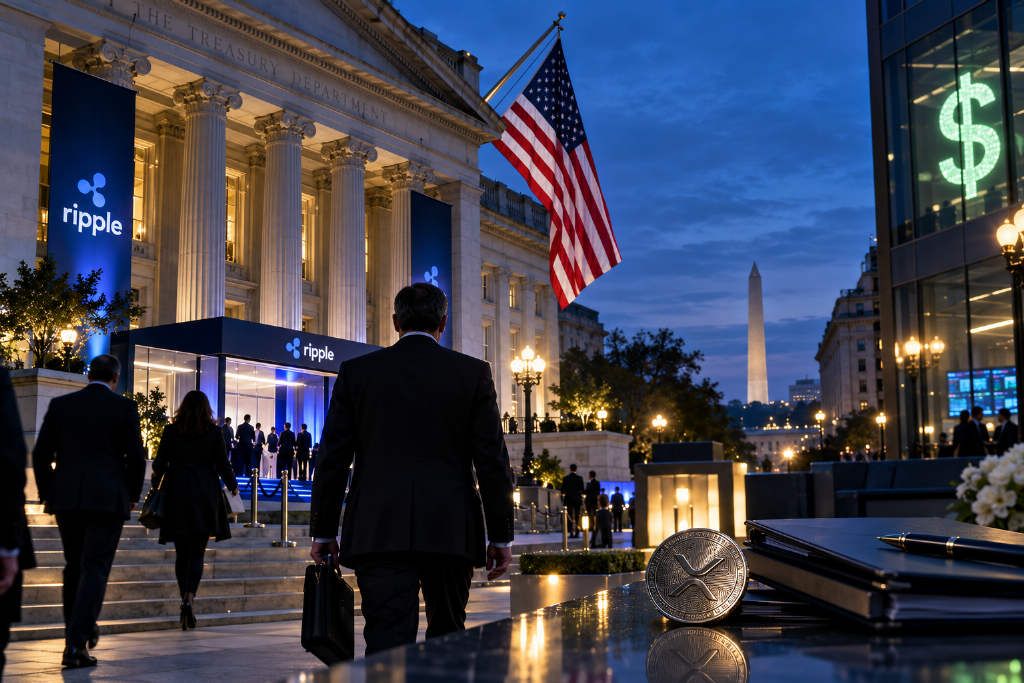
U.S. Treasury Secretary Bessent said crypto could become America’s next tool for keeping the U.S. dollar on top, according to a CoinDesk report published on Oct. 27, 2026. He made the remarks while speaking at a Ripple conference, where he linked digital assets to a broader policy goal tied to the dollar’s standing.
Bessent also said actions by the U.S. Securities and Exchange Commission and the Commodity Futures Trading Commission could help cover part of the gap left by the failure of the Clarity Act. In the same remarks, he said those regulatory moves could also help curb crypto debanking, a reference to banking access problems faced by parts of the digital asset sector.
The report was written by Krisztian Sandor and edited by Nikhilesh De. No additional details were provided in the source summary beyond Bessent’s comments, the venue, and the agencies he referenced.
U.S. Treasury Secretary Bessent said crypto could become America’s next tool for keeping the U.S. dollar on top.
Bessent made the remarks at a Ripple conference
According to CoinDesk, Bessent made the comments while speaking at a conference hosted by Ripple. He said actions by the U.S. Securities and Exchange Commission, or SEC, and the Commodity Futures Trading Commission, or CFTC, could help fill the gap left by the failure of the Clarity Act.
He also pointed to crypto debanking
Bessent said those actions could also help curb crypto debanking. The CoinDesk report was written by Krisztian Sandor and edited by Nikhilesh De. It was published on Oct. 27, 2026.
This article was originally published by Bit.Fan. For more cryptocurrency news and market insights, visit www.bit.fan. Disclaimer:
The market information, project data, and third-party content displayed on this platform are for industry information sharing only and do not constitute any form of investment advice or return commitment.
Cryptocurrency trading carries high risks. Users should fully assess their risk tolerance and make independent decisions. All profits, losses, and legal responsibilities are borne by the users themselves.