
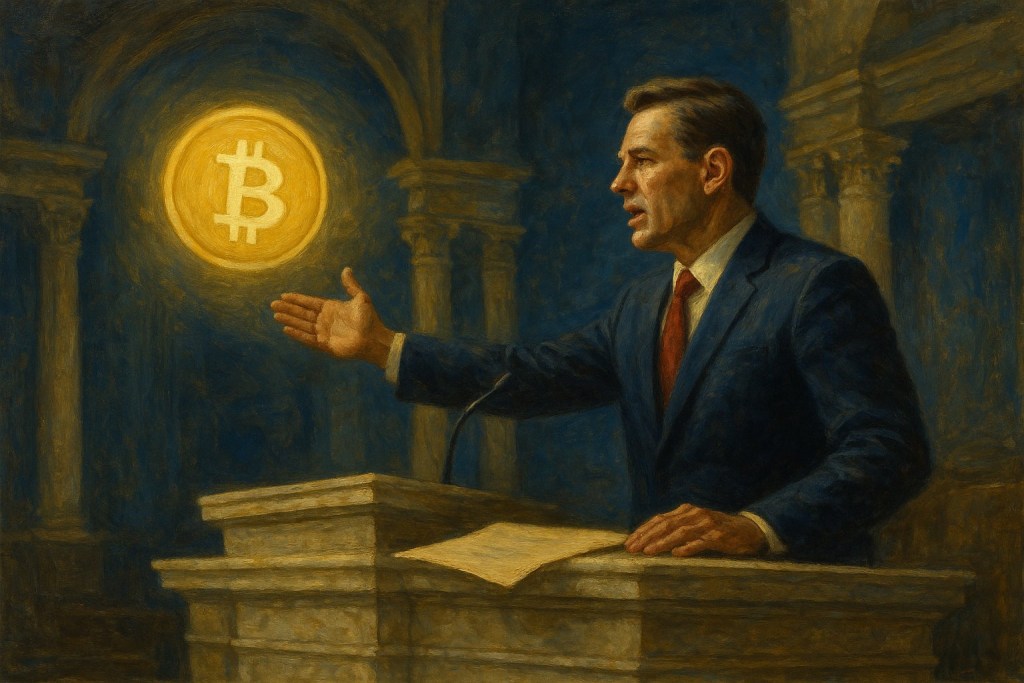
U.S. Treasury Secretary Scott Bessent used a July 30 post on X to call on the Senate to vote immediately on the CLARITY Act before lawmakers leave for the August recess. The measure is a digital-asset market structure bill, and Bessent gave his appeal extra visibility by ending it with a quote from Bitcoin creator Satoshi Nakamoto.
Bessent says the Senate should act now
In the post, Bessent said the Senate should vote “immediately” and blamed Democrats for holding up the measure for political reasons. He said the House passed the bill more than a year ago and that bipartisan staff on Senate committees had already spent “thousands of hours” on a revised version.
He argued that the legislation would tighten consumer protection and anti-money laundering requirements while giving digital assets a clearer regulatory framework. Bessent also singled out Senator Elizabeth Warren as a main source of opposition. He added that the Fraternal Order of Police now supports the legislation.
A Satoshi quote closes the message
The most closely watched part of Bessent’s post came at the end. He wrote: “I believe Satoshi said it best — ‘If you don t believe me or don t get it, I don t have time to try to convince you, sorry.’”
The line comes from a 2010 forum post by Satoshi Nakamoto and has long been treated as a classic quote inside the Bitcoin community. Its use by a sitting U.S. Treasury secretary in support of crypto legislation drew added attention to the post.
Senate progress remains uncertain
Even with Bessent’s public push, the bill’s prospects before the recess remain shaky. Senate Majority Leader John Thune has already said the measure may be difficult to move before the August break because disagreements over ethics provisions have not been resolved.
August 7 had been viewed by the market as a key date, and the Senate could still hold a procedural vote first. Final passage, however, may be pushed back until after the recess. The report also linked that outlook to earlier coverage saying the Senate had paused the bill and that its odds of passage had fallen to about 37%.