
Tokenized stocks are now facing a question that goes beyond infrastructure: once an asset is onchain, how do you get people to actually hold it and use it?
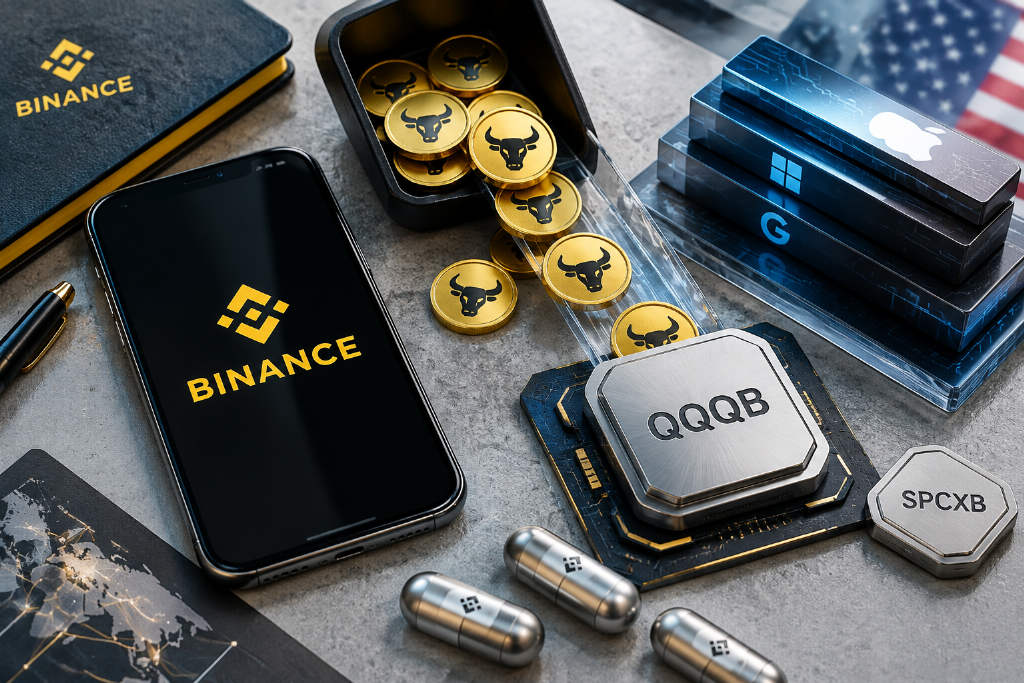
On Sept. 28, Binance said it would support a distribution of QQQB to eligible holders of the Meme token "Niulai." QQQB is a bStocks tokenized security tied to the Invesco QQQ Trust. The reward has two parts: an onchain airdrop arranged by the project team, and an extra allocation funded by Binance using 30% of spot trading fees generated by Niulai. Over the same period, MarsCoin holders are also set to receive SPCXB, a SpaceX-linked tokenized asset, under a similar arrangement.
What stands out here is not simply that Meme coin holders are receiving a stock-linked token. The structure connects two assets that usually speak to different user groups. One side draws attention through community momentum and trading heat. The other is trying to bring traditional financial exposure into crypto-native markets.
Meme tokens become the entry point
Discussions about tokenized stocks have often centered on whether the product works at all: can it trade around the clock, how are the underlying shares custodied, and how does the token connect back to traditional markets? Those questions matter at launch. After launch, another one takes over: why would users leave a familiar brokerage account for a new tokenized instrument?
For many investors, putting a stock onchain is not enough on its own. If all they want is price exposure to a stock or an ETF, existing channels already provide that. An onchain product has to fit into trading behavior users already have, or offer an experience the older route does not provide.
The Niulai reward structure is a distribution experiment built around that reality. It does not ask users to understand the full bStocks framework before buying QQQB. Instead, it gives a segment of users who are already trading a Meme token their first contact with a tokenized stock product through a holding reward. The conversion path is straightforward: community attention and trading activity gather users first, the stock token lands in their accounts as a reward, and only then does the market find out whether they want to keep it or use it.
Still, exposure is not the same as demand. What matters more is what happens after users receive QQQB: do they hold it, use it in other onchain settings, or sell it immediately?
A reward loop built on trading fees
The source of the reward is the most important part of the design. According to Binance, the program includes the project team's onchain airdrop, plus an additional QQQB distribution funded with 30% of spot trading fees collected from Niulai, until further notice.
That reward does not come from fixed income generated by the QQQ ETF itself, and no fixed rate of return is promised. Instead, the setup ties Niulai's trading activity directly to holder rewards. Trading creates fees, a portion of those fees is used to distribute another asset, and that reward can itself become a reason to keep holding Niulai.
Each party gets something out of the arrangement. For the project, the reward can make the token more attractive to hold. For the platform, stronger trading activity can generate fee income. For bStocks, it opens a route into the crypto user base.
The circular nature of the mechanism is also easy to see. If reward expectations pull in more trading, trading volume and the size of the reward pool may rise together in the short term. If trading cools, the source of those rewards may shrink as well. The durability of the model depends on real trading demand, not on the return narrative that may develop during promotion. An airdrop can create first contact. It cannot create long-term utility on its own.
There are also practical conditions attached. Binance's rules use daily random snapshots to calculate balances, and only daily holdings above 10,000 Niulai count as valid holdings for that day. Eligibility is also subject to account status, identity verification, product access rules, and regional restrictions.
Robinhood used a different route
Looking at Robinhood makes the distribution angle clearer.
When Robinhood launched its tokenized stock product in 2025, it gave eligible users in Europe tokenized private-company stock linked to OpenAI and SpaceX. It chose companies with broad public attention but limited direct access for ordinary investors, using those names to pull users toward the new product.
Niulai points in a different direction. Robinhood used sought-after assets to bring users into a tokenized equity product. The Niulai-related setup pushes stock tokens into an existing Meme coin community. Both approaches show that competition in tokenized assets is no longer only about who can issue them. It is also about who controls user entry points and who can lower the barrier to first exposure.
That does not mean the rights attached to these products are the same. Robinhood's terms define its private-company stock tokens as derivative contracts between the user and the platform, which means holders do not become shareholders of OpenAI or SpaceX. Binance has also stated that bStocks are not shares of the underlying company, and holders do not directly own those shares. Even when products are grouped under the label of tokenized stocks, the actual rights still depend on the specific product documents.
The real test starts after the buzz fades
The phrase "hold a Meme coin and receive a stock token" spreads easily. It can also be misunderstood as a low-risk yield story. In practice, users first take on Niulai's price volatility. The amount of QQQB they receive depends on valid holdings, reward funding, and the detailed campaign rules. Even if they receive the reward, it may not offset a drop in Niulai's price. QQQB itself is also not the same as directly holding units of the QQQ fund.
That is why this model cannot be judged only by how much the Meme token rises during the campaign or how much discussion the airdrop generates. The more useful questions come later: whether users still want to hold the stock token after rewards weaken, whether the token moves into more trading or application scenarios, and whether users understand what kind of product they actually own.
The Niulai case suggests that once traditional assets move onchain, the contest shifts from issuance to distribution. Meme coin communities, trading activity, and incentive structures can deliver a first wave of users for tokenized stocks. Whether a one-time airdrop turns into sustained usage is a separate question, and it rests with the product itself.
