
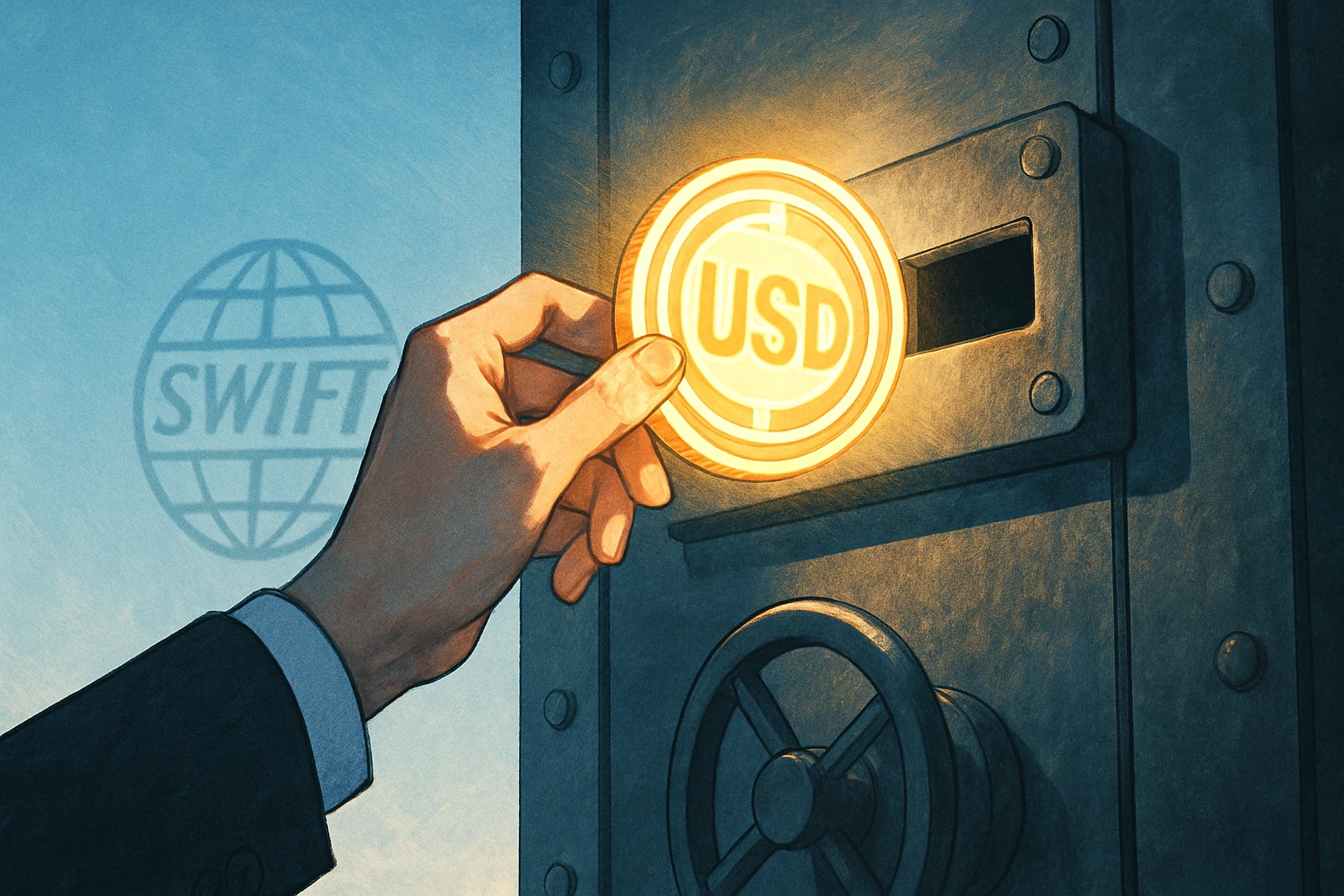
Binance has quietly normalized a feature that allows users to convert USDT to USD and withdraw directly via the SWIFT network—shifting from the opaque P2P market to a standard bank wire process. When a user clicks "withdraw USD," the exchange internally converts USDT to fiat at near 1:1 through its matching engine, then BPay, a subsidiary licensed by the Central Bank of Bahrain (CBB), sends a standard SWIFT MT103 message to the recipient bank. Crypto traces stay inside the exchange; what exits is clean fiat money.
Bahrain License Lets BPay Join the SWIFT Grid
After losing payment partners in 2023–2024, Binance pivoted to owning its infrastructure. BPay Global BSC © holds a payment service provider license from the CBB, enabling direct access to the SWIFT network. The model works as a "front shop, back factory": crypto trades at the front, fiat settlement via SWIFT at the back. Unlike P2P transfers, the remitter is a compliant payment processor, and the bank sees a standard international wire—greatly reducing friction with risk management systems.
Why Reconnect SWIFT? It's About Last-Mile Settlement
On-chain transfers take seconds and cost a few dollars, while SWIFT requires T+2 settlement and higher fees. The rationale is a mismatch in function: blockchain excels at global transport of value, but real-world transactions—real estate, taxes, supply chains—still demand fiat in bank accounts. Binance uses SWIFT only for the final "hop," treating it as a unloading port between the crypto economy and the real economy, not a replacement for on-chain transmission.
Compliance as a Feature: Audit Trail Beats Speed
On January 15, 2026, Bank of Bahrain and Kuwait (BBK) joined Binance Link, enabling API-level connectivity. For high-net-worth users, this means single transfers of $5 million or even $50 million are feasible. The bigger win: withdrawals via official channels generate a full, traceable bank statement—critical under CRS and CARF tax frameworks. A "clean source of funds" carries a premium far beyond a few percentage points in return. Binance sacrifices some censorship resistance (mandatory KYC) in exchange for a passport into mainstream finance.