Swift2026-10-08 08:51:42Swift names new oversight committee members to shape next-generation strategySwift said it has appointed new members to its oversight committee, setting up a group that will help define the company’s next-generation strategy. According to the announcement cited by Techub and sourced to Finextra’s crypto channel, the committee’s task is to align that strategy with the priorities of the global financial community. The group is also expected to support efforts aimed at strengthening resilience and trust across the cross-border ecosystem. The update did not include further details on the members or a timeline for the committee’s work, but it clearly framed the appointments around Swift’s broader role in cross-border financial infrastructure. The announcement was reported by Techub News, which attributed the information to Finextra Crypto.30
Taurus2026-10-07 12:03:35Taurus co-founder says Swift blockchain ledger needs critical internal layersLamine Brahimi, co-founder of digital asset infrastructure firm Taurus, said Swift’s blockchain ledger will need key internal layers before it can reach its full potential. He said the technology shows promise, but warned that missing infrastructure inside the system could hold back broader adoption. Brahimi pointed to identity management and data privacy solutions as examples of the layers still needed. Without them, he said, large-scale use may remain limited even if the ledger technology itself is sound. He also said financial institutions will need to confirm that any such system can meet strict regulatory and operational standards before moving ahead. In his view, building those missing layers is central to whether the effort can succeed. The remarks were cited by Techub News, which referenced CoinDesk.40
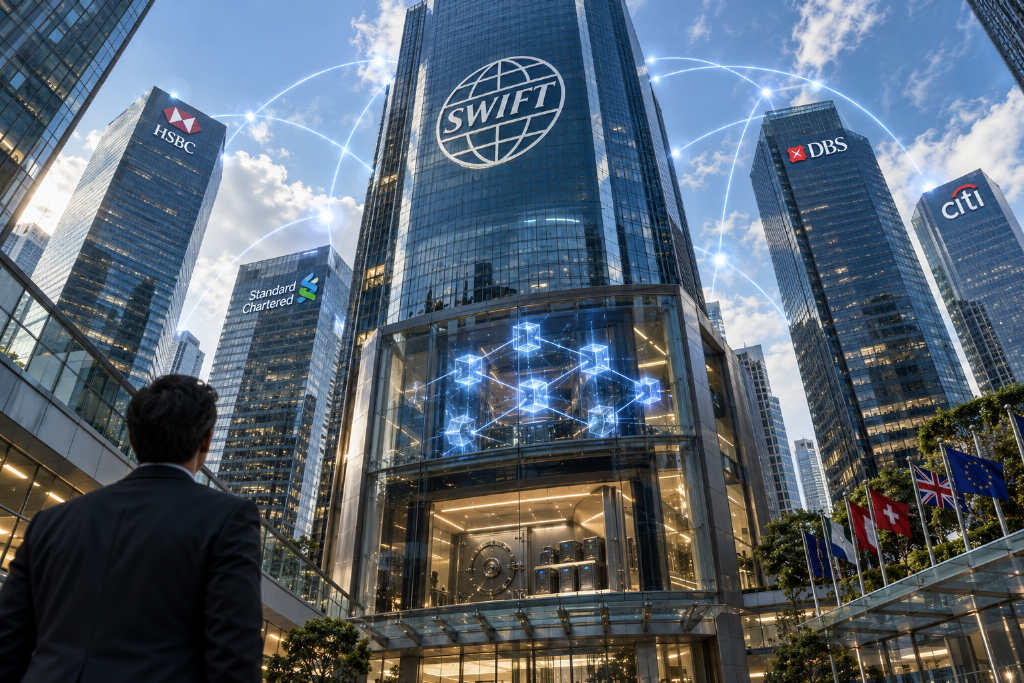
Taurus2026-10-07 12:02:39Taurus co-founder says banks need three capabilities to connect to Swift’s blockchain ledgerLamine Brahimi, co-founder and managing partner of crypto custody and tokenization firm Taurus, said in an interview with CoinDesk that banks need three core capabilities to connect to Swift’s new blockchain ledger: their own permissioned chain to interact with the Swift ledger, wallet functionality, and tokenization and smart contract capabilities to integrate Swift’s smart contracts. He said the setup shows Swift’s ledger is not meant to replace banks’ internal systems. Instead, it acts as an orchestration layer for cross-border, 24/7 transfers of tokenized deposits, while final settlement still runs through existing arrangements. Brahimi added that banks must continue to hold and manage tokenized deposits, digital asset wallets, and related smart contracts themselves. Swift said in July that 17 banks were preparing real-time tokenized deposit transactions. In August, HSBC and Standard Chartered completed the first real-time interbank transaction, while DBS and Citi later carried out a weekend cross-border U.S. dollar payment that cut settlement time from as long as two business days to minutes.30
Swift2026-10-07 11:59:24Banks Need Three Internal Layers Before Connecting to Swift’s Blockchain Ledger, Taurus Co-Founder SaysBanks may be able to use Swift’s new blockchain-based ledger for round-the-clock cross-border transfers of tokenized deposits, but they still need their own digital-asset stack before they can connect, according to Taurus co-founder and managing partner Lamine Brahimi. In an interview with CoinDesk, Brahimi said institutions need three core components in place: a permissioned ledger that can interact with Swift’s ledger, wallet capabilities, and tokenization and smart-contract tools that can integrate Swift’s smart contracts. He said Swift’s ledger should be viewed as an orchestration layer rather than a replacement for banks’ internal systems or existing settlement arrangements. Final settlement still runs through current structures, while banks remain responsible for holding and managing tokenized deposits and the related wallet and contract infrastructure. Swift said in July that 17 banks were preparing live tokenized-deposit transactions. HSBC and Standard Chartered completed the first live interbank transaction on the ledger in August, and DBS and Citi later carried out a weekend cross-border dollar payment that settled in minutes instead of taking up to two business days. Brahimi said the added infrastructure requirement is not necessarily a major obstacle for banks already active in digital assets and should not be seen as a flaw in Swift’s design.40
ANZ2026-10-05 23:08:33ANZ completes cross-border tokenized deposit payment on Swift blockchain ledgerAustralia and New Zealand Banking Group, or ANZ, has completed a real-time corporate treasury transaction using tokenized deposits and Swift’s blockchain ledger, according to Techub, which cited Finextra Crypto. The transaction is framed as a fresh step by a traditional financial institution in putting blockchain infrastructure to work in cross-border payments. It also points to continued experimentation with tokenized deposits as a settlement tool in institutional finance. The report adds that the deal touched both cross-border payment flows and asset tokenization, placing the transaction in two areas that banks and financial market infrastructure providers have been testing more closely. No additional transaction size, counterparties, or corridor details were disclosed in the source item.150
Anchorage Dig2026-10-05 19:09:59Anchorage Digital teams up with Standard Chartered on U.S. dollar accounts and SWIFT accessAnchorage Digital has entered a partnership with Standard Chartered to expand U.S. dollar account services for international institutional clients and add access to the SWIFT payments network. The companies said the arrangement is aimed at making fiat deposits and withdrawals easier for global institutions, while improving the efficiency and convenience of cross-border fund transfers. The update was reported by Techub, citing Crypto Briefing. No additional financial terms or rollout details were disclosed in the brief.90
Chainlink2026-10-02 08:48:43Chainlink and Swift demo automated tokenized equity dividend payments across four blockchainsChainlink used the 2026 Swift Hackathon to present an automated cash dividend payment system for tokenized equities, showing how the process can run across four blockchains from announcement to payment and final reconciliation. The demo combined Swift messaging, the Chainlink Runtime Environment (CRE), and the ISO 20022 standard. According to the report, the setup was designed to coordinate traditional financial market infrastructure with multichain tokenized assets without manual intervention. The demonstration focused on operational challenges tied to corporate actions for tokenized assets such as stocks, especially dividend distribution, and aimed to give institutions a workflow built around familiar interaction standards. Chainlink’s entry placed second in the Swift Hackathon business challenge. The project has not been launched in production and remains a technical demonstration, according to the report, which cited NewsBTC.260
stablecoins2026-10-01 13:50:00MELD co-founder says most businesses convert stablecoins back to fiat right after settlementMost businesses using stablecoins for payments are not keeping crypto exposure on their books, according to MELD co-founder Pankaj Bengani. In comments cited by Cointelegraph, Bengani said data available to the stablecoin payments company shows that the vast majority of enterprises convert stablecoins back into fiat immediately after transactions are settled. He said the main use case today is cross-border business payments rather than holding digital assets. Bengani also said stablecoins are unlikely to replace SWIFT in the near term. Still, he argued they could reduce the need for correspondent banking intermediaries in some payment flows. Even if that happens, banks would continue to play key roles in custody, compliance, liquidity provision, and local settlement. The remarks point to a model in which stablecoins are used as payment rails inside existing financial workflows, while fiat remains the endpoint for most corporate users.240