
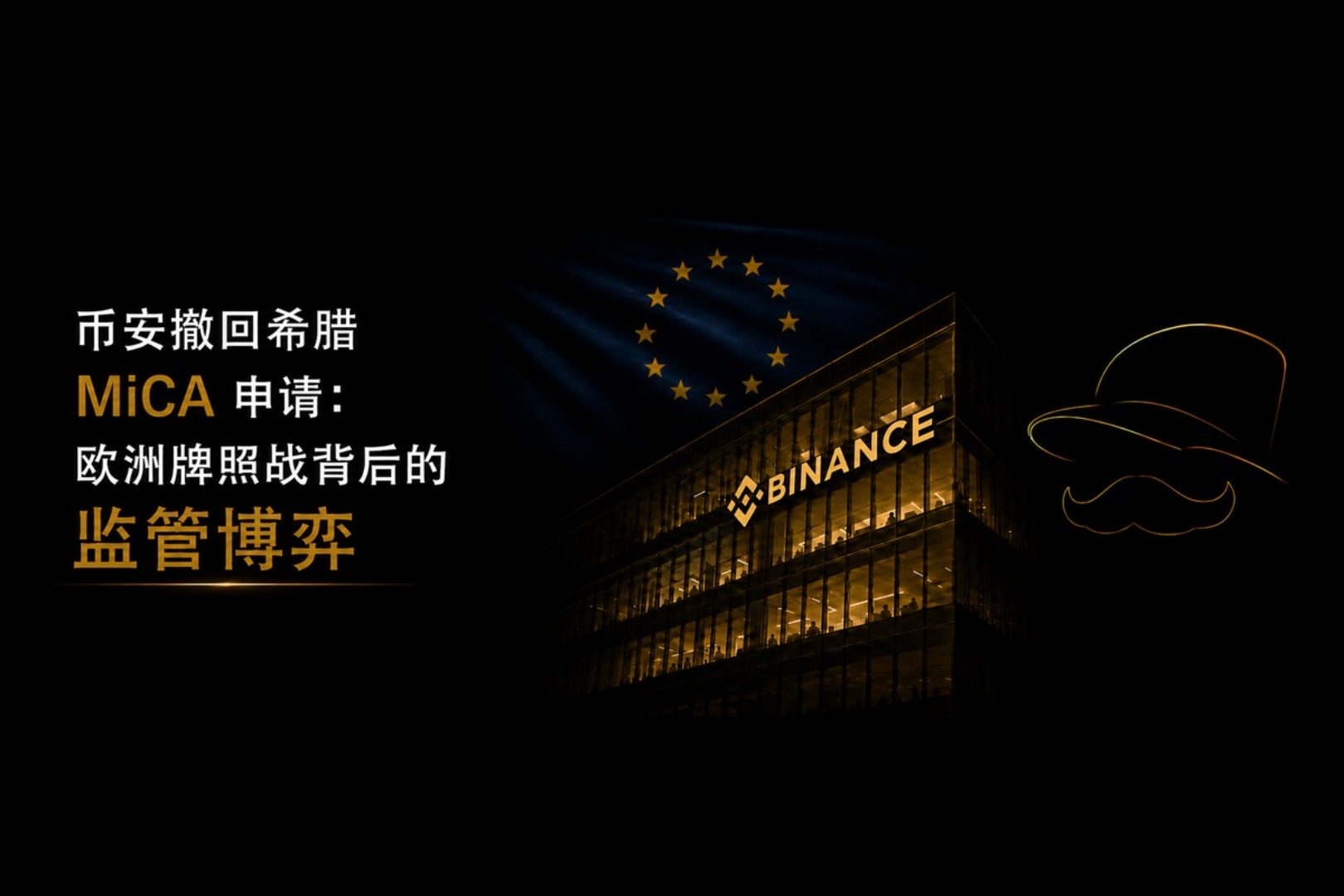
Event Recap: Binance Withdraws Greek MiCA Application
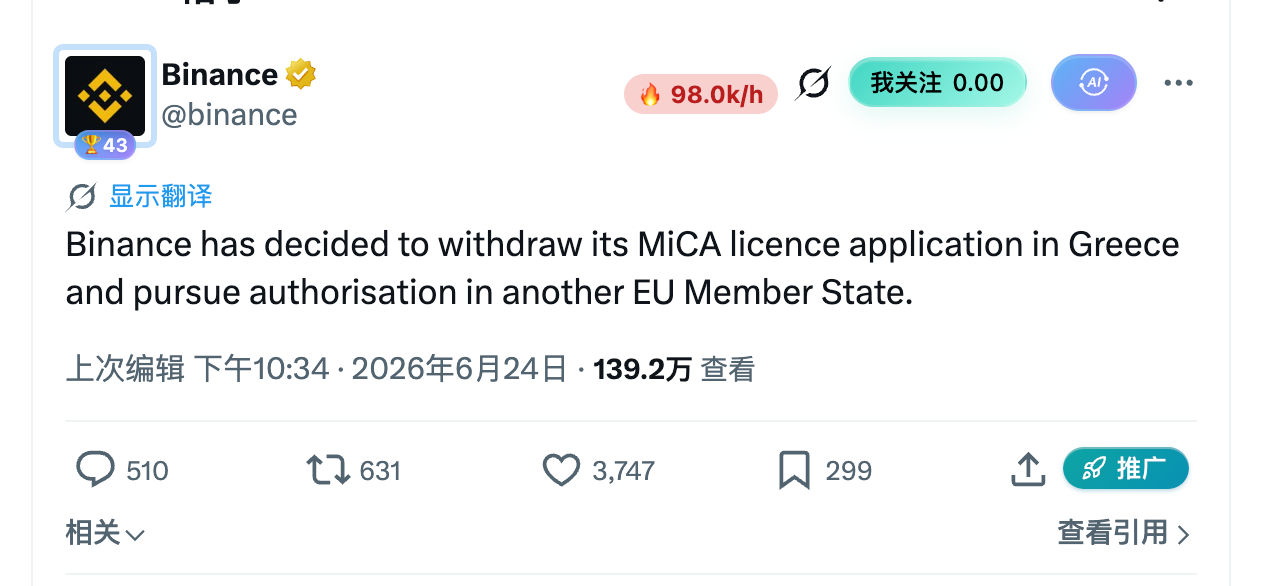
On June 24, 2026, Binance announced the withdrawal of its MiCA (Markets in Crypto-Assets Regulation) authorization application submitted to the Hellenic Capital Market Commission (HCMC) in Greece. According to Binance, the decision followed a careful assessment of the status and timeline of the Greek approval process. The exchange stated it would seek authorization in another EU member state instead. Binance emphasized that user assets remain secure and accessible, and it will directly inform affected European users about subsequent arrangements.
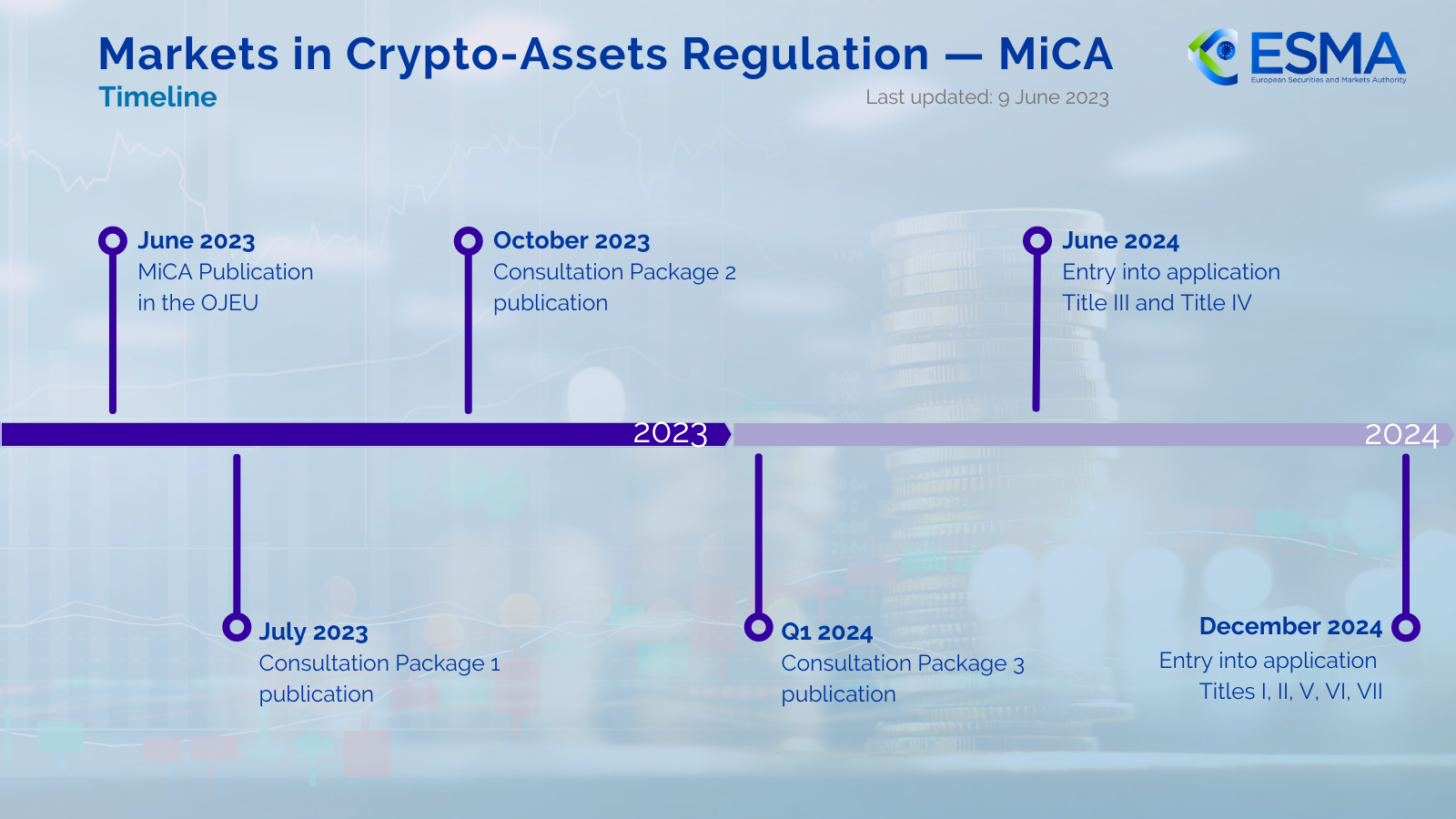
Deadline Looming: MiCA Transition Period Ends July 1
The withdrawal comes just days before the MiCA transition period officially ends on July 1, 2026. The European Securities and Markets Authority (ESMA) has made it clear that after July 1, any Crypto Asset Service Provider (CASP) without MiCA authorization that continues to offer services to EU clients will be violating EU law. Such providers must cease services and execute orderly exits or client migrations. Even holders of local financial licenses from some EU countries will not be able to operate crypto-asset services in the EU after July 1. This creates a hard deadline for Binance: if the Greek application could not yield a clear result before the deadline, the exchange would face enormous pressure on its European operations, customer communications, institutional partnerships, and regulatory narrative.
Why Did Greek Approval Stall? Regulatory Game and 'Politicization'
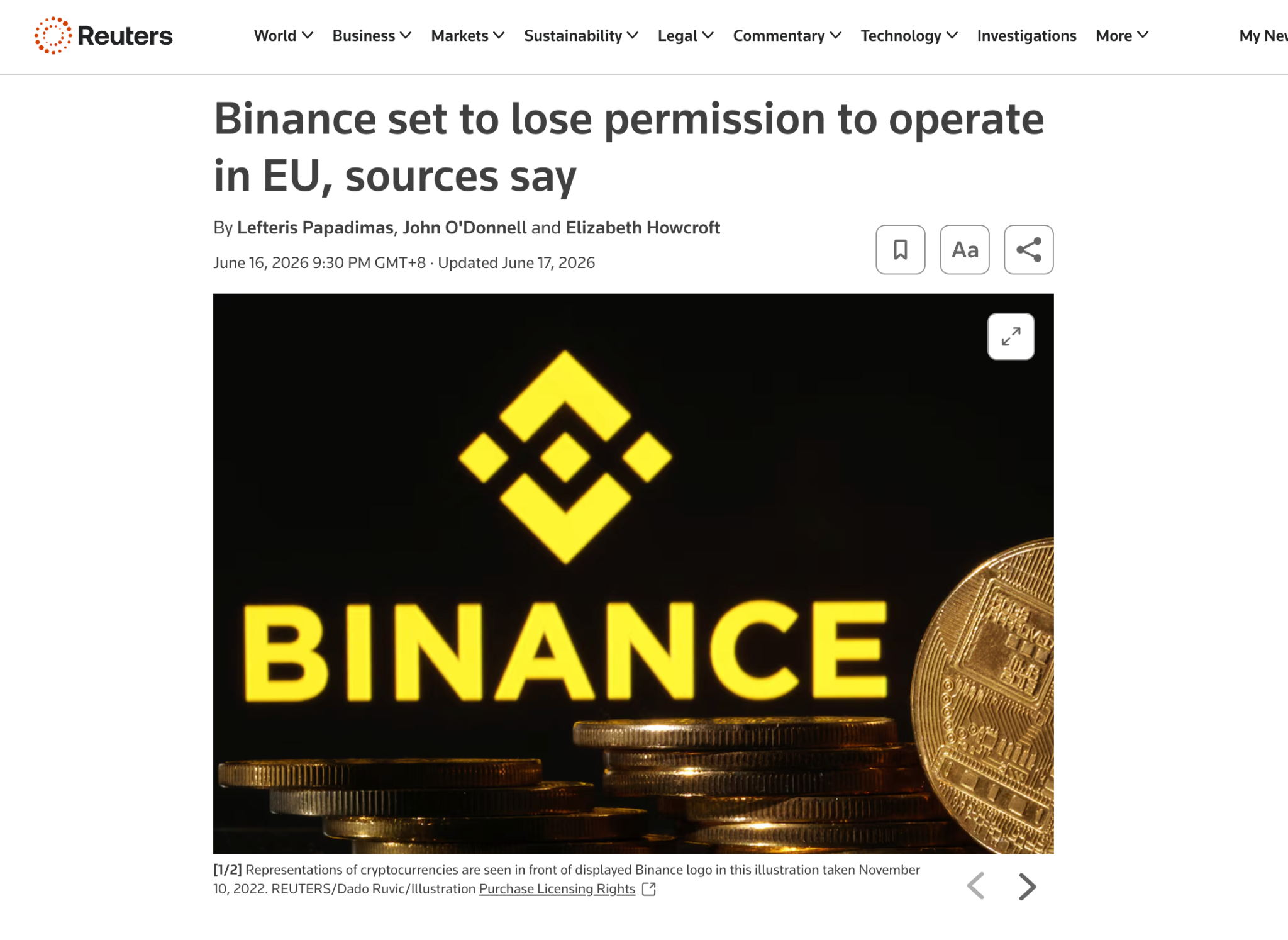
Binance submitted its MiCA application to HCMC in January 2026, initially expecting approval before the July 1 deadline. However, on June 16, Reuters cited sources reporting that Greek regulators were expected to reject Binance's MiCA application. Binance responded by stating that it had maintained constructive cooperation with regulators over the past 18 months and believed HCMC had completed its review, deeming the application compliant with MiCA requirements and even reviewed at the ESMA level. The conflicting accounts indicate the process reached a state of uncertainty.
On June 23, Greek media eKathimerini reported that Binance had withdrawn two applications—one to HCMC and one to the Bank of Greece—and described the process internally as 'politicized'. The report noted that while the Greek government welcomed Binance's investment, advisors from the Bank of Greece and the European Central Bank (ECB) expressed negative opinions. This highlights a deeper regulatory tug-of-war: although MiCA applications are decided by member states, ESMA coordinates oversight, and the ECB wields significant influence over financial stability, banking system risks, and payment systems. A large exchange entering the EU single market through a smaller, more investment-hungry member state raises concerns about standards, making Greece's entry point subject to multiple pressures.
For Binance, waiting for a formal rejection would attach a clear 'MiCA application denied' label, hampering further applications in other member states and trust from institutional clients. By voluntarily withdrawing, Binance retains the ability to control the narrative, buys time to manage European users, and avoids entering the next negotiation with a rejection letter on file.
Binance's European Strategy: From Cyprus to Greece to France?
Binance's European licensing strategy has been evolving. In June 2023, Binance's Cyprus entity voluntarily deregistered from the local crypto asset service provider list, citing the need to concentrate resources on fewer regulated entities in preparation for MiCA. In November 2023, Binance reached a historic $4 billion+ settlement with the U.S. Department of Justice, Treasury, and CFTC over anti-money laundering, unlicensed money transmission, and sanctions violations. CEO Changpeng Zhao (CZ) stepped down and served prison time. This left Binance with a heavy reputational burden. In Europe's regulatory system, past compliance issues do not automatically disappear with a new CEO and fines.
In January 2026, Binance bet on Greece. CEO Richard Teng publicly cited Greece's workforce and security conditions as advantages for a European regulatory hub. After the Greek setback, Binance is likely to turn to France. Binance already holds a DASP registration with France's AMF (since May 2022) via Binance France SAS, covering custody, fiat trading, crypto-to-crypto exchange, and exchange operation. France has a mature digital asset framework, stronger regulatory experience, and greater market influence than Greece. However, the existing DASP registration does not automatically translate into MiCA authorization; French scrutiny could be stricter. Drawing parallels to Coinbase through Luxembourg CSSF and Kraken through Ireland's central bank, Binance needs a member state that can both handle regulatory oversight and support its European business volume.

MiCA's Unified Access and the Regulatory Arbitrage Dilemma
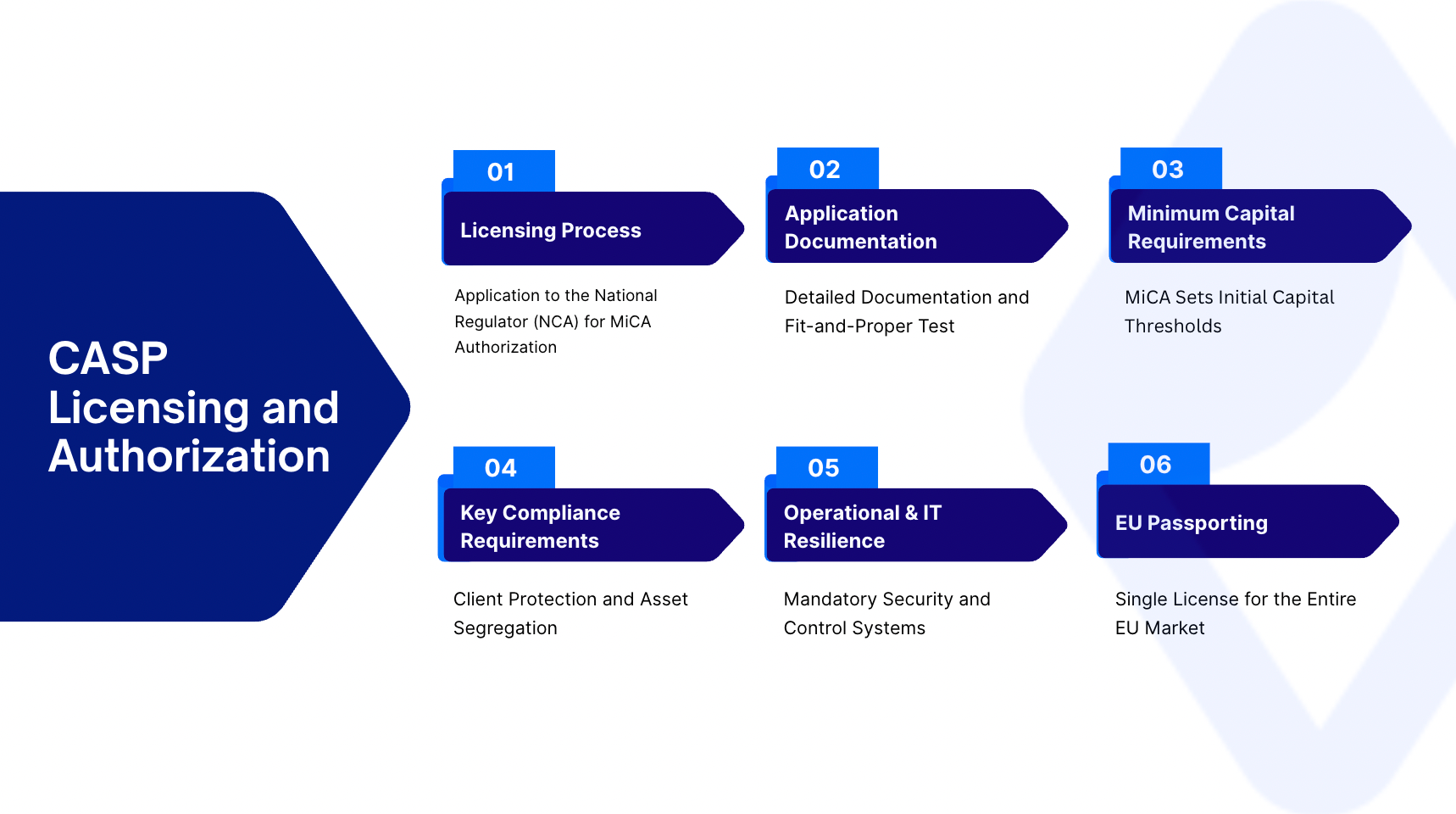
MiCA was designed to eliminate fragmented crypto regulation across Europe by establishing a unified authorization regime with an EU passport mechanism. A CASP licensed in one member state can serve the entire EU market. However, this creates a new form of regulatory arbitrage: if a large, controversial exchange with a heavy compliance history can quickly obtain MiCA authorization through a smaller, resource-constrained member state eager for investment, it could undermine standards across the bloc. Countries with stronger regulatory frameworks—such as Germany, the Netherlands, and France—fear that standards would be lowered. Consequently, ESMA and the ECB exert influence behind the scenes to ensure consistent implementation.

The 'politicization' reported by Greek media reflects this contest: it transcends local investment and jobs, touching on EU financial sovereignty, regulatory reputation, and competition among member states. Greece's desire to attract Binance for investment, tax, and fintech credibility clashed with institutional caution from the ECB and Bank of Greece.
Competitive Landscape and Market Impact
As of June 2026, Coinbase has obtained MiCA authorization through Luxembourg's CSSF, while Kraken has secured it via the Central Bank of Ireland. These platforms now enjoy regulatory certainty, enabling them to compete aggressively for institutional clients, compliance-sensitive users, and banking/payment partners. Although Binance retains global liquidity, emerging market coverage, and a full product suite, its short-term European revenue will likely suffer. More critically, Europe serves as a shop window for global regulatory credibility. Failure to secure MiCA could slow Binance's legitimacy rehabilitation, affecting bank partnerships, institutional capital flows, stablecoin and RWA expansions, and how other jurisdictions perceive its compliance capabilities.
In the long run, a unified regulatory framework will favor platforms with higher compliance costs, more transparent governance, and lighter historical baggage. Traditional finance players entering crypto custody, tokenization, and payment settlement will also benefit. A clear stratification is emerging: compliant exchanges serve institutional capital, while DEXs and non-EU platforms cater to native, aggressive crypto demand. For Binance, the potential pivot to France will be slower, more expensive, and a true test of whether it can repair the trust deficit with global regulators.