
Unprecedented ETF Exodus: Institutional Outflows Hit Records
U.S. spot Bitcoin ETFs have been the primary catalyst behind the latest dip. Since mid-May, these products have experienced net outflows for six straight weeks, with cumulative withdrawals reaching $5.94 billion over the past 30 days—the largest institutional capital flight since their launch in January 2024. On May 28, BlackRock's IBIT posted a single-day net outflow of $528 million, the highest ever recorded for any Bitcoin ETF. Total assets under management for the ETF complex have plunged from approximately $113 billion at the start of the year to around $77.5 billion, representing a loss of over one-third of their value.
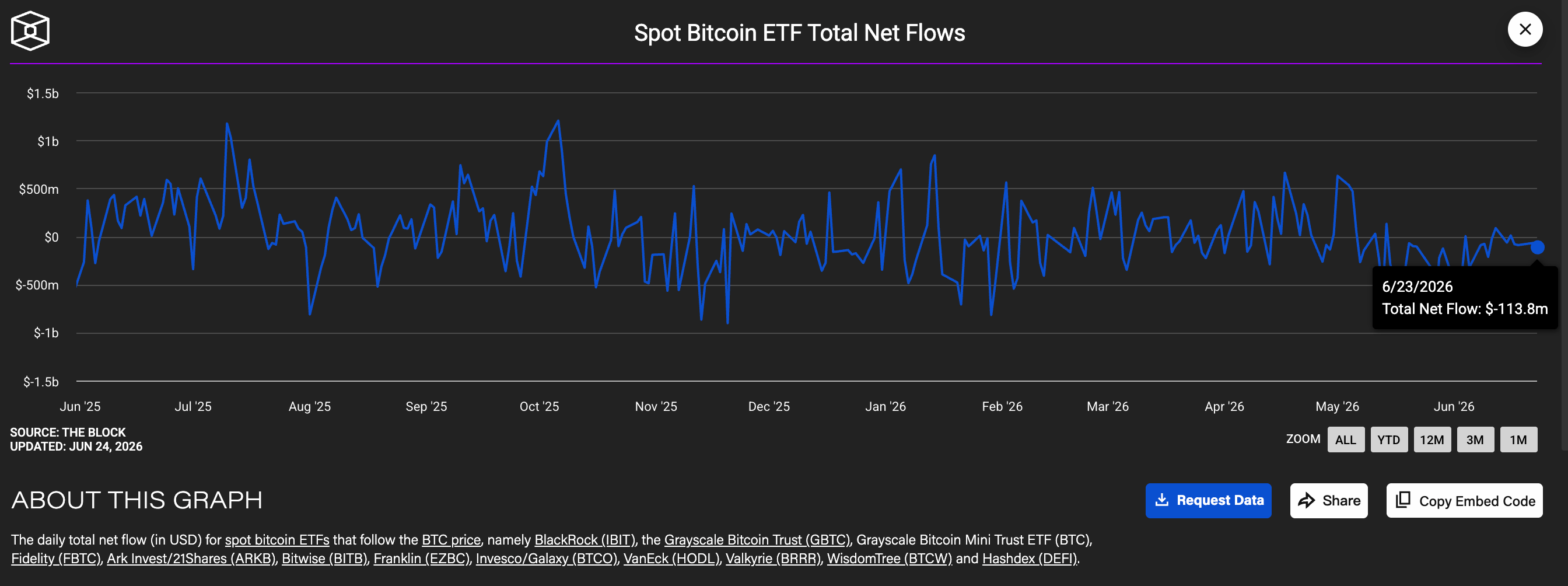

The mechanical feedback loop of ETF redemptions amplifies selling pressure. When institutions redeem shares, authorized participants are forced to sell the underlying Bitcoin directly on the secondary market, creating persistent spot selling. CoinShares characterized the situation as a 'sentiment shock' rather than a structural deterioration of the crypto market's fundamentals. Data from The Block shows that even on June 23, ETFs recorded net outflows of approximately $113.8 million, indicating no substantive reversal in institutional selling patterns.

Macro Headwinds: Rate-Hike Fears Crush Risk Appetite
Macroeconomic pressures have also dealt a heavy blow to Bitcoin. The U.S. Bureau of Labor Statistics reported that April job openings surged to 7.62 million, far exceeding expectations and marking the highest level in nearly two years. This pushed the 10-year Treasury yield back above 4.45%. Cleveland Federal Reserve President Beth Hammack subsequently warned that if inflation remains persistent, the Fed may need to resume rate hikes. According to CME FedWatch Tool, the market now prices in a greater than 50% probability of a rate increase before the end of 2026.

The strong bull market of 2025 was built on the liquidity expectations of Fed rate cuts. With those expectations now reversing and real interest rates rising, institutional capital is rotating toward low-risk assets such as bonds and cash. Bitcoin, as a high-risk asset, suffers the most from this shift in preference.

Outlook: The $60K Line as a Critical Battle Line
In the short term, all eyes are on the upcoming U.S. inflation data and the Fed's next policy signals. If the CPI print comes in below expectations, Bitcoin could get a temporary reprieve. However, if inflation proves sticky again, downside pressure will continue to accumulate. Until the extreme fear sentiment fades and ETF flows show a clear turning point, whether Bitcoin can defend the $60,000 level may determine the direction of the bear market's next stage. The weekly loss of ~9% and the breach of the previous October low underscore the severity of the correction.