
Bitcoin broke through the critical $60,000 support level again during today's trading session, briefly falling to $59,023 — its lowest point since October 2024 and a fresh 20-month low. As of press time, BTC has slightly recovered to around $60,600, narrowing its 24-hour decline to about 3%, with a seven-day drop of roughly 9%.

This marks the third time this year Bitcoin has breached the $60,000 round number. Unlike the previous two occasions, this sell-off is happening against a backdrop of sustained institutional capital outflows and a sharp macro policy shift, systematically shaking market confidence.

Reason One: The Longest Net Outflow Streak in Spot ETFs
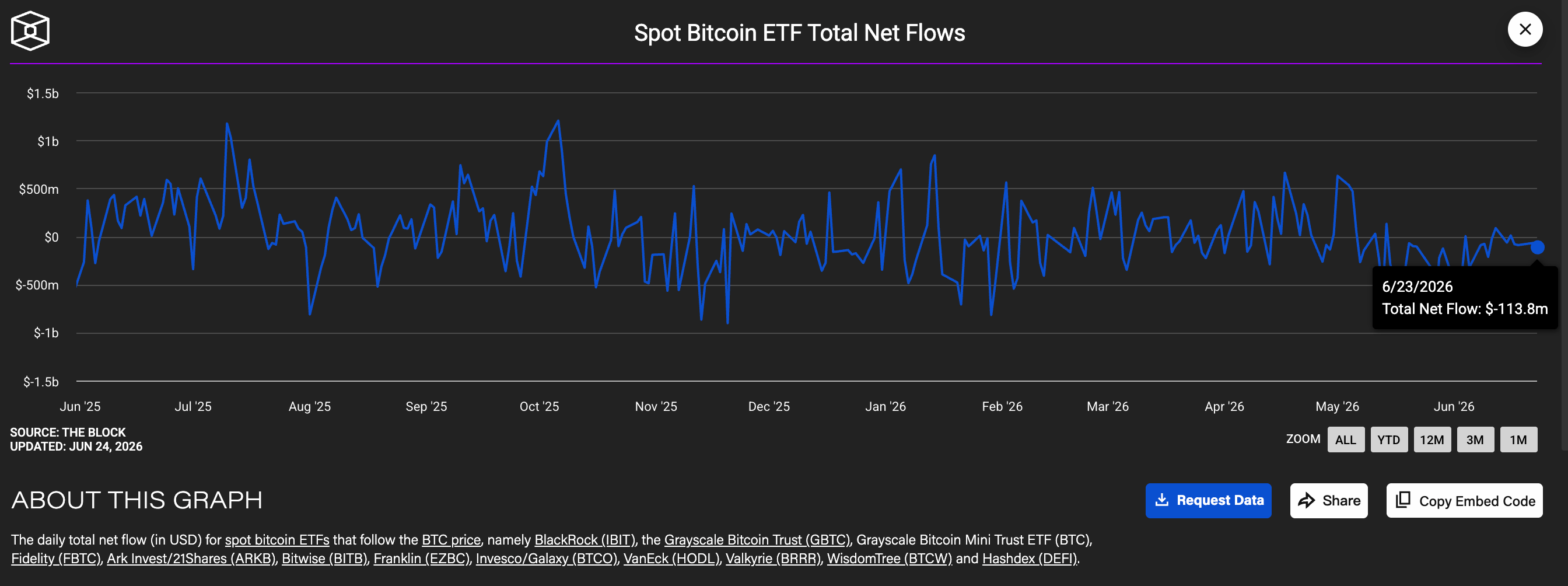
U.S. spot Bitcoin ETFs have been the primary driver of this decline. Since mid-May, ETFs have recorded net outflows for six consecutive weeks, with cumulative losses of approximately $5.94 billion over 30 days — the largest institutional withdrawal wave since their launch in January 2024. Notably, BlackRock's IBIT experienced a record single-day net outflow of $528 million on May 28. Total assets under management in Bitcoin ETFs have fallen from roughly $113 billion at the start of the year to about $77.5 billion, a loss of over a third. According to The Block, ETFs still saw net outflows of about $113.8 million on June 23, indicating no substantial reversal in institutional selling.

The ETF mechanism amplifies selling pressure: when institutions redeem shares, authorized participants must sell corresponding Bitcoin directly in the secondary market, creating sustained spot supply. CoinShares characterizes the current situation as an "emotional shock" rather than a structural breakdown of crypto market fundamentals.

Macro Headwinds: Rising Rate Hike Expectations Weigh on Risk Assets
Macro factors are also weighing heavily on Bitcoin. U.S. April job openings surged to 7.62 million, far exceeding expectations and hitting the highest level in nearly two years. This pushed the 10-year Treasury yield back above 4.45%. Cleveland Fed President Beth Hammack subsequently stated that if inflation remains elevated, the Fed may need to resume rate hikes. CME FedWatch data shows the market now prices a more than 50% probability of a rate hike by year-end.

In contrast, the strong bull market of 2025 was built on the liquidity expectation of Fed rate cuts. Once that expectation reverses and real rates rise, institutional funds tend to rotate into bonds, cash, and other low-risk assets, leaving Bitcoin — a high-risk asset — disproportionately affected. In the near term, market attention is focused on upcoming U.S. inflation data and the Fed's next policy signals. A lower-than-expected CPI reading could offer Bitcoin a breather; but if inflation proves sticky, downward pressure will continue to build. Until extreme fear dissipates and ETF flows show a clear turning point, whether Bitcoin can defend the $60,000 line may determine the next direction of this bear market.