
A Forbes report says Bitcoin is beginning to reshape humanitarian finance in crisis zones by changing where trust sits in the funding chain. The argument is not that trust disappears. It is that trust can move away from banks, payment processors, and platform-controlled disbursement toward recipient-controlled wallets, local validators, and community-based review networks.
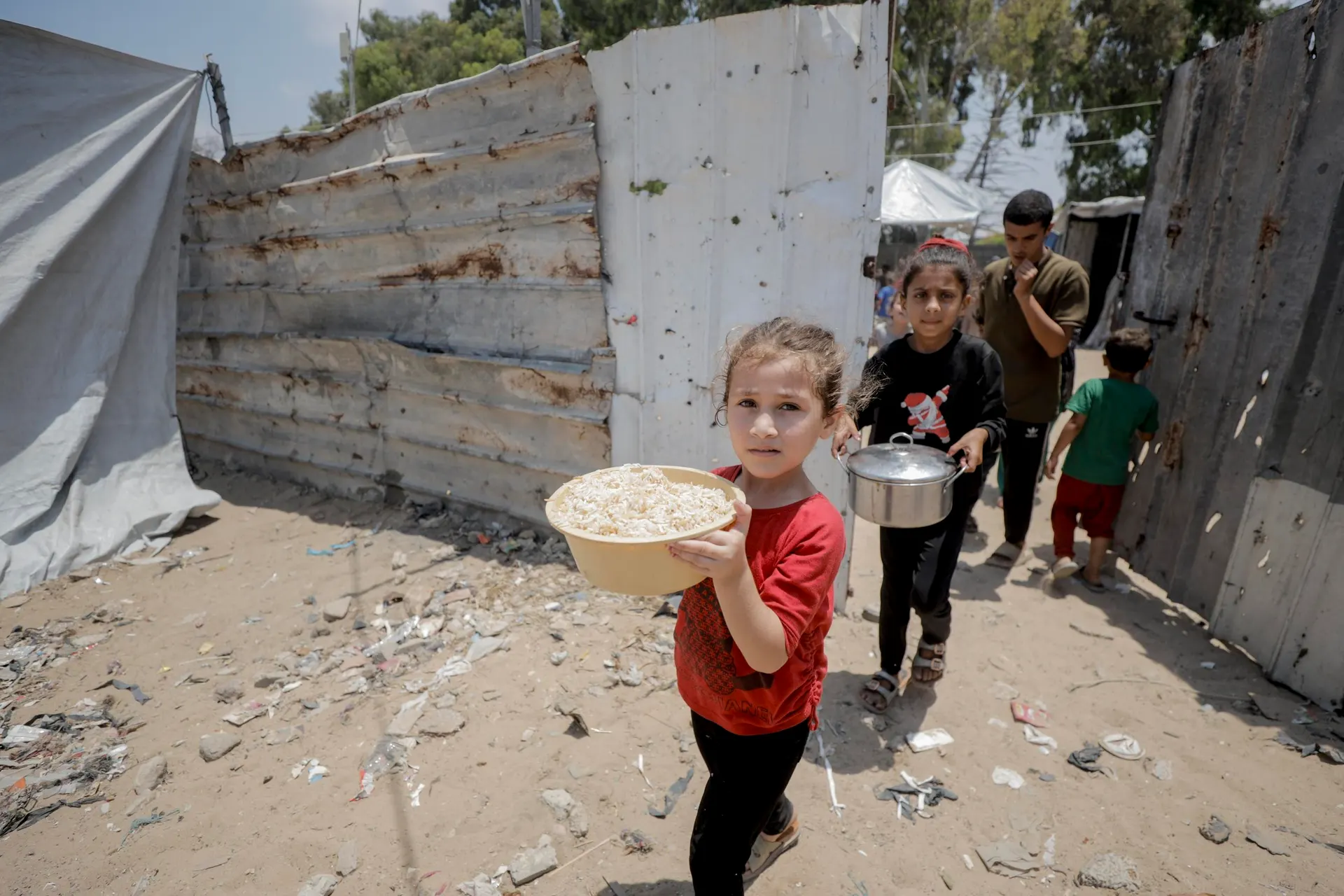
The report opens with a case from Gaza. Sami Jamal Al-Shannat raised more than £55,000 on GoFundMe for family members caught in war. He believed the hardest part was over once the campaign succeeded. But after the platform deducted a 3.9% fee, the money still could not be paid directly into Gaza. The remaining funds had to be sent to a named beneficiary living in a supported country, who would then pass the money on to Sami’s family.
That arrangement complied with platform rules, but it also made the final delivery dependent on personal trust. Sami said the arrangement with his brother-in-law, who had been listed as the beneficiary, later collapsed. He said he still has not received the full amount, and the dispute remains unresolved. He described the outcome as more than a financial loss, saying it left his wife and children in an extremely vulnerable position.
“Raising the money wasn’t the problem,” Sami said from a displaced persons camp in Gaza. “The problem started when we had to rely on someone else to receive it on our behalf.”
According to the report, Sami now wants to recover the funds and pursue accountability, but from Gaza he has struggled to find a lawyer and lacks the money and connections needed to do so. He also plans to keep fundraising because wartime inflation has driven up the price of food and other essentials.
GoFundMe did not respond to repeated requests for comment, the report said.
Compliance rules can block the last mile
The report presents Sami’s experience as part of a wider structural problem in humanitarian crowdfunding. Platforms have to comply with banking rules, sanctions regimes, and anti-money laundering requirements. Those controls can sharply limit where funds are allowed to go. When people in a crisis cannot receive money directly, intermediaries become necessary, and responsibility shifts from institutions to individuals. At that point, aid raised in their name may never fully reach them.
The same bottleneck can hit large human rights groups. Lyudmyla Kozlovska, president of the Open Dialogue Foundation, recalled that in the early days of Russia’s 2022 invasion of Ukraine, platforms including PayPal, GoFundMe, and Wise blocked the group’s fundraising appeal for Ukraine. By using Bitcoin instead, the foundation was able to bypass those delays and deliver emergency humanitarian aid on the second day of the war.
The report says charities, aid groups, and technology companies have spent years trying to solve the same problem: how to reach people who cannot access the conventional financial system. A growing number of developers now argue that the current model relies on too many middle layers, especially when money has to cross borders or reach recipients in restricted jurisdictions.
Geyser’s approach: rebuild trust through review and local partners
Michele Morucci, co-founder of Bitcoin crowdfunding platform Geyser, said the main issue is not simply how to move money. It is deciding whom to trust.
“People think the biggest challenge is moving the money. It’s not. The biggest challenge is deciding who to trust.”
Donors usually do not know the beneficiaries themselves, he said, so they depend on platforms, charities, journalists, and community leaders to judge whether a campaign is real. Removing one middleman only matters if there is another credible structure to replace it.
Geyser reviews projects before they go live. Creators are asked to provide proof of work, team information, and required documents. Projects that do not meet the platform’s credibility standards are not approved.
The platform also relies on a community layer. More than 100 Geyser Field Partners identify and support projects in areas they know well, forming a trust link between local communities and donors around the world. Michele said those partners have helped deliver 12 million satoshis directly to community projects, equal to about £5,600 or 0.12 BTC. He also said the model is still new and the available data remains limited.
Mainstream crowdfunding still depends on banking rails
The report argues that the weakness exposed by Sami’s case is not unusual. Crowdfunding platforms can raise money within hours for families facing war, disaster, or repression. Getting those funds safely into the hands of the intended recipients is much harder.
GoFundMe is not the only platform that limits payout regions. Mainstream crowdfunding services depend on banks and payment providers, and they have to follow sanctions rules, identity checks, and anti-money laundering standards in specific jurisdictions. When a direct payout is not supported, organizers may have to nominate a beneficiary in another jurisdiction to receive the money first. That may satisfy legal and banking requirements, but it shifts responsibility onto the proxy recipient. If the relationship breaks down, the intended beneficiary has few ways to seek redress through the platform.
Agora separates validation from custody
Agora takes a different route, according to the report. It allows funds to move directly between donor and recipient, while verification comes from organizations and individuals with first-hand knowledge of the project.
Mary Kate, co-founder of Soapbox, the team behind Agora, said donors may not know the person asking for help, but they may know and trust the organization validating that case.
“It allows us to transfer trust away from the project itself and onto the validator. You may not know the person asking for help, but you may know and trust the organization that verified it.”
Under that model, the final choice stays with the donor. A project can remain visible even without validator support, while trusted organizations can add context and credibility without becoming the sole gatekeeper.
Agora also removes the crowdfunding platform from the payment flow. Donations go straight to wallets controlled by recipients, reducing the chance that funds are held by the platform or passed through third parties. The report notes that Bitcoin allows funds to move across borders without platform custody or beneficiary handoff, though wallet security, access, and exchange-rate risk still remain.
For Mary Kate, the significance goes beyond payment mechanics.
“We can’t take away your account, we can’t shut down your project, and we can’t take your money,” she said. “For people going through trauma and lacking control over their lives, that can be an enormous moment of empowerment.”
She also said direct payouts do not solve everything. Projects still need review. Donors still need enough information to make informed decisions. Recipients can still misuse funds. Agora is trying to make those risks more transparent while giving recipients greater control over money raised in their name.
The unintended reach of sanctions and financial controls
The report expands the discussion beyond crowdfunding mechanics. Activists, journalists, and humanitarian groups in many regions have found it harder to move legitimate funds across borders as financial regulation grows more complex and sanctions affect entire jurisdictions rather than only governments.
Femi Longe, global freedom technology strategy lead at the Human Rights Foundation, said those restrictions often end up harming the very people who should be able to receive humanitarian support.
“Traditional crowdfunding platforms are regulated, and moving money across borders means complying with anti-money laundering and sanctions rules. The problem is that these rules often end up affecting legitimate opposition groups, nonprofits, and ordinary people rather than the governments they were meant to target.”
Femi said even organizations operating lawfully inside sanctioned countries can struggle to receive donations. Visible financial links may also expose supporters or relatives at home to retaliation.
Lyudmyla warned that the issue has moved beyond administrative friction and has become what she called “transnational financial repression,” with regimes using global anti-money laundering and counter-terror finance rules to cut dissidents off from banking access, including in Western countries.
She pointed to a resolution adopted by the OSCE Parliamentary Assembly in July 2026. The resolution recognized transnational financial repression as a systemic threat and called for stronger protection for donor privacy and privacy-preserving digital tools. Lyudmyla said Bitcoin payment tools are becoming a necessary lifeline for targeted donors and activists.
The report adds that political opposition groups, independent journalists, and civil society organizations often rely on international donations to keep operating. When donations become harder to send or easier to monitor, financial infrastructure itself turns into another form of pressure.
Direct payment changes control, not the need for accountability
The interviewees did not argue for removing regulation altogether. Public fundraising still requires accountability, transparency, and protections against fraud, the report said. All of them acknowledged that no perfect solution exists.
Femi said the aim should be to remove unnecessary intermediaries while preserving oversight.
“If the people running the project directly control the wallet receiving the funds, I think that is better than the status quo.” He added that verification and supervision remain essential parts of any system handling public donations.
The report returns to Sami’s case as an example of a deeper weakness in humanitarian finance. Systems built around banks, payment processors, and jurisdictional boundaries often struggle when money has to reach people living through war, political repression, or humanitarian emergency. No one interviewed suggested that technology alone can solve humanitarian fundraising.
Direct payments to recipients remove one layer of risk. They do not guarantee that a project is real, that organizers are honest, or that the money will be used for the purpose stated in the campaign.
“I don’t think Bitcoin solves everything. You still need systems to verify project creators, and you still need accountability for how funds are used. Those challenges do not disappear just because payments become direct,” Femi said.
The common thread between the platforms run by Michele and Mary Kate, the report said, is not a claim that trust has been eliminated. It is an attempt to redesign where trust sits.
In that framing, a new generation of humanitarian crowdfunding is more than a temporary fix for a broken legacy model. Open payment networks can give recipients direct control over funds raised in their name, while decentralized trust networks can help donors decide whom to support. Judgment, verification, and accountability still matter. But this architecture is beginning to bypass the legacy financial limits and regulatory obstacles that often keep conventional platforms from reaching the people who need help most.