
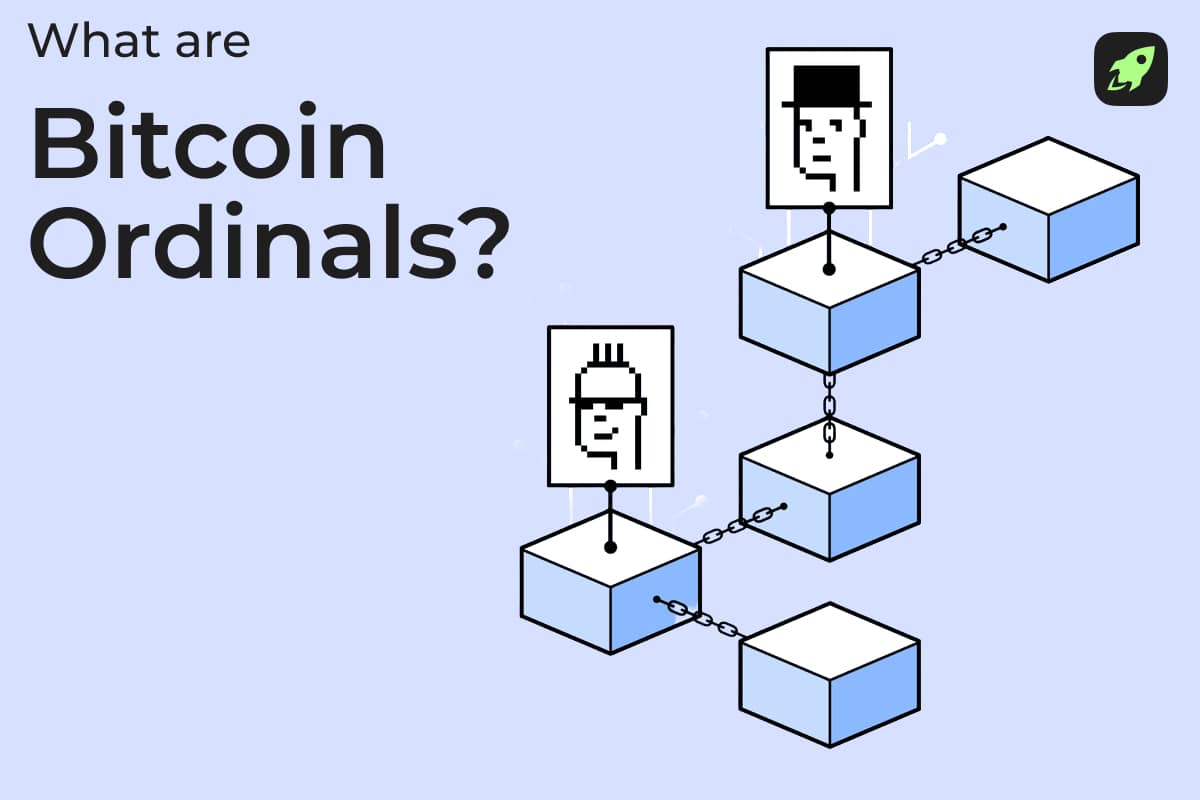
Bitcoin Ordinals are often discussed in the same breath as “Bitcoin NFTs,” inscriptions, rare sats, BRC-20, and Runes. The source material draws a clear line between them. Ordinals are a protocol for numbering and tracking individual satoshis, while inscriptions are the data attached to those sats; only the combination produces what many users describe as Bitcoin-native digital artifacts.
The distinction starts with Bitcoin’s smallest unit. The article notes that 1 BTC contains 100,000,000 satoshis, and Ordinals work at the sat level because Bitcoin itself moves through UTXOs rather than as intact whole coins. Wallet balances are assembled from unspent transaction outputs that can be split, combined, and spent across many transactions. A whole-coin label would break as soon as that coin was divided. A sat-level numbering system can keep tracking the unit through normal transaction flow.
Numbered sats and attached data are not the same thing
Ordinal theory assigns each sat a unique number based on the order in which it was mined. The sequence begins with the first sat in the Genesis Block and continues for every sat mined after that. This does not alter Bitcoin consensus rules. Bitcoin still treats sats as fungible units, while Ordinals add an interpretive layer used by wallets, explorers, and indexers to identify where a specific sat sits after it moves between inputs and outputs.
Inscriptions are a separate layer. The piece lists text, images, audio, video, HTML, SVG, code, and JSON as inscribable data types, usually stored in transaction witness data. In practical terms, Ordinals answer which sat is being tracked, and inscriptions define what content is attached to it. A sat carrying inscription data becomes an inscribed satoshi that users can view, transfer, and trade.
Why Ordinals drew broad attention after 2023
The article says the protocol became widely visible in early 2023, after Casey Rodarmor’s ord software enabled users to index sats, create inscriptions, and explore them on Bitcoin mainnet. It did not require a new chain, a sidechain, or a separate token. The system was built on Bitcoin’s existing transaction model.
Two older Bitcoin upgrades made this practical. SegWit introduced witness data and changed block-weight accounting, while Taproot, activated in 2021, enabled more flexible script-path spending. The source stops short of saying these upgrades created NFTs on Bitcoin. Its point is narrower: they created the technical conditions that made richer on-chain inscription activity feasible.
Why people compare them with NFTs
The comparison works at a surface level. An inscribed sat can be unique, transferable, collectible, and tradable on marketplaces, which makes the NFT label useful for newcomers. But the mechanics differ from Ethereum-style NFTs. Those usually rely on smart contracts such as ERC-721 or ERC-1155. Bitcoin Ordinals do not use that model. They depend on sats, inscriptions, UTXOs, and Bitcoin transactions, with no separate smart-contract registry managing ownership.
The storage model is different too. Many traditional NFTs point to metadata or media stored on IPFS or centralized servers. Ordinal inscriptions place the content directly on Bitcoin, tying the media and the ownership trail more closely to the same ledger. That on-chain design is one of the main reasons supporters describe inscriptions as Bitcoin-native digital artifacts rather than standard NFTs.
The biggest practical risk is wallet handling
The source places heavy emphasis on custody. A UTXO can hold ordinary sats, inscribed sats, or both. If a user spends an inscribed UTXO through a wallet that does not support Ordinals or sat control, the inscription can be lost through ordinary transaction handling. That makes wallet selection and transfer discipline central to anyone storing or trading these assets.
The article also lists a wider set of concerns: higher transaction fees, network congestion, debate over Bitcoin’s intended purpose, scam and phishing exposure on marketplaces, liquidity and volatility risk, and the uncertainty that comes with an experimental protocol. For users trying to understand the space, the key takeaway is structural rather than promotional: a numbered sat, the data written onto it, and the UTXO holding it are three separate pieces of the same system.