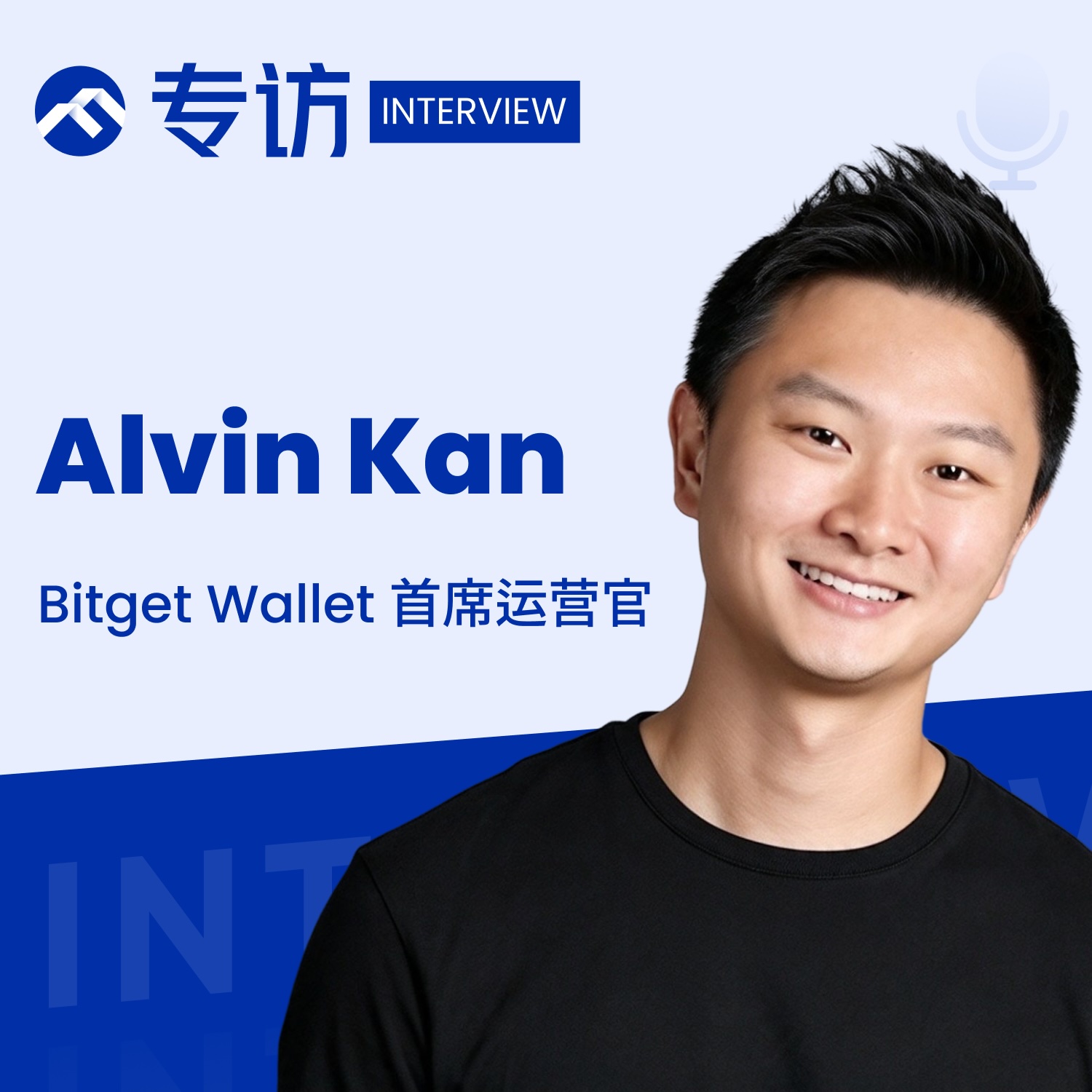
Bitget Wallet is pushing payments closer to the center of its product strategy as it tries to evolve from a self-custody crypto wallet into a broader financial app, Chief Operating Officer Alvin Kan said in an interview with Foresight News. The company said in July 2026 that it had surpassed 100 million users globally, and that the number of users making payments each day had, for the first time, moved above the number of daily trading users.
For Bitget Wallet, payments are no longer just an added feature. Kan said the company wants to bring payment cards, QR-code spending, cross-border collections, stablecoin savings products, and tokenized stock trading into one app that can handle both everyday cash flow and investment needs.
Using Brazil’s Pix without a local bank account
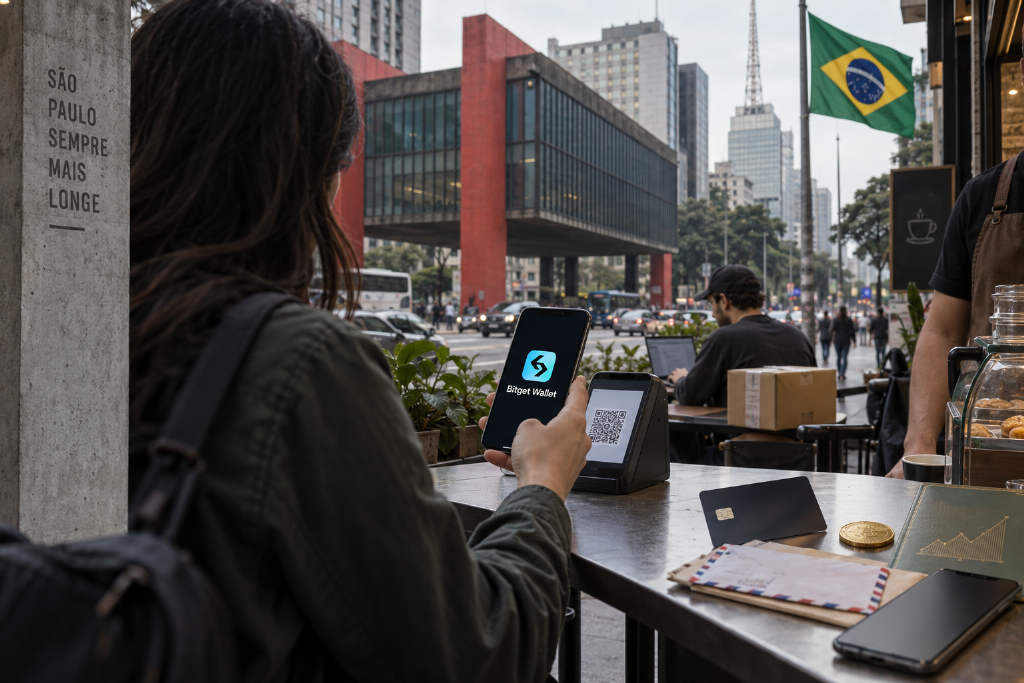
Kan said that during a recent trip across Latin America, he used Bitget Wallet to make QR-code payments through Brazil’s Pix system even though he did not have a local bank account. Pix is Brazil’s instant payment network. After connecting to a local payment service provider, the wallet was able to access those rails.
He argued that on-chain payments are not meant to solve a problem that does not exist. If a user already has a local bank account and only needs domestic payments, existing financial infrastructure in many countries is already good enough. But the case changes when a person needs to move money across borders, travel without local banking access, or spend stablecoins and crypto in daily life.
That is where the wallet sees room to work. Kan pointed to digital nomads living in Southeast Asia as one example of users who may hold crypto assets or stablecoins but still need a simple way to pay regular expenses.
Stablecoin collections for freelancers and remote workers
Cross-border income is another area the company wants to build out. Kan said Bitget Wallet is paying close attention to the needs of digital nomads, overseas remote workers, and cross-border freelancers.
He gave a simple example: a worker based in Asia and an employer based in the U.S. may both want settlement in stablecoins, but the employer may not understand blockchain wallets or want to pay directly in crypto. That gap shows there is still a usability barrier between traditional bank payments and on-chain finance.
Bitget Wallet wants to tighten the link between fiat collections and on-chain assets. In the structure Kan described, the payer would keep using a familiar bank transfer, while the recipient could convert incoming fiat into stablecoins such as USDC through a third-party provider, then move those assets into the wallet for spending, transfers, or savings.
Kan said the company plans to focus first on demand tied to major currencies such as the U.S. dollar and euro, then expand based on market feedback.
In Latin America, the conversation was not mainly about speculation
This was Kan’s first trip to Latin America. He said discussions with users in Brazil and Argentina focused far less on speculation, meme coins, or derivatives than on practical questions: how to use stablecoins for payments and how to use stablecoins for yield.
Another demand that stood out was tokenized stocks. According to Kan, some users wanted one app that could support payments, savings, and investing. When the topic turned to investment, U.S. equities were among the most familiar assets. That meant some users who were not especially interested in certain forms of crypto trading still showed interest in tokenized stock products.
He said that pattern looked different from what he had seen in some other markets.
Building a payment network means market-by-market integration
Kan said Bitget Wallet is still using the public figure of more than 100 million users. From here, he said, the company is placing product and go-to-market resources into South Asia, Southeast Asia, Latin America, and Africa.
Rather than setting one headline user target, the company is watching growth by country and looking at whether user assets and transaction activity inside the wallet are increasing. The aim, he said, is to become a financial application users open as part of everyday life.
On the product side, Bitget Wallet plans to widen country coverage and add more payment scenarios. Payment cards are only one part of that effort. The company is also working on QR-code payments, bank transfers, and tighter fiat-to-stablecoin collection flows to cover more daily spending, income, and cross-border payment use cases.
Kan drew a clear distinction between crypto product expansion and payment expansion. On-chain products can often add functionality by integrating a protocol once and making it available to eligible users in many places. Payments do not work that way. They must connect to local rails one market at a time.
He said the wallet has already added QR-code payment support in parts of Southeast Asia and Latin America. In some African markets, where cards or bank transfers are more common, the company has connected to those methods through local payment service providers, or PSPs.
Bitget Wallet has also placed local staff in Brazil, Argentina, and some African markets, and built seed user groups to gather feedback. Teams test channels directly. Kan said he wants to be able to land in different countries and pay with the app, but that requires continued local buildout.
Payments are changing the team and exposing operational weak spots
As the payments push expands, the team itself is changing. Kan said business, product, and engineering staff all need to understand payments because users care deeply about completion time, fees, and reliability on every transaction. A small number of failed orders can still damage the experience.
When Bitget Wallet screens partners, it looks at pricing and service quality, but also at the licenses those partners hold. Kan said the company has been learning in this area for the past year and a half and hiring people with relevant backgrounds.
He added that while many employees previously came from crypto companies and exchanges, the team now also includes people from Visa, Mastercard, and other traditional payments firms. Local full-time staff and seed users provide the ground-level view the company needs. In his words, it is hard to understand payment problems in Latin America by discussing them from somewhere else.
The hardest issue in rollout, he said, is the uneven performance of payment channels. Some are unstable. Some are expensive. Some have fees that change. That forces the company to test them one by one and choose suitable partners.
Redundancy matters too. If one channel fails or goes offline, another has to take over. Kan said Bitget Wallet is approaching this with an on-chain payment aggregator mindset, linking multiple channels together instead of relying on a single route.
Payments bring users in more often. Investment features are meant to keep them there.
Kan said combining payments, savings, and trading in one app starts with coverage. If the product only works in one country, users lose access as soon as they travel. Bitget Wallet has already spent about a year and a half building its payment network, and he said that work will continue.
He also argued that moving money back and forth between separate apps reduces efficiency. If one app handles savings and another handles trading, users must keep transferring funds across products. Putting those functions together makes capital movement easier.
Still, he stressed that every feature requires depth. Bitget Wallet has been working on trading for eight years, and support for more chains, lower slippage, and a smoother execution flow all require continued investment. Adding an entry point is only the start.
On conversion, Kan said the company has seen some users arrive for payment cards or QR-code payments and only later begin trying tokenized stocks. In some cases, that takes about four to six months.
Once users already keep funds in the app and have built trust, they may start using more services. Payments matter here because they create a high-frequency touchpoint. If users come back every day, they gradually become familiar with the wider product.
Kan also made a distinction between a trading platform and a daily finance app. A trading-first product may add a payment card without immediately convincing users to adopt it. But if users already manage routine income and spending in a financial app, using its investment features may feel more natural.
Why tokenized stocks look like a long-term business
Even in a sector where trends can turn quickly, Kan said Bitget Wallet has long-term conviction in tokenized stocks. He noted that internal conversations track many themes and some may stay hot for only two weeks, but tokenized equities are different in his view.
He gave two reasons. First, traditional financial institutions have begun investing in related technology and companies. Second, Bitget Wallet’s own business data shows tokenized stock trading volume has kept growing over a period of time instead of spiking only during a brief wave of attention.
If the company wants to serve more mainstream users, Kan said, stocks may be the first asset class they think of when they want to invest. Some users want access to U.S. or dollar-denominated assets but face limited local access or high brokerage costs. Tokenized stocks inside a wallet can provide another route.
Connecting spending and investing through rewards
Kan said Bitget Wallet has launched a feature that returns assets as spending rewards. After users make card purchases, they can choose to receive rewards in assets such as Bitcoin or tokenized stocks, including tokenized assets tied to NVIDIA and Tesla shares.
That creates a direct path between consumption and investing. A user pays, receives asset rewards, and may later use trading functions to exchange them. The company’s task is to make those steps flow smoothly.
He added that once assets move on-chain, they can be combined in more ways. Tokenized stocks can be transferred between wallets, and applications can build different functions around them. Part of his confidence in tokenization comes from that programmability.
The company says it is already profitable
Asked how a global payments buildout can pay for itself, especially when subsidies may be involved, Kan said Bitget Wallet is already profitable.
He said both payments and trading generate fees because the company provides convenience in both cases, while still trying to keep payment pricing competitive. For now, the bigger priority is scale. With more scale, the company expects to gain more room in negotiations with partners and secure better terms. Kan said current operating conditions give Bitget Wallet confidence to keep investing in product development.
The company is also building out a business-facing line. Kan said Bitget Wallet is turning its trading aggregation capabilities into APIs that other products can call, then charging merchants or developers for access.
Payments may reduce dependence on market cycles, while B2B and AI open new questions
Traditional crypto wallets often see activity rise and fall with market conditions. Kan said Bitget Wallet has still seen user growth continue during weak periods. One reason is cross-chain swaps, since users may still need to move assets between chains even when they are not trading actively.
Payments are the other reason. In many emerging markets, the demand comes from daily life. Users still need to collect funds, transfer money, and pay bills no matter what the market is doing. Kan said that allows the company to keep building product instead of arranging everything around market heat.
He also said Bitget Wallet wants to expose trading infrastructure to more products because, in the future, more transactions may be initiated by AI agents. If the company depends only on users operating inside its own app, it will not reach every use case. Since it has already built trading infrastructure, it wants more front ends to connect to it.
For now, the company is starting with trading services. Whether payments can also be packaged as an interface layer for outside applications remains an open area to explore. Kan said services aimed at businesses and developers will become more important over time, and users may not always need to open Bitget Wallet directly in order to access what the company offers.
AI execution, self-custody risk, and user responsibility
Kan said Bitget Wallet remains cautious about allowing AI agents to decide and execute trades on behalf of users. At the current stage, transactions still require user confirmation. If AI is allowed to act more independently in the future, the system would need permission tiers, such as limits on how much capital can be used per trade.
He warned that AI hallucinations are part of the equation, and said those constraints must be considered. Payments also involve issues that traditional finance has dealt with for years, while on-chain standards in some areas are still not mature enough. The company will keep watching and moving forward, he said, but not without those conditions in place.
On asset protection, Kan said Bitget Wallet will continue updating wallet security technology, but user education remains essential because self-custody also means users carry part of the burden.
Some users know they are using a self-custody wallet, he said, yet still do not fully recognize that they must protect key material themselves. Storing sensitive key information in the cloud, for example, can create risk. Better product security and stronger user awareness both have to improve.
When asked about losses tied to third-party protocols accessed through the wallet, Kan said the platform’s role is to make clear what the user is doing and what risks are involved. Whether the action is a transfer, a savings product, or a meme-coin purchase, the wallet should provide prompts and safety labels that explain the risk level before the user chooses whether to continue.
That is part of the responsibility boundary he described. Self-custody gives users more control, but also requires them to take more responsibility for their own decisions.
What still needs work next
For the next stage of product improvement, Kan returned to payments. The network still needs broader country and channel coverage, better stability, and lower fees so the user experience is more consistent from one use to the next.
He added that both trading and wallet use need to become easier for ordinary users. Many people do not understand the differences between blockchains or gas fees, the network charges required for on-chain actions. Bitget Wallet has already been working to reduce that friction, but he said there is still room to improve.
The links between payments, savings, and trading also need to feel smoother. He gave one example: a user receives tokenized stock rewards after spending, then wants to exchange those rewards. That full path should feel natural.
In Kan’s view, users should be able to use these functions according to their own financial needs without first learning the underlying technical complexity. A person may simply want to receive money, complete a payment, or buy an asset. He said that remains the direction of the company’s wallet experience work.