
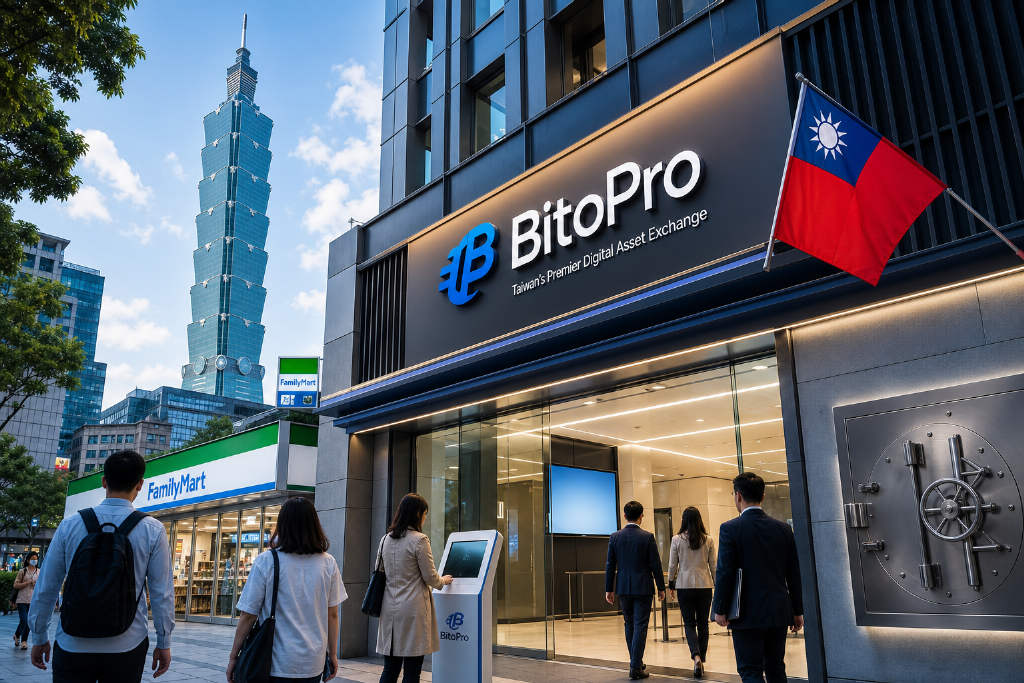
Taiwan virtual asset company BitoGroup said its exchange BitoPro has gained both local market recognition and international exposure, after ranking at the top of a new CRIF survey and securing a place in a Global Blockchain Business Council handbook.
According to CRIF’s latest survey on the future development of Taiwan’s virtual asset industry and its regulatory framework, BitoPro ranked first among local platforms in both the most-used and most-trusted categories. Separately, the company’s points-to-crypto service was included in the 2026 101 Real-World Blockchain Use Cases Handbook published by the Global Blockchain Business Council, where it was listed as Case No. 50.
CRIF survey rankings covered retail and business users
BitoGroup said it has focused on virtual asset innovation since its establishment in 2014, while treating compliance, security, and risk management as the foundation of industry development. The company also said that after the third reading of the Virtual Asset Service Act, Taiwan’s industry has moved into a more formal legal framework, and BitoGroup has continued to respond to regulatory requirements, participate in policy discussions through industry associations, and invest in cross-sector anti-fraud efforts and market education.
In the B2C retail user market, CRIF’s survey placed BitoPro first in both most-used and most-trusted categories. In the B2B corporate user market, it ranked first in most-trusted and second in most-used.
Bito.Enterprise targets Web3 use cases for institutions and companies
The company said it officially launched Bito.Enterprise this year as an enterprise-focused application sub-brand aimed at cross-border trade and corporate transformation needs. Built around open services, the unit is designed to help financial institutions and enterprises connect with practical Web3 use cases, including stablecoin settlement, points-to-crypto conversion, and a cryptocurrency payment gateway.
BitoGroup said its stablecoin settlement service, Bito.ONE, has already started pilot and trial programs with four financial institutions and 10 companies.
FamilyMart-linked points-to-crypto model entered GBBC handbook
On the points-to-crypto side, BitoGroup said its work received international recognition through GBBC’s recently published 2026 101 Real-World Blockchain Use Cases Handbook, a compilation of representative blockchain applications that the company said serves as an important reference for governments, regulators, and central banks.
BitoGroup’s selected case is titled Points-to-Crypto: Taiwan’s World-First Retail-to-Web3 Ecosystem for Financial Inclusion. The entry describes the company’s collaboration with FamilyMart convenience stores on a service that converts reward points earned through everyday spending into virtual assets. The model links retail, the points economy, and Web3 applications, creating a route from daily consumer activity into Web3.
CEO comment and company profile
BitoGroup founder and CEO Cheng Kuang-Tai said: "Bito has long been committed to innovation, compliance, and industry development, and has received recognition from both the market and international organizations. Bito will continue to build on compliance, security, and technology to help the public, enterprises, and financial institutions expand virtual asset applications, allowing more Taiwan-developed models to reach international markets."
The company added that as Taiwan’s virtual asset regulatory environment becomes more complete, it plans to continue rolling out innovative B2C services and diversified virtual asset products. On the B2B side, it said Bito.ONE has already begun pilot cooperation with financial institutions and companies, while its points-to-crypto and cryptocurrency payment gateway services already have deployment-ready technology and commercialization examples.
According to the company profile in the source material, BitoGroup was founded in 2014. Its BitoPro crypto exchange has completed the Financial Supervisory Commission registration for anti-money laundering compliance applicable to virtual asset service providers or personnel, and offers crypto wallet and trading services, as well as fiat deposit and withdrawal support, convenience-store purchases, and points-to-crypto conversion.