
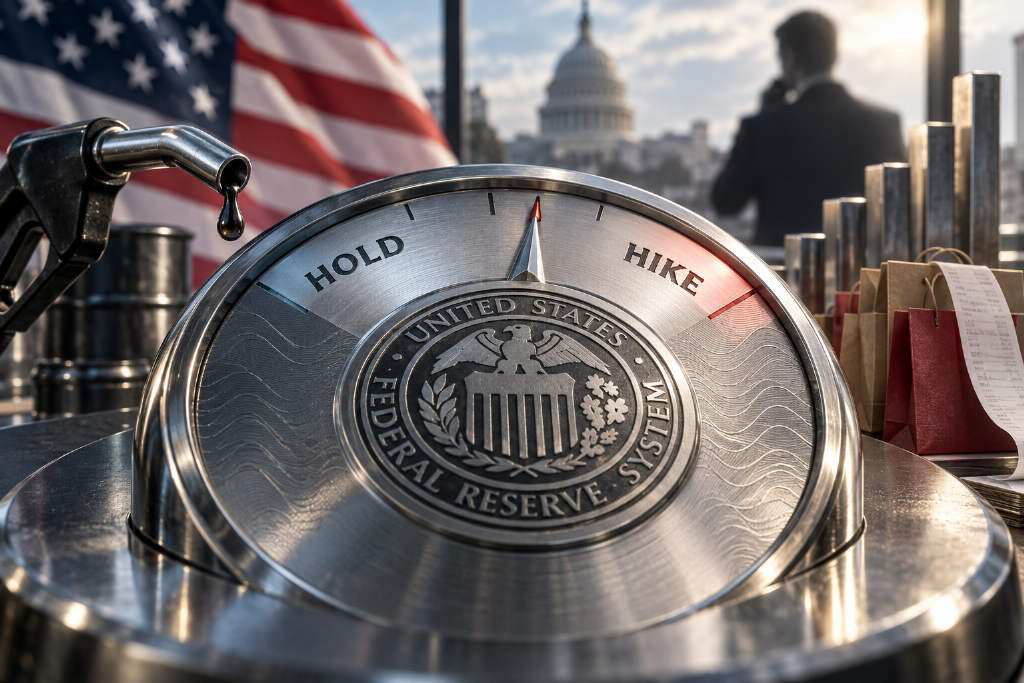
BlockBeats reported on Oct. 16 that a Bitunix analyst said stronger U.S. producer inflation and consumer data are making it harder for the Federal Reserve to judge whether current interest rates are sufficient to bring prices lower.
September PPI rose 1.3% month over month and 6.3% year over year, while core PPI increased 0.7% on the month and 5.0% on the year, both above market expectations. Retail sales for the same period rose 0.8% month over month, also beating expectations.
Energy costs pushed prices higher, but not on their own
Energy prices climbed 10.8% in a single month, making them a major driver of higher production costs. Even so, core PPI remained elevated, indicating that cost pressure was not coming from energy alone.
The analyst also noted that retail sales are nominal data and do not strip out price changes. An increase in spending, therefore, does not necessarily mean real demand rose by the same margin.
The Fed faces a tougher policy trade-off
That mix of data leaves the Fed with a more complicated choice. If companies keep passing higher costs on to goods and services, inflation could take longer than expected to cool. If rates move higher, mortgages, corporate financing and household spending would face more strain.
The report said Chair Walsh has tried to downplay forward guidance and leave markets to interpret economic data on their own. But officials have recently had to speak frequently to reset expectations for rate hikes, suggesting that less guidance may not reduce volatility and could instead add uncertainty to rate pricing.
Fiscal constraints and long-term yields remain in focus
U.S. fiscal conditions were also described as a longer-term constraint. Ray Dalio warned that a large volume of maturing debt and new borrowing could keep Treasury supply elevated. Market participants are also closely watching whether the Treasury adjusts long-bond buybacks and issuance maturities.
If government funding needs, corporate AI investment and high energy costs compete for capital at the same time, long-term yields could tighten financial conditions before the Fed delivers another rate increase.
Crypto markets are watching more than the next rate move
For risk assets, the key question is not only when the next rate hike may come, but whether inflation and demand cool at the same time. If yields and the U.S. dollar continue to strengthen, crypto assets could face pressure from higher funding costs and weaker risk appetite. If price pressures gradually ease, markets may have room to reassess the policy path.
The analyst said the pass-through from PPI to PCE, changes in real consumption and long-dated Treasury yields will say more about whether tightening still needs to intensify than any single policy remark.