

Block posted third-quarter results that exceeded its own expectations and raised its full-year guidance again. The payments and financial services company said gross profit rose 22% from a year earlier, while adjusted operating profit increased at a much faster pace.
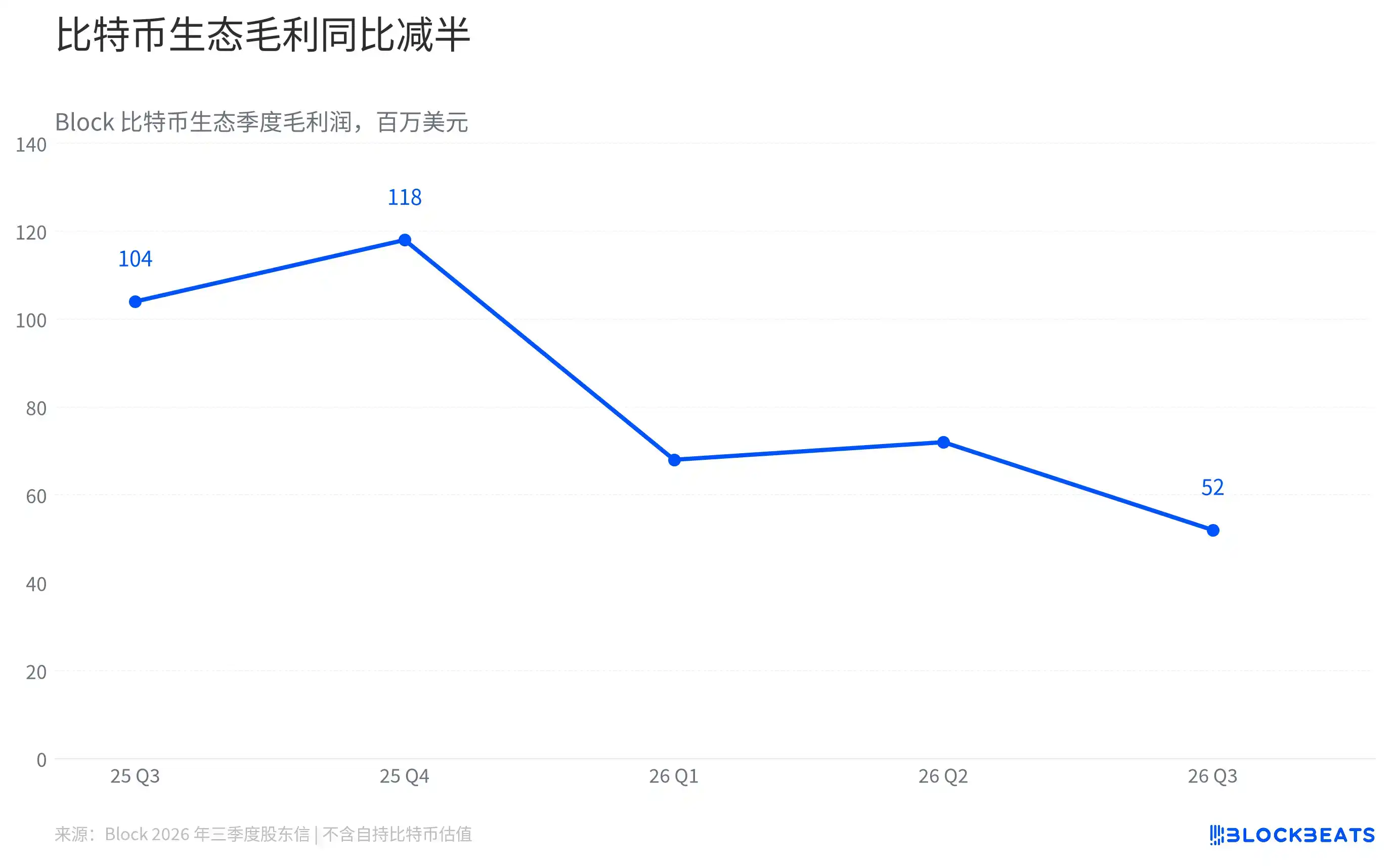
Bitcoin moved in the opposite direction. In its third-quarter shareholder letter, Block said gross profit from its Bitcoin ecosystem was cut in half year over year. The segment still produced meaningful revenue, but it was no longer the engine behind gross profit growth in the quarter.
What made up for the decline in Bitcoin gross profit
Block presented two ways to read its business. One breaks the company into segments such as Cash App and Square. The other groups activity by product category, including business services, financial solutions and the Bitcoin ecosystem. The two frameworks overlap, so their figures cannot be added together directly.
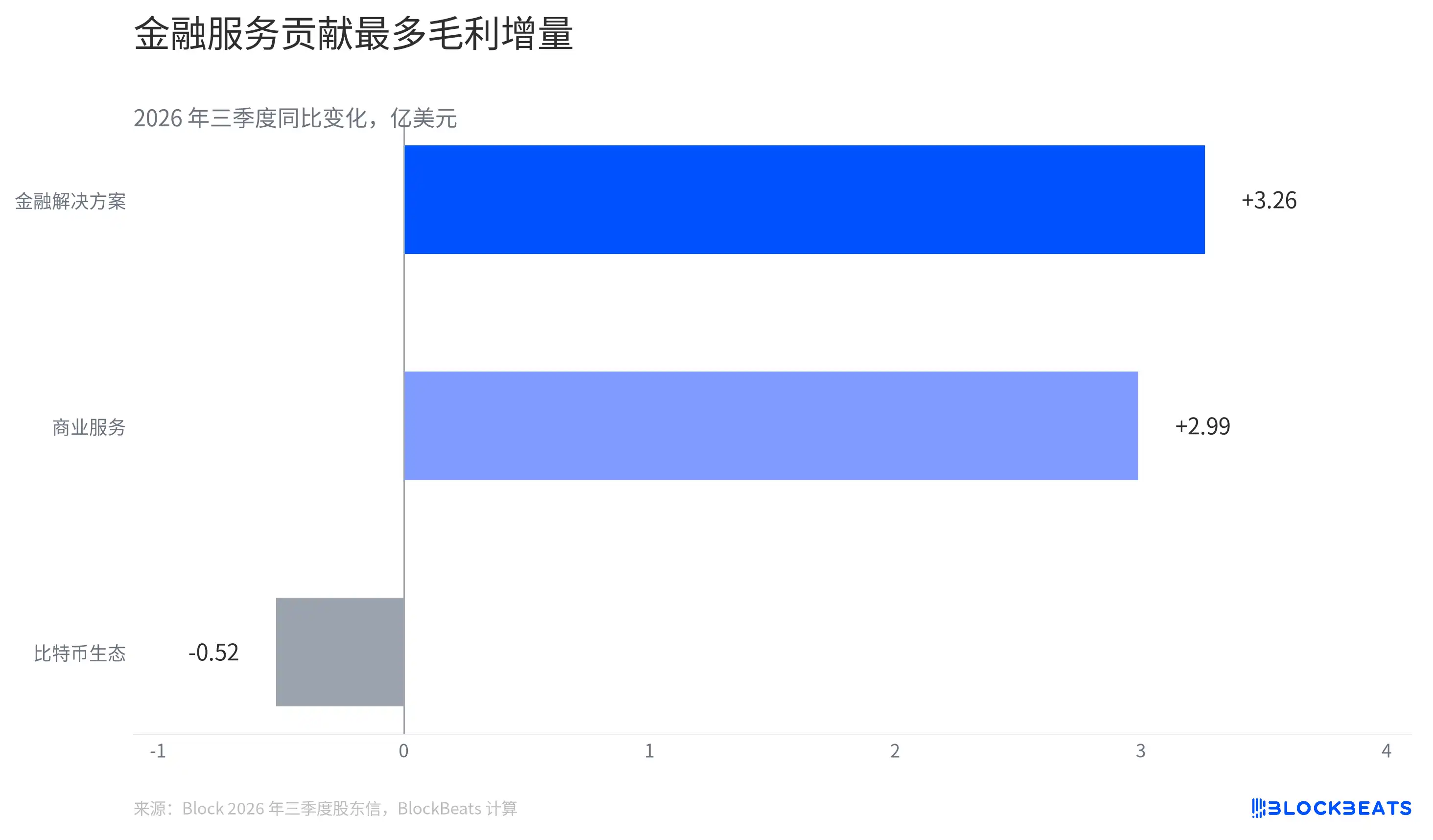
By product category, the increase in gross profit from financial solutions was slightly larger than the increase from business services. Growth in those two areas offset the decline in the Bitcoin ecosystem and kept total gross profit moving higher.
Financial solutions include lending products such as Cash App Borrow, along with instant deposit, interest on customer funds and Square Loans. In the shareholder letter, Block said growth in this category was driven mainly by Cash App consumer lending.
The company said originations reached $19 billion in the third quarter, up 40% from a year earlier. That figure refers to newly originated volume during the quarter, not loan balances, and it should not be treated as revenue.
Business services cover Square payments, software and hardware, as well as products including Cash App Card, Cash App Pay and buy now, pay later. Merchant acquiring, card spending and installment purchases all feed revenue across different products. Block said growth in Square payment volume and in Cash App activity together supported gross profit in this category.
Viewed by segment, Cash App expanded faster. Its third-quarter gross profit topped $2 billion and accounted for about two-thirds of Block’s total gross profit. That share shows why Block’s growth cannot be understood by looking only at merchant payment terminals. Consumer borrowing, spending and payments inside Cash App matter as well.
Loan growth brought another set of numbers to watch
As lending volume expanded, so did a separate cost line. Block said transaction, loan and consumer receivable losses rose 66% year over year, which the company attributed to loan growth and changes in product mix.
That loss category spans multiple businesses and is not the same thing as charge-offs on Cash App consumer loans. Block said variable profit margin for consumer lending was flat from a year earlier and slightly better than in the previous quarter, but it did not provide a specific figure. Because variable profit excludes processing costs and risk losses but does not yet deduct funding costs, those growth rates alone do not show whether bad-debt rates increased.
Why GAAP and adjusted operating profit look so different
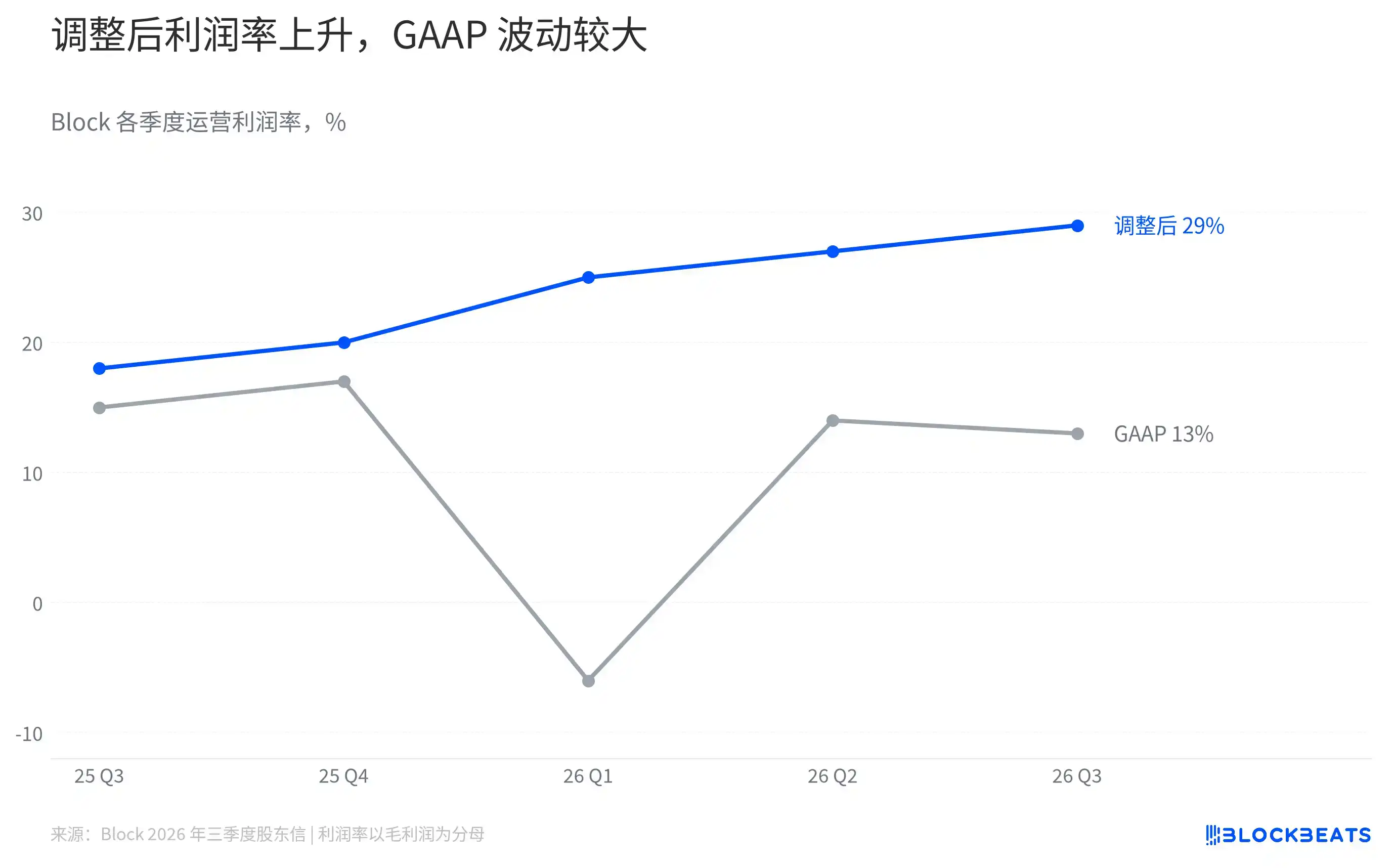
One of the most eye-catching figures in the quarter was a 92% year-over-year increase in adjusted operating profit. Under U.S. GAAP, though, operating profit rose only 5%. The same company produced two very different growth lines.
Start with the denominator. Both margin lines in the chart use gross profit as the base and measure how much remains after related operating expenses are deducted for each dollar of gross profit generated. They are not traditional operating margins based on total revenue, so they cannot be compared directly with companies that use revenue as the denominator.
Then there is the numerator. GAAP operating profit reflects operating expenses recorded in the financial statements. Adjusted operating profit follows Block’s non-GAAP definition and removes specific items such as restructuring and contingencies. The two measures answer different questions, and the adjusted figure does not mean those costs did not occur.
In the third quarter, GAAP operating profit was about $428 million, while adjusted operating profit was $923 million. The gap was close to the size of the GAAP figure itself. Block’s reconciliation table lists several adjustments, and each item needs to be reviewed by type and amount rather than assigning the entire difference to one cause.
Across the quarterly series, adjusted operating margin kept trending higher, while the GAAP line showed larger swings. One reflects the company’s defined adjusted operating performance. The other keeps the expenses that hit the statements in the period. Reading both together gives a fuller picture of how fast profit is growing and where the limits of that growth sit.
Large Bitcoin revenue, thin Bitcoin gross profit
Revenue in Block’s Bitcoin ecosystem comes mainly from activity such as customers buying Bitcoin through Cash App. Because the company also incurs costs to obtain Bitcoin for customers, the revenue figure cannot be read as fees or profit.
In the third quarter, the business recorded about $1.8 billion in revenue but only $52 million in gross profit. Using the disclosed figures as a rough guide, less than $3 in gross profit remained for every $100 of revenue. Block said the decline in gross profit was driven mainly by a strategic reduction in fees on some Bitcoin transactions in Cash App.
A separate Bitcoin-related figure appeared elsewhere in the accounts. Block holds Bitcoin as a long-term investment and remeasures it at fair value at the end of each quarter. Changes in Bitcoin’s price flow through net income, but they are not part of gross profit from Bitcoin ecosystem transactions.
According to Block’s third-quarter 10-Q, the company recognized about $230 million in remeasurement gains on its Bitcoin investment during the quarter, not a loss. It did not sell that investment in the same period, so the gain does not represent realized proceeds from selling Bitcoin.
Once those two lines are separated, the contrast in the report becomes clearer. Gross profit from customer-facing Bitcoin activity fell, the carrying value of Block’s own Bitcoin holdings rose during the quarter, and payments and financial services supplied most of the increase in gross profit.



