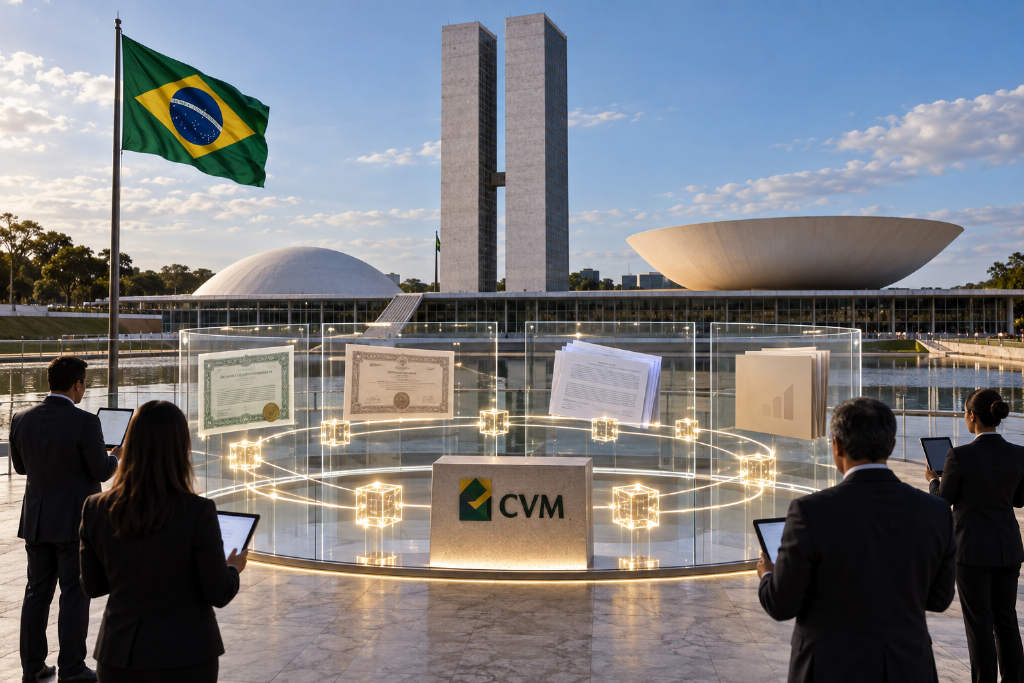
Brazil’s securities regulator, the Comissão de Valores Mobiliários (CVM), is moving forward with a distributed ledger technology pilot focused on tokenized securities. The proposal covers simulated trading only and does not involve real securities or actual investors. The test will be coordinated by CVM’s tokenization working group and is set to run for 60 days, with an option to extend it by another 30 days. The draft still requires board approval before it can proceed. According to the brief, the scope of the test spans multiple parts of the securities lifecycle, from issuance through settlement. Assets included in the planned simulation are stocks, bonds, receivables certificates, and investment fund shares. The move shows that the regulator is examining how tokenization infrastructure could be applied within securities markets, but the current plan remains limited to a controlled, non-live environment.
Brazil’s securities regulator, the Comissão de Valores Mobiliários (CVM), is advancing a distributed ledger technology pilot for tokenized securities, according to Odaily.
The plan is limited to simulated trading and will not involve real securities or actual investors. The test will be coordinated by CVM’s tokenization working group, run for 60 days, and may be extended by another 30 days. The draft still awaits board approval.
The proposed scope covers stocks, bonds, receivables certificates, and investment fund shares, spanning stages of the securities lifecycle from issuance to settlement.
This article was originally published by Bit.Fan. For more cryptocurrency news and market insights, visit www.bit.fan. Disclaimer:
The market information, project data, and third-party content displayed on this platform are for industry information sharing only and do not constitute any form of investment advice or return commitment.
Cryptocurrency trading carries high risks. Users should fully assess their risk tolerance and make independent decisions. All profits, losses, and legal responsibilities are borne by the users themselves.