
Bitcoin led the move, Ether followed, and altcoin sentiment improved across the board
Bitcoin was one of the strongest risk assets last week. It climbed from below $63,000 at the start of the week to an intraday high of $79,500 on Aug. 21, posting a weekly gain of more than 26% and its best weekly performance since March 2023. It is now trading around $76,000 to $77,000, with the market still torn between a full bull comeback and a short-term overheated move.

BTC also moved above its 200-day moving average for the first time since November 2025. Analyst darlene.net said that after the rejection near $79,500, the market would gradually absorb overhead selling before pushing higher.
Many traders are watching $75,000 to $73,000 as key support, especially near the short-term holder cost basis. On the upside, there is a visible sell wall around $79,000 to $80,000. Trader Killa compared the latest rally to the late-2022 bottom structure and said the pullback may not run very deep, with $70,000 to $73,000 potentially forming the range floor for another push above $80,000.
Flows gave the move some real backing. U.S. spot Bitcoin ETFs saw roughly $1.918 billion of net inflows last week, while spot Ether ETFs drew about $697 million. Combined inflows topped $2.6 billion, the strongest weekly total since October 2025 and the largest in 2026.
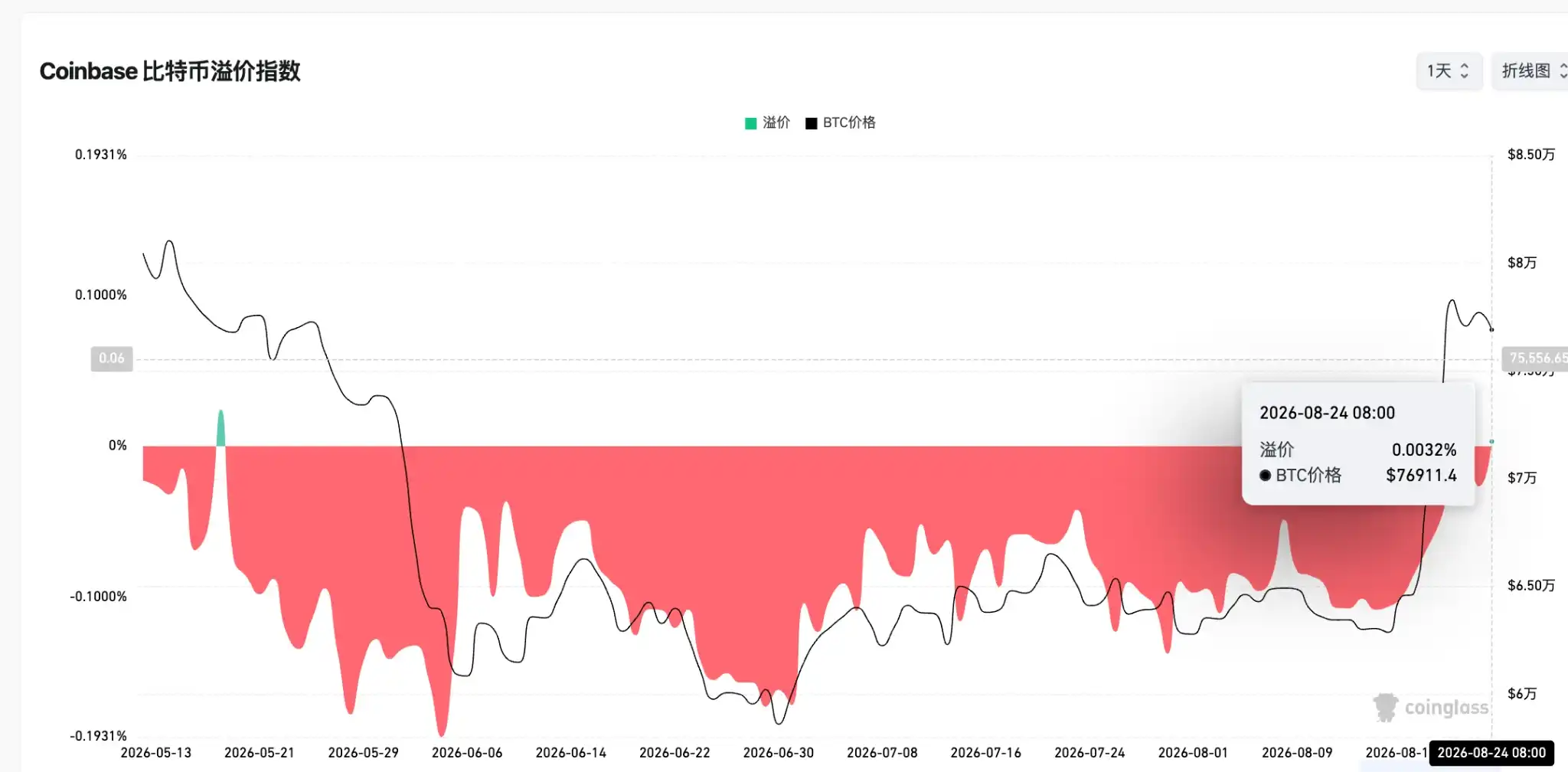
Coinglass data showed Coinbase’s Bitcoin premium index turned positive for the first time since May 19, printing 0.0032% and ending a 97-day negative streak, the longest on record. That suggests selling pressure from institutions has eased, though the positive reading is still small and needs confirmation from actual demand.
Polymarket now shows about a 48% probability that Bitcoin will touch $90,000 before 2027.
Institutions are still running shorts
On-chain positioning does not show unanimous bullishness. Abraxas Capital, Fasanara Capital and Wintermute are holding more than $600 million in combined Bitcoin and Ether shorts, including 138,600 ETH worth about $338 million and 3,425 BTC worth about $265 million.
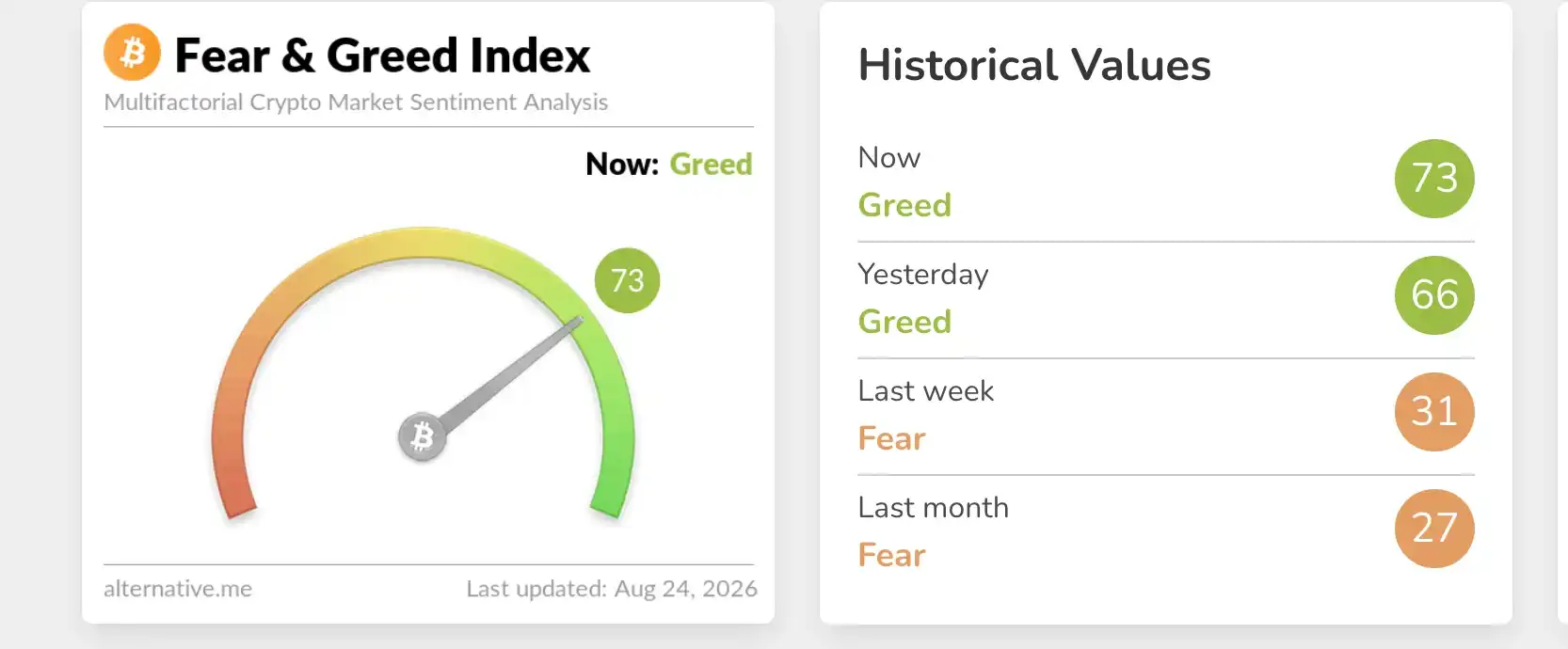
The Fear and Greed Index rose to 73, its highest reading since Oct. 5 last year, putting it firmly in the “greed” zone. Daniel YU, head of asset management at BIT, said position discipline matters more than directional calls ahead of Jackson Hole and the U.S. PCE release. He added that the week’s sharp reversal shows why linear extrapolation does not work well under policy shocks, and that holding $80,000 is the key test for whether this move becomes a trend rather than a repair rally.
Ether outperformed, but leverage reduction is showing up on-chain
Ether was equally strong. It started the week around $1,900, reached as high as $2,546, and gained nearly 30%, easily outpacing Bitcoin. ETH/BTC climbed back to around 0.031, while Ether’s market cap returned above $280 billion.
Still, the chain is showing signs of deleveraging. F2Pool co-founder Wang Chun reportedly sent 12,765 ETH to Binance over three days to repay a loan. At the same time, Abraxas Capital and Wintermute opened large shorts on Hyperliquid, suggesting professional money is not leaning one way.
BIT said the key near-term Ether range is $2,400 to $2,500. If price can consolidate at higher levels, excess liquidity may continue to spill into DeFi and altcoins.
Altcoins are in a high-beta phase
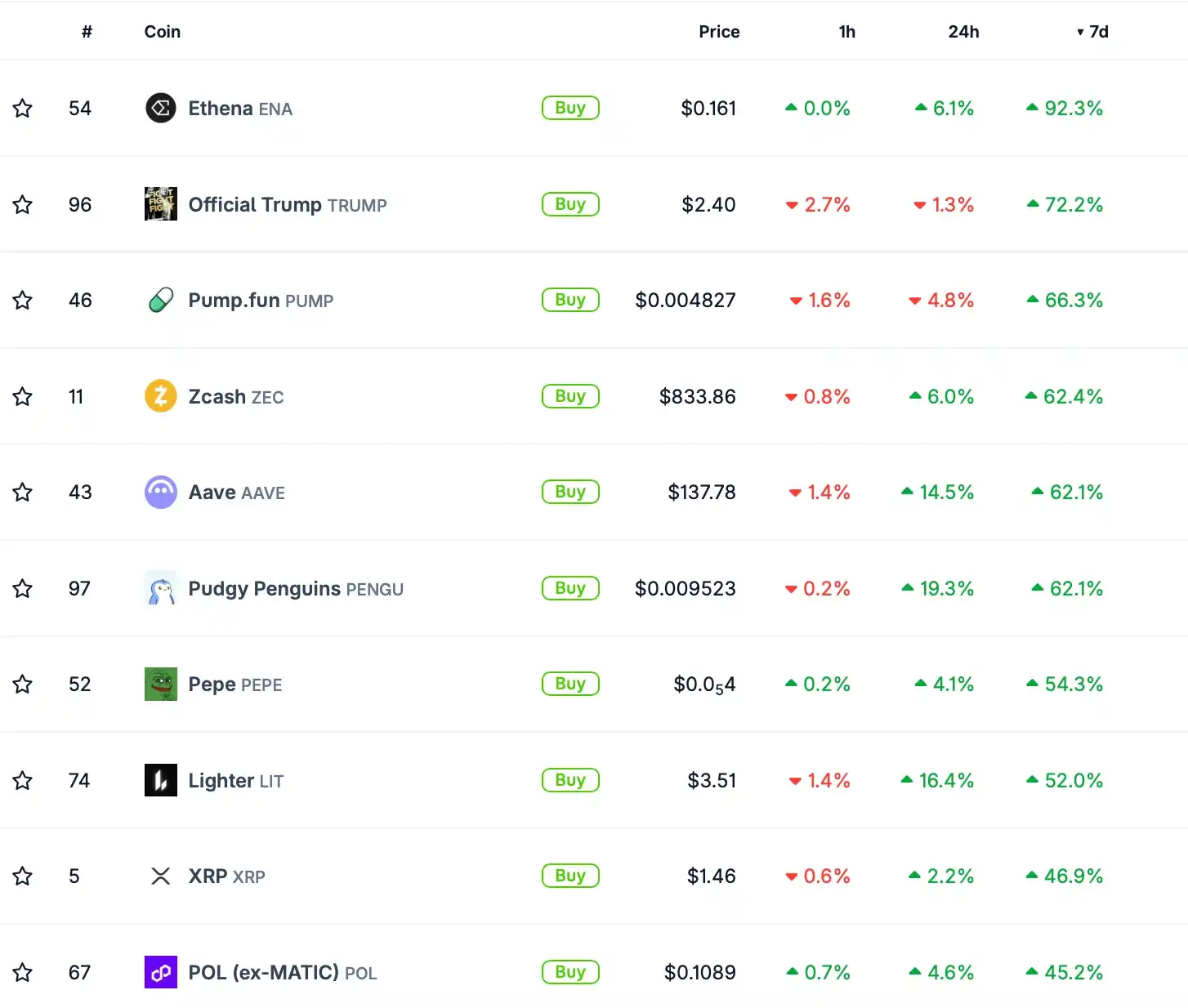
Altcoins have entered a classic high-beta phase. Among the top gainers in the top 100 by market cap were ENA, up more than 100% on a weekly basis after Coinbase strategic cooperation and FalconX warehouse-related catalysts; TRUMP, up about 90% on political meme and crypto-legislation headlines; PUMP, up 99% on a jump in Solana meme launchpad trading volume; and ZEC, up about 75% to $888 and at a record high as privacy names attracted a risk-off premium. HYPE briefly cleared $83 and was up more than 44% over seven days, while AAVE moved above $130 for its highest level since February.
Other items on the board include large token unlocks this week for H, HUMA and XPL. H carries an unlock worth about $19.9 million. SoSoValue (SOSO) will unlock about 23.46 million tokens worth roughly $7.3 million. Plasma (XPL) will unlock about 88.89 million tokens worth around $8 million. Humanity Protocol (H) will unlock about 266 million tokens worth about $19.9 million.
Binance will support the Conflux Network (CFX) upgrade and hard fork on Aug. 25. BNB Chain plans a security-focused Pasteur hard fork on the same day. Zcash will open a token-holder vote on the scope of the NU7 upgrade on Aug. 25. The EU will expand its crypto ban on Belarus to all MiCA service providers, effective Aug. 25.
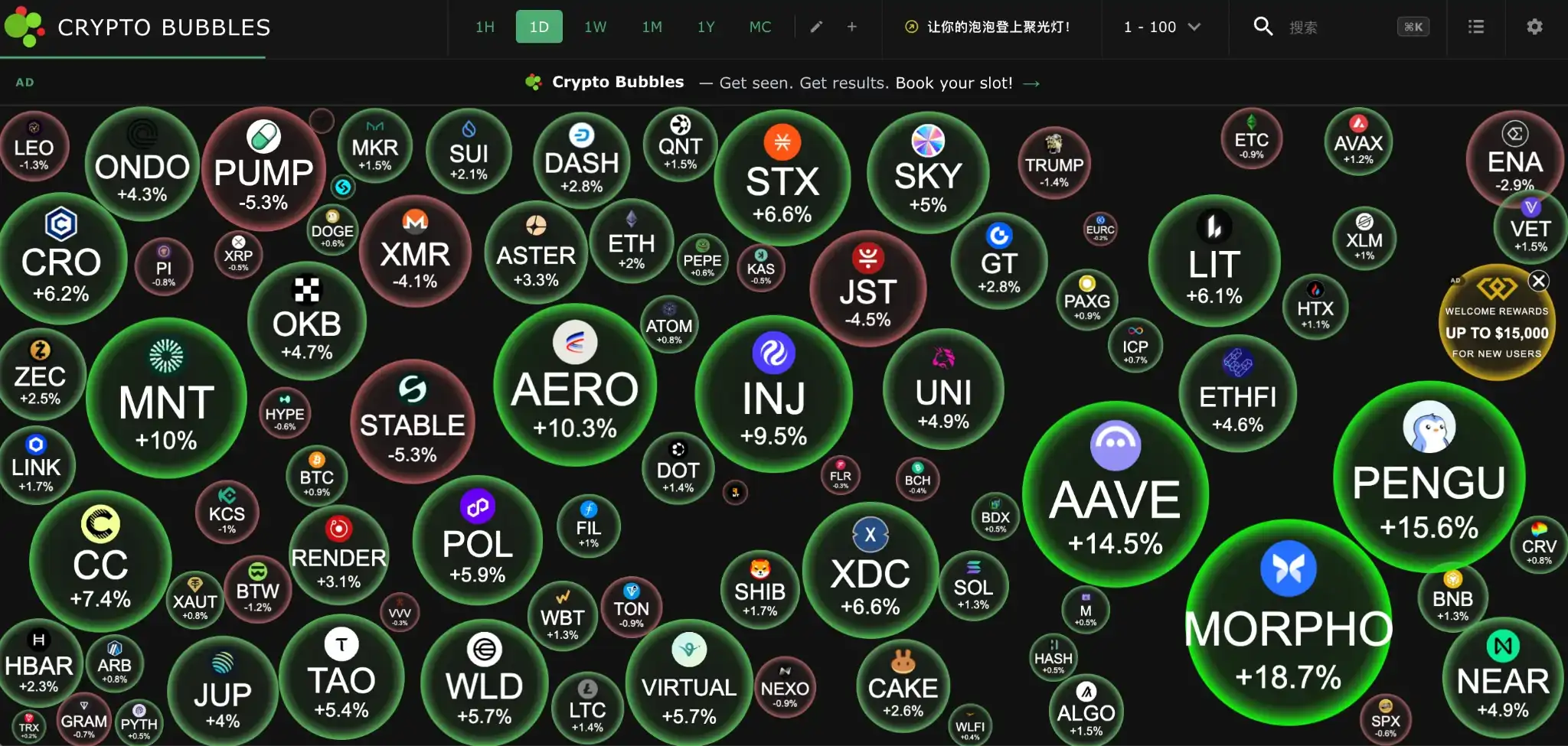
Crypto stocks outperformed as broader U.S. futures softened
U.S. stock index futures were slightly lower, with Dow futures down 0.01%, Nasdaq 100 futures down 0.65% and S&P 500 futures down 0.17%.
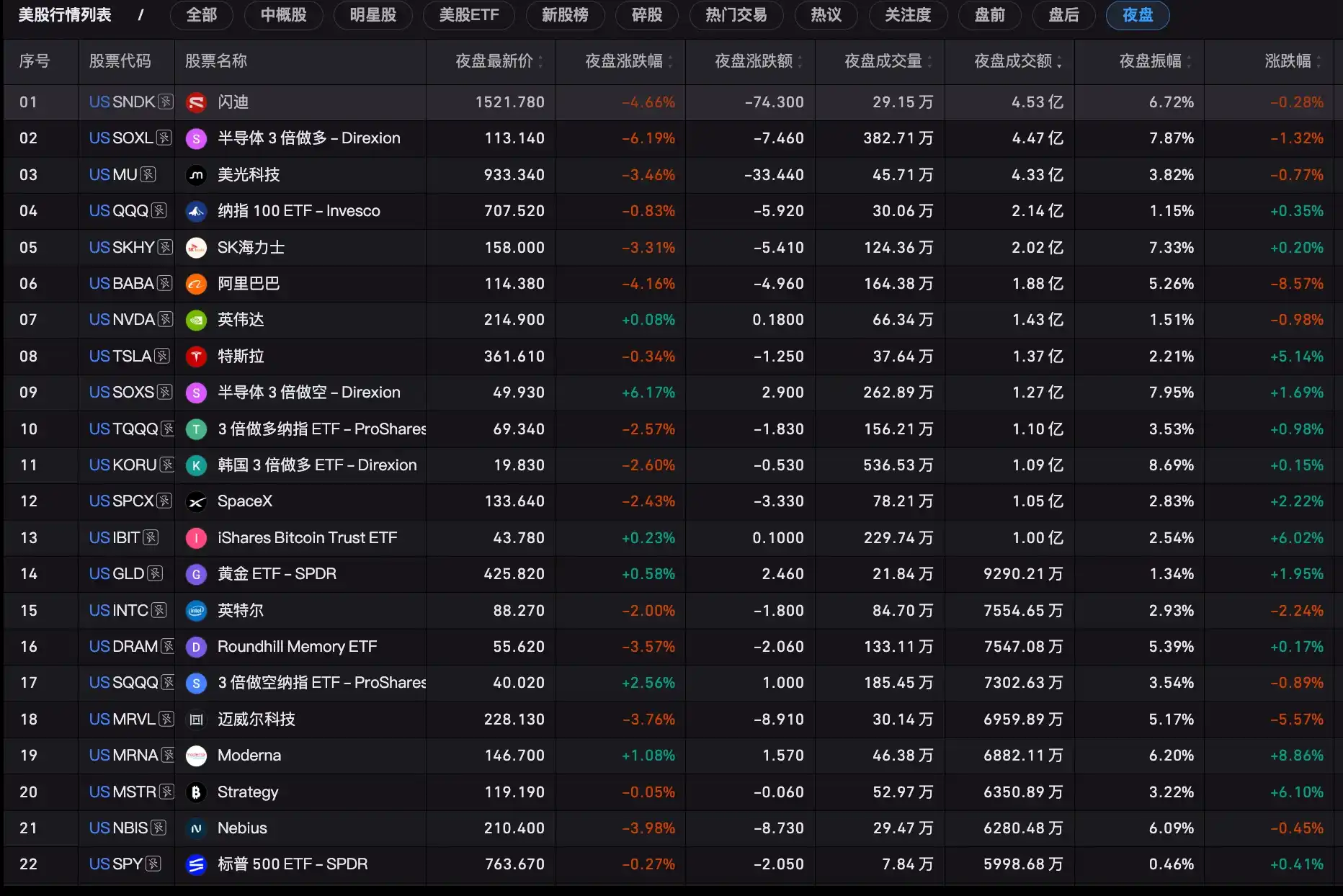
BIT’s overnight tape showed broad losses in semiconductors, memory and optical communication names. Sandisk fell 4.66%, Micron dropped 3.46%, SK Hynix lost 3.31%, Intel slipped 2%, Marvell declined 3.76%, and the DRAM ETF fell 3.57%. Nebius dropped 3.98% and Lumentum fell 4.2%.
Applied Optoelectronics fell more than 12% overnight after signing a $600 million ATM equity distribution agreement. Alibaba, which had already dropped 8.58% on Friday, fell another 4.16% overnight after announcing an HK$80 billion share placement over the weekend.

The AI trade is now entering earnings verification mode, with Nvidia’s Wednesday post-close report in focus. Jefferies expects July-quarter revenue of $95 billion, while Morgan Stanley is more cautious at $91.2 billion. Rising memory costs could push Nvidia’s AI servers up more than 15% in early 2026. Citadel also disclosed that it cut semiconductor exposure by more than 80% through over 100 block trades, a move involving more than $4 billion and names such as Micron, Nvidia, Broadcom, TSMC, CoreWeave and Nebius.
Crypto-linked equities remained the most responsive part of the risk complex. According to BIT U.S. stocks data, Robinhood rose nearly 14%, Coinbase gained more than 8%, Strategy climbed more than 6%, and Circle plus Bitmine Immersion Technologies both advanced more than 5%.
Asia-Pacific markets fell as Korea, Japan and Hong Kong came under pressure
Most Asia-Pacific markets were lower on Monday, with pressure coming from elevated global bond yields, the approach of the U.S. PCE release and profit-taking after a crowded AI trade. South Korea’s KOSPI fell 215.99 points, or 3.12%. Samsung Electronics still dropped 8.7% despite unveiling a capital return plan of up to 110 trillion won for 2026, and SK Hynix fell 3.41%.
The Nikkei 225 closed down 0.74%. Higher Japanese long-end yields, yen volatility and softer global risk appetite weighed on the market. Kioxia fell 6.24%, and SoftBank Group dropped 5.33%.
Hong Kong’s Hang Seng Tech Index slid 3.61%, with large-cap names in AI models, chips and internet shares leading the declines. Zhipu and MINIMAX-W both fell more than 10%, Tianshu Zhixin dropped more than 9%, SMIC lost 8%, and GigaDevice plus Hua Hong Semiconductor both fell more than 5%. Mainland China also weakened, with the Shanghai Composite down 0.59%, the Shenzhen Component down 2.13% and the ChiNext Index down 3.21%, while precious metals and coal held up better.
A Goldman Sachs report said China’s semiconductor self-sufficiency rate by volume has risen to 70%, lifted its 2030 capex target to $82 billion and initiated coverage of CXMT with a Buy rating. Near-term sentiment, however, remains constrained by the global risk backdrop.
What to watch next
- Aug. 24: SK Hynix union vote on wages and labor terms, with the market watching for possible HBM and memory supply-chain disruption.
- Aug. 24: Pinduoduo conference call at 19:30, plus earnings from Leapmotor and Xpeng.
- Aug. 25: U.S. Treasury Secretary Bessent to release details of sanctions on Iran.
- Aug. 25-26: Jefferies semiconductor, IT hardware and communications tech conference, with TSMC, FormFactor, Aehr Test Systems and Arbe Robotics among the participants.
- Aug. 26-30: Gamescom in Cologne, with Microsoft, Nintendo, Tencent, NetEase and CDPR set to appear.
- Aug. 26-27: Deutsche Bank’s California tech conference in Dana Point.
- Aug. 26-28: Shenzhen AGIC general artificial intelligence expo, followed by the Big Data Expo from Aug. 28-30.