
On Aug. 13, Calterah Microelectronics (Shanghai) Co., Ltd. had its STAR Market IPO application formally accepted by the Shanghai Stock Exchange. China International Capital Corporation (CICC) is the sponsor. The company plans to issue no more than 9.42455 million shares, representing at least 25% of its total share capital after the offering, and seeks to raise RMB 3.489 billion. Based on those terms, the implied valuation is about RMB 14 billion.
That figure stands well above the valuation from Calterah’s E2 financing round completed roughly six months earlier, when the implied valuation was around RMB 8.26 billion. On that basis, investors in that round are sitting on a paper gain approaching 70% in less than a year.
Founded by a Berkeley-trained team, built around automotive radar chips
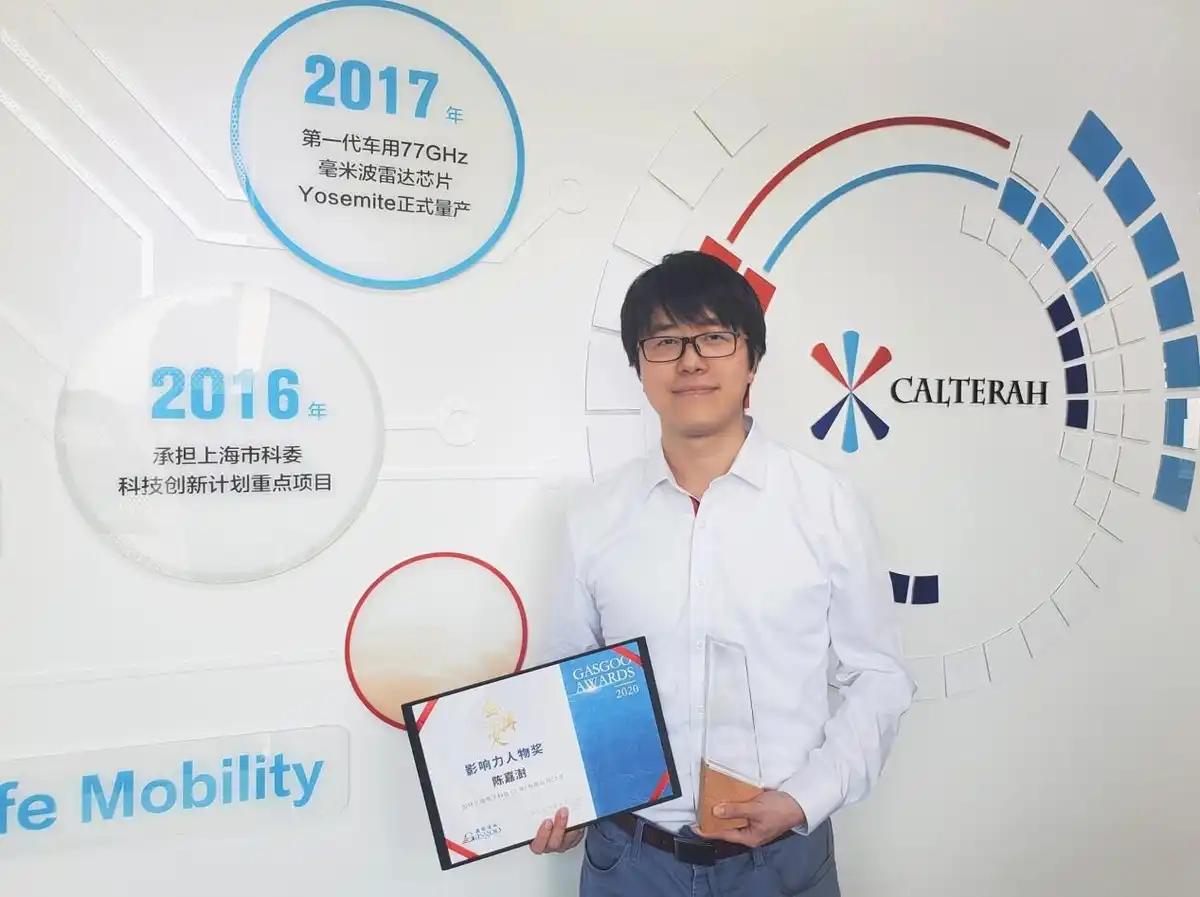
Calterah traces its start to February 2014. After earning a Ph.D. in electrical engineering from Berkeley at age 30, Chen Jiashu returned from Silicon Valley to Shanghai’s Zhangjiang area to start the company with his advisor, Ali Niknejad, director of the Berkeley Wireless Research Center. The target was millimeter-wave radar, a field then dominated by international players.
While in the U.S., Chen had led development of what the article described as the world’s first 60GHz WiGig CMOS SoC chip. He also received the Fulbright Science and Technology Award from the U.S. Department of State and was the only Chinese student among the 27 awardees that year.
From the beginning, Calterah took a less common route. At the time, mainstream industry designs relied on multi-chip solutions based on gallium arsenide or silicon-germanium, which came with higher costs and lower integration. Calterah instead bet on CMOS, even as that approach drew skepticism over whether its performance could meet automotive-grade requirements.
Product milestones and the cost case for CMOS
The prospectus says Calterah taped out the world’s first fully integrated 77GHz radar transceiver single chip in 2015, just one year after its founding. In 2017, Yosemite, described as the world’s first automotive-grade CMOS RF front-end chip, entered mass production. The company introduced an AiP SoC chip in 2019 and launched the Kunlun platform built on a domestic supply chain in 2024.
The article points to cost as the main advantage of the CMOS path. Traditional module solutions could cost more than $100, limiting adoption to high-end vehicles, while a CMOS single-chip design cut costs to a fraction of that level and helped bring millimeter-wave radar into passenger cars priced around RMB 100,000.
Market position by 2025
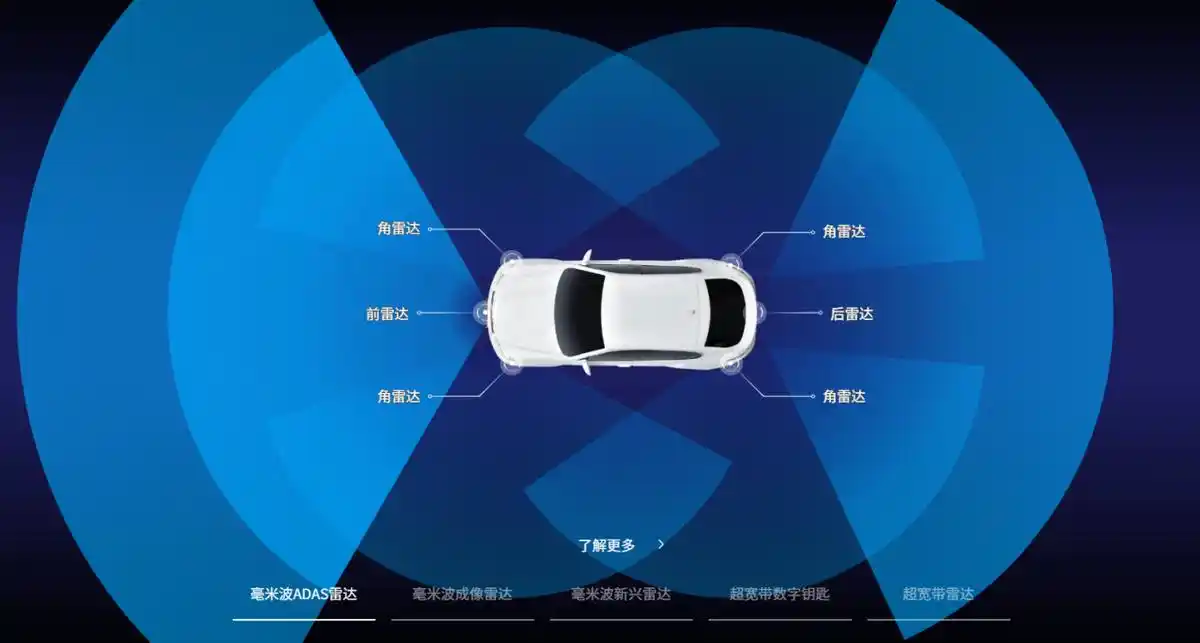
By 2025, Calterah ranked fourth in the global automotive millimeter-wave radar chip market with about 4% share. In China, its market share reached 31.1%, ranking second. Cumulative shipments exceeded 30 million chips, the company worked with more than 30 automakers, and its products covered more than 300 vehicle models.
The filing also says Calterah became the first domestic supplier for two leading global Tier 1 platforms, entering supply chains for Volvo and Rivian. That put a China-made automotive-grade chip into overseas front-end vehicle supply chains.
Its customer list includes BYD, Geely, NIO, Chery, SAIC, FAW, Leapmotor, Seres, Volvo, and Rivian.
BYD carries far more weight than any other end customer. Calterah entered BYD’s advanced driver-assistance system supply chain relatively early, and in 2025 it benefited from BYD’s “smart driving for all” strategy, which drove a sharp rise in procurement demand. The article identifies that as the core reason revenue doubled in 2025.
Revenue doubled in 2025, but losses continued
Revenue rose from RMB 206 million in 2023 to RMB 303 million in 2024 and RMB 632 million in 2025, for a three-year compound growth rate above 75%. The year-on-year growth rate in 2025 reached 108.44%.
Profitability has not turned positive. Net profit attributable to shareholders was negative RMB 323 million, negative RMB 334 million, and negative RMB 193 million in 2023, 2024, and 2025. The company then posted another RMB 60 million loss in the first quarter of 2026. Cumulative losses over the three years and three months reached RMB 910 million, and as of the end of March 2026, unrecouped losses on the balance sheet stood at RMB 172 million.
Gross margin, though, was not weak. Core business gross margin came in at 47.80%, 43.81%, 47.25%, and 48.97% across the reporting periods, above the domestic peer average of roughly 35% to 38%. In other words, the products themselves were profitable, but that profit was absorbed by high R&D and selling expenses.
Heavy R&D burden and negative operating cash flow
R&D spending totaled RMB 304 million, RMB 365 million, RMB 370 million, and RMB 98.33 million from 2023 through the first quarter of 2026. At one point, the R&D expense ratio reached 147.75%. It fell to 58.55% by 2025, but that was still well above the 25% to 42% range for peers.
As of March 2026, the company had 275 R&D employees, accounting for 65.63% of total staff.
Selling expense ratios were 15.24%, 13.90%, 7.42%, and 8.11% over the same periods, also above peer levels. With that spending profile, operating cash flow remained negative at RMB 170 million, negative RMB 249 million, negative RMB 18.465 million, and negative RMB 121 million from 2023 through the first quarter of 2026. The article says the company has yet to achieve positive internal cash generation and still relies on equity financing to support operations.
Financing rounds tracked technical milestones
Calterah’s fundraising moved almost in step with its technology milestones. In 2015, Silergy and Hong Kong Ziting led the angel round. In 2017, Frees Fund and Zhongguancun Xingye Investment took part in the Series A round. In 2019, CICC Capital, Shaanxi Hongchuang, China Renaissance, and China Mobile Innovation Industry Fund joined the Series B round, followed by a B+ round led by Gaolishengzhu in August that year.
In 2020, Shangqi Capital, GAC Capital, and Chaos Capital entered as strategic investors. In 2021, SDIC Fund Management led the Series C round, with Langmafeng Venture Capital, BOCOM International, and China Renaissance New Economy Fund also investing. In 2022, Fosun Capital, China Merchants Capital, Noah GLP, Yinggang Capital, and Juntong Capital joined the C+ round.
The D round in July 2024 was described as the valuation inflection point. Investors included the second phase of the National Integrated Circuit Industry Investment Fund, Shanghai Guoxin Venture Capital, Fuchuangtou, and existing shareholders SDIC Fund Management and Walden International.
Fundraising accelerated in the year before the IPO push. In a capital increase in January 2025, the second phase of the Big Fund invested RMB 50 million, while Shanghai Guoxin, Advanced Manufacturing Phase II, Innovation Chuangke, and Hong Kong Ziting followed, for a total of about RMB 179 million. In the E1 round in September 2025, Lingang Special Area funds including Linglingqu Fund, Zhangke Yaokun, Ruishi Phase IX, and Greater Bay Area Fund invested a combined RMB 208 million. In the E2 round in 2026, Huaxin Dingxin alone invested RMB 300 million, while CCTV Rong Media, Ruishi Phase VII, and Guofengtou Xinzhi each invested RMB 100 million, with several other institutions joining. That round totaled about RMB 955 million.
Across those three rounds, Calterah raised about RMB 1.34 billion. The prospectus also shows that in the 12 months before filing, the company brought in more than 20 institutions in rapid succession, all at the same subscription price of RMB 292.25 per share.
Three pressure points in the prospectus
The filing sets out three issues likely to draw close scrutiny.
First is concentration on both direct customers and end customers. The top five direct customers, mostly semiconductor distributors, contributed 99.77%, 99.07%, 99.90%, and 99.97% of sales revenue across the reporting periods. On the end-customer side, BYD alone accounted for more than 50% of sales revenue over a long period. In 2026, after an automaker introduced a second supplier, revenue from the largest end customer came under pressure, and first-quarter revenue growth slowed to 8.10%, down sharply from 286.94% a year earlier. The article notes that customer qualification cycles for automotive chips typically run three to four years, which means any steep drop in BYD orders would be hard to offset quickly with new accounts.
Second is a concentrated supply chain with meaningful overseas dependence. The share of overseas procurement has remained above 50% for a long period. The top five suppliers accounted for 80.16% of procurement, and the largest supplier alone made up 58.68%. EDA tools also rely on overseas providers.
Third is limited product diversification. In 2025, millimeter-wave radar chips contributed 99.93% of revenue, with ADAS chips accounting for 90.64% of that. The unit price of the core product fell from RMB 49.56 per chip to RMB 41.62 over more than three years, a cumulative drop of about 16%.
Commercialization of the company’s ultra-wideband, or UWB, chips has been slow. In 2025, only a small number of samples were produced in the fourth quarter, and full-year revenue was just RMB 5,400. In an interview this year, Chen Jiashu also said that compared with millimeter-wave radar, UWB chips still lag in distance and angle precision, point-cloud richness, and target classification capability, making it difficult in the short term to match millimeter-wave radar’s market position and revenue scale.
Use of proceeds
Of the planned RMB 3.489 billion in IPO proceeds, about RMB 2.093 billion is earmarked for millimeter-wave radar R&D and industrialization, RMB 695 million for the UWB chip project, and the remaining RMB 702 million for a technology innovation center and headquarters construction.
At “Calterah Day 2026” in June, the company announced that its Dubhe UWB chip had entered mass production. The prospectus presents that as a concrete step for a second product line, though large-scale volume ramp still needs to be proven.
Source: Xinghe Business Observer. This article was carried from ZAKER Finance.