Overseas AI C2026-09-22 09:11:00CICC says overseas AI spending is still rising, but slower growth could weigh on China exports in 2027CICC Insight said overseas AI capital expenditure is still expanding and continues to spill over into China through the global AI supply chain, supporting exports of servers, optical modules, PCBs, communications equipment and related components while also lifting domestic investment plans. The report focuses on the United States and notes that capital expenditure by five major cloud companies — Amazon, Alphabet, Microsoft, Meta and Oracle — rose 86.5% year over year in the second quarter of 2026. Based on FactSet consensus estimates, total overseas AI capex is still expected to grow, though the year-over-year pace may start to cool from the fourth quarter of 2026. The report points to three constraints behind a possible slowdown: tighter financing conditions as free cash flow comes under pressure and the gap between ROIC and WACC narrows; physical bottlenecks such as power, water, land and permitting limits for data centers; and rising AI safety governance concerns, including Anthropic CEO Dario Amodei’s recent call to moderately slow frontier model capability gains. CICC’s estimates show overseas AI capex leads China’s AI-related exports by about one quarter and domestic AI supply-chain investment by about one year. On that basis, the main effect in 2027 may show up first in weaker export support, while the lagged impact on investment may become clearer in 2028.430
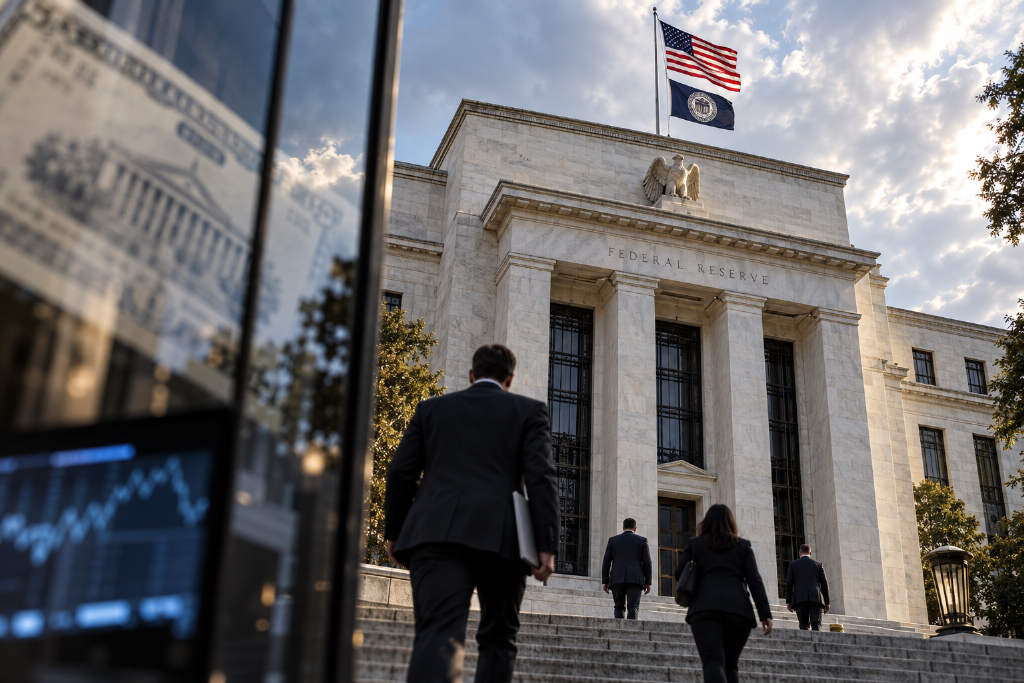
Federal Reser2026-09-14 00:27:04CICC says a September Fed rate hike may be the better option to preserve credibilityCICC said in a research note that, from the perspective of preserving the Federal Reserve’s credibility, the Fed would be better off raising rates in September, calling that the key factor in the decision. The note said the "deliberate ambiguity" from Waller at the July Federal Open Market Committee, or FOMC, meeting threw market expectations into disarray. It added that the U.S. Treasury term premium rose from 0.65% at the end of July to 0.9% in mid-August, which in CICC’s view forced Waller to make a hawkish commitment at the Jackson Hole conference. According to the note, the Fed may still have some room to maneuver if incoming data weakens. But with nonfarm payrolls and inflation coming in above expectations one after another, the central bank has been pushed into a tighter spot. CICC also said that while these short-term indicators have their limits, they are still the main reference points ahead of the next FOMC meeting. If the Fed still chooses not to hike, the note warned, markets may question its earlier hawkish messaging and that could trigger a deeper credibility problem and a loss of control in the Treasury market. The item was cited by Jin10 via Odaily.910
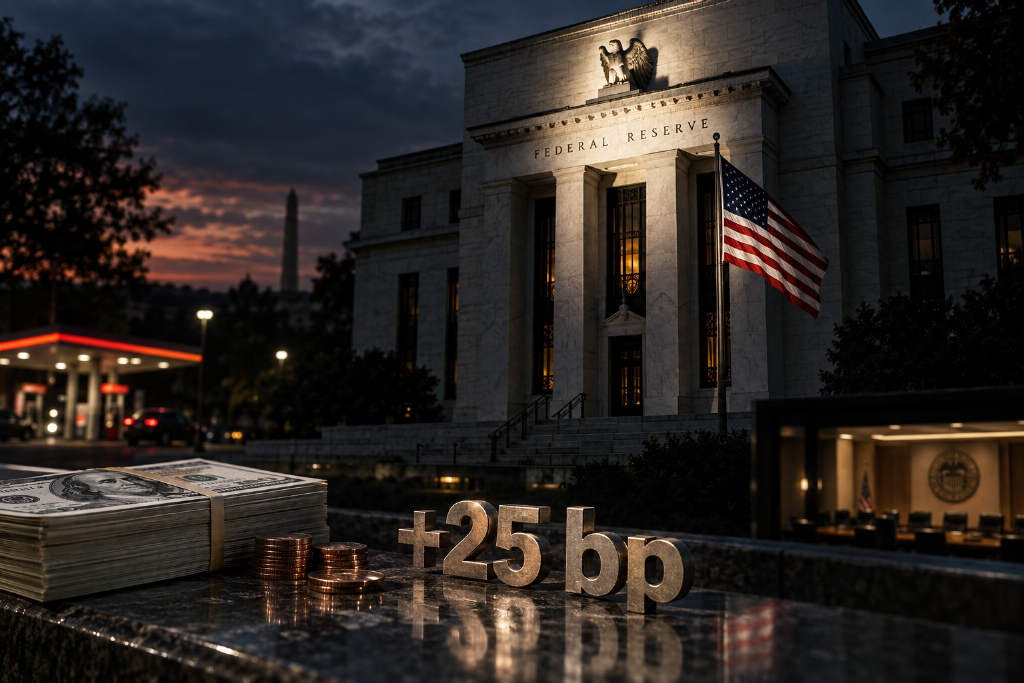
US inflation2026-09-12 05:49:58CICC says August U.S. inflation may put a September Fed rate hike back on the tableU.S. inflation picked up again in August, according to a research note from China International Capital Corporation, or CICC, cited by BlockBeats on Sept. 12. The note said headline CPI rose 0.4% month over month, while core CPI increased 0.3% from a month earlier. Core CPI also climbed 2.4% year over year, slightly above market expectations. CICC said the August inflation print has reached the threshold for the Federal Reserve to resume rate hikes. It expects the Fed could raise rates by 25 basis points at its Sept. 16 policy meeting, lifting the federal funds target range to 3.75% to 4%. In CICC’s view, higher energy prices and continued resilience in services prices remained key drivers of inflation, while some AI-related price pressures had also begun to emerge. The firm added that the Fed may lower its unemployment-rate forecast, raise its inflation forecast, and push up its projected rate path for 2027 and 2028, sending a more hawkish signal. CICC also warned that the bigger risk is that the Fed could deliver additional hikes later this year or next year, leaving room for markets to reprice expectations for an easing cycle.830
Zhipu2026-09-11 11:58:17Zhipu launches roughly $5 billion fundraising with share placement and convertible bondsZhipu (2513.HK) has launched a roughly $5 billion fundraising in Hong Kong through a dual-track transaction that includes about $2 billion of new share placement and about $3 billion of convertible bonds. The company is placing 21.97 million new shares at HK$714 each, representing about a 10% discount to Friday's closing price of HK$793. The convertible bonds are zero-coupon notes due in September 2027, denominated in yuan and settled in U.S. dollars, with an issue price of 100% to 100.5% of principal and an implied yield between negative 0.5% and zero. The initial conversion price is HK$892.50, a 25% premium to the placement price. Zhipu said the proceeds will go toward research and development, computing resources and related infrastructure, as well as expansion, strategic investments, potential acquisitions, working capital and other general corporate purposes.950
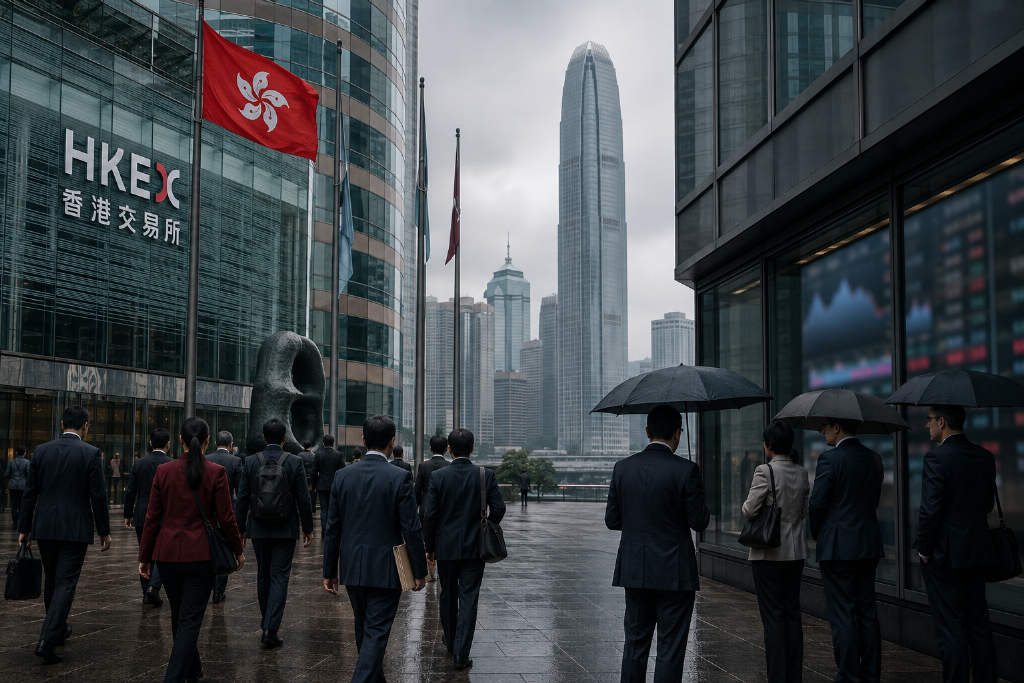
Hong Kong sto2026-09-07 01:03:05CICC says southbound money shows smarter timing in Hong Kong stocks, while active foreign inflows lagA WuBlockchain article republished a research note from CICC that examines which investor flows in Hong Kong equities act more like “smart money.” The report argues that Hong Kong’s offshore market structure makes it unusually sensitive to cross-market capital reallocation, creating a recurring seesaw effect against A-shares and other regional markets. Looking back to 2016, CICC says southbound funds are highly correlated with the market overall, yet they also show a contrarian edge: inflows tend to slow after strong rallies and pick up when Hong Kong stocks fall or underperform A-shares. Within southbound flows, insurers are described as the most stable long-term buyers, often adding on weakness, while actively managed mutual funds and ETFs tend to chase market direction more closely. By contrast, the note says active foreign funds usually add exposure only after market performance and earnings expectations improve, making them a lagging indicator by one to two quarters. Passive foreign flows, in CICC’s view, carry less signal because they are smaller and are often driven by subscriptions and redemptions in broader emerging-market products rather than dedicated China positioning. CICC adds that flow signals matter more when China’s credit cycle is choppy and overseas liquidity is tightening. In the current setup, it says southbound inflows have slowed over the past month while active foreign inflows have accelerated, pointing to a market with more structural opportunities than broad upside in the near term.1120
Hong Kong sto2026-09-07 01:03:05CICC says southbound funds show “smart money” traits while active foreign flows lag the Hong Kong marketA research note from China International Capital Corporation, republished by WuBlockchain, argues that Hong Kong stocks are especially sensitive to shifts in capital because the market operates offshore and competes with other equity markets for investor allocation. Looking back to 2016, CICC says southbound flows are closely tied to market performance but also display some “smart money” characteristics: inflows tend to slow after strong rallies and accelerate when Hong Kong equities fall or underperform A-shares. By contrast, the report describes active foreign investors as a lagging signal that usually adds exposure only after market performance and earnings expectations have already improved, while passive foreign flows carry less short-term signaling value because they are driven more by broad emerging-market allocations than China-specific positioning. CICC adds that funding signals become more useful when China’s credit cycle is choppy and overseas liquidity is tightening. In its current read, those conditions are in place: southbound inflows have slowed over the past month, active foreign inflows have accelerated, and that mix, based on the firm’s framework, points to limited room for a near-term broad upside move in Hong Kong equities and raises the risk of renewed weakness instead.1070
Yue Zhi An Mi2026-09-04 11:20:32Yue Zhi An Mian Plans Hong Kong IPO, Could Raise Up to $5 BillionYue Zhi An Mian, a company aiming to go public in Hong Kong as early as this year, plans to raise up to $5 billion through an IPO, according to people familiar with the matter. The company has appointed Bank of America as global coordinator, with CICC, Deutsche Bank, and Goldman Sachs as joint sponsors. A confidential IPO filing has been submitted, and the offering could raise between $3 billion and $5 billion. The plans are still under consideration and details may change.890
Federal Reser2026-08-29 06:42:22CICC: Fed Chair Warsh's Hawkish Jackson Hole Speech Aids Policy CredibilityIn a note published on Aug. 29, CICC offered its take on Federal Reserve Chair Warsh's Jackson Hole speech, calling the tone hawkish. Warsh acknowledged that inflation remains elevated, said interest rates are still the primary policy tool, and pledged to act "as circumstances warrant." He pointed to economic resilience, stable employment, and easing financial conditions as evidence that policy risks now tilt to the inflation side. He also placed responsibility for the 65-month inflation overshoot on the central bank itself and walked back his July suggestion of letting the market do the Fed's rate-hiking work. CICC believes the speech will help rebuild the Fed's credibility, and markets have already started to price a marginal recovery in policy trust. Over the longer run, Warsh continues to argue that AI could reshape the economy and the policy framework, while pushing for fewer forward-guidance commitments and other reforms. For markets, the hawkish signal raises the odds of a rate hike this year, but CICC cautions that this is not necessarily pure bad news. Liquidity is not the issue today; what markets need is policy discipline and predictability. If inflation is subdued in time, the medium-term outcome could actually be favorable, the brokerage said.910