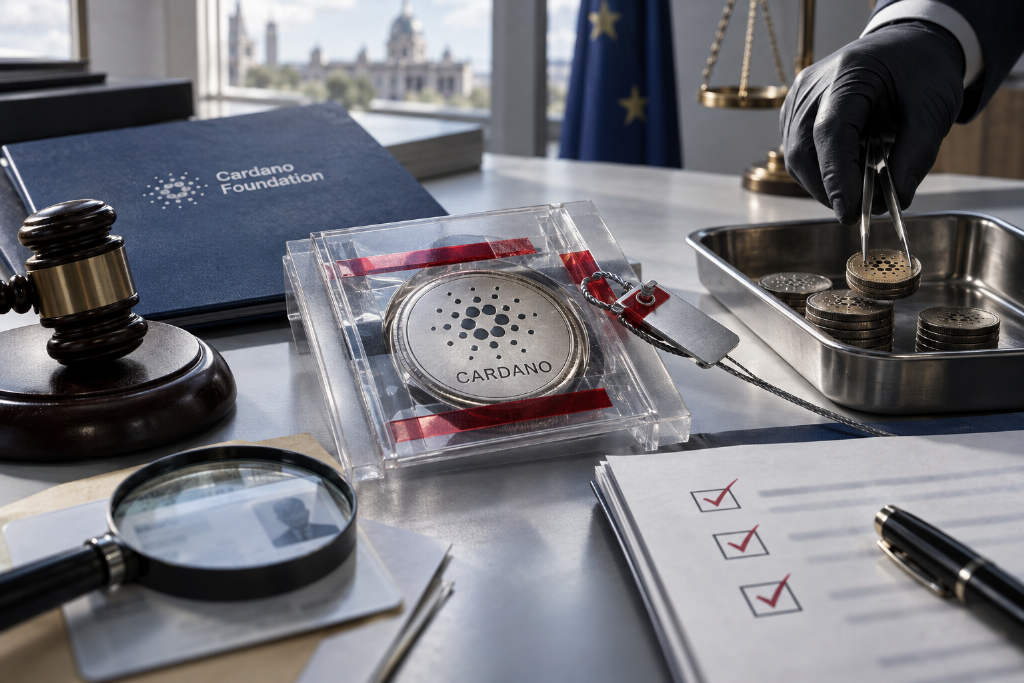
Cardano Foundation has introduced the CIP-0113 token standard, a framework aimed at regulated asset issuers that want tighter control over token transfers and holdings on Cardano. Under the standard, issuers can restrict recipients based on preset rules and can also freeze, seize or move token balances. The design allows those controls to be implemented without a hard fork of the Cardano network. CIP-0113 also requires compliance checks on every transfer, including identity verification and sanctions-list screening. Issuers can choose from existing rules or define their own, and those rules can be updated as regulatory requirements change. Under an authorization mechanism, designated parties may transfer tokens without the holder’s consent. The development was reported by CoinDesk and cited by Odaily.
Cardano Foundation has introduced the CIP-0113 token standard, allowing regulated asset issuers to restrict recipients under preset rules and to freeze, seize or transfer token holdings.
The standard lets issuers apply those controls without a hard fork of the Cardano network. CIP-0113 requires compliance checks for every transfer, including identity verification and sanctions-list screening.
Issuers can select existing rules or create their own, then update them as regulatory requirements change. Under an authorization mechanism, relevant parties may transfer tokens without the holder’s consent. CoinDesk was cited as the source.
This article was originally published by Bit.Fan. For more cryptocurrency news and market insights, visit www.bit.fan. Disclaimer:
The market information, project data, and third-party content displayed on this platform are for industry information sharing only and do not constitute any form of investment advice or return commitment.
Cryptocurrency trading carries high risks. Users should fully assess their risk tolerance and make independent decisions. All profits, losses, and legal responsibilities are borne by the users themselves.