
CFTC Eyes Crypto-Style Perpetual Contracts, First Target: Crude Oil

CFTC Eyes Crypto-Style Perpetual Contracts, First Target: Crude Oil

N
News Editor
2026-06-23 08:32:28
The U.S. Commodity Futures Trading Commission is looking to adopt the perpetual contract mechanism popular in crypto markets, starting with crude oil.
CFTCperpetual contractscrude oilcryptocurrencyregulation

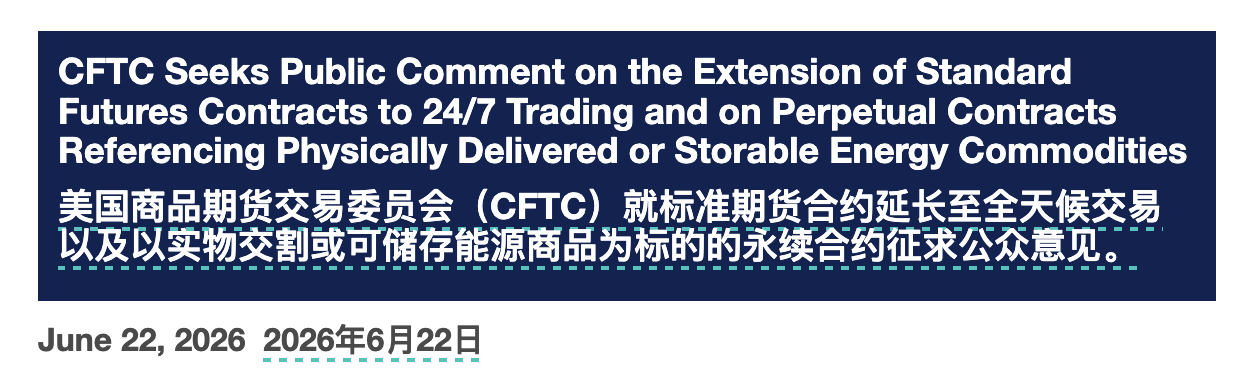
According to Foresight, the U.S. Commodity Futures Trading Commission (CFTC) is considering replicating the crypto market's popular perpetual contract product and introducing it to traditional energy trading, with crude oil as the first target.


CFTC Eyes Crypto-Style Perpetual Contracts, First Target: Crude Oil 2

CFTC Eyes Crypto-Style Perpetual Contracts, First Target: Crude Oil 3

Perpetual contracts are unique derivatives in the cryptocurrency market that have no expiration date and use a funding rate mechanism to anchor the price to the spot index. They have dominated digital asset trading since their inception. By "copying" the crypto market practice, the CFTC may be acknowledging the advantages of this mechanism in risk management and liquidity, and attempting to expand it to commodity markets.
CFTC Eyes Crypto-Style Perpetual Contracts, First Target: Crude Oil 4

Specific details have not yet been disclosed, but if implemented, this move could profoundly change the trading model for crude oil and other energy products, while also marking further integration between traditional finance and crypto finance in product design.

CFTC Eyes Crypto-Style Perpetual Contracts, First Target: Crude Oil 5

This article was originally published by Bit.Fan. For more cryptocurrency news and market insights, visit www.bit.fan.
200

Disclaimer:

The market information, project data, and third-party content displayed on this platform are for industry information sharing only and do not constitute any form of investment advice or return commitment.

Cryptocurrency trading carries high risks. Users should fully assess their risk tolerance and make independent decisions. All profits, losses, and legal responsibilities are borne by the users themselves.