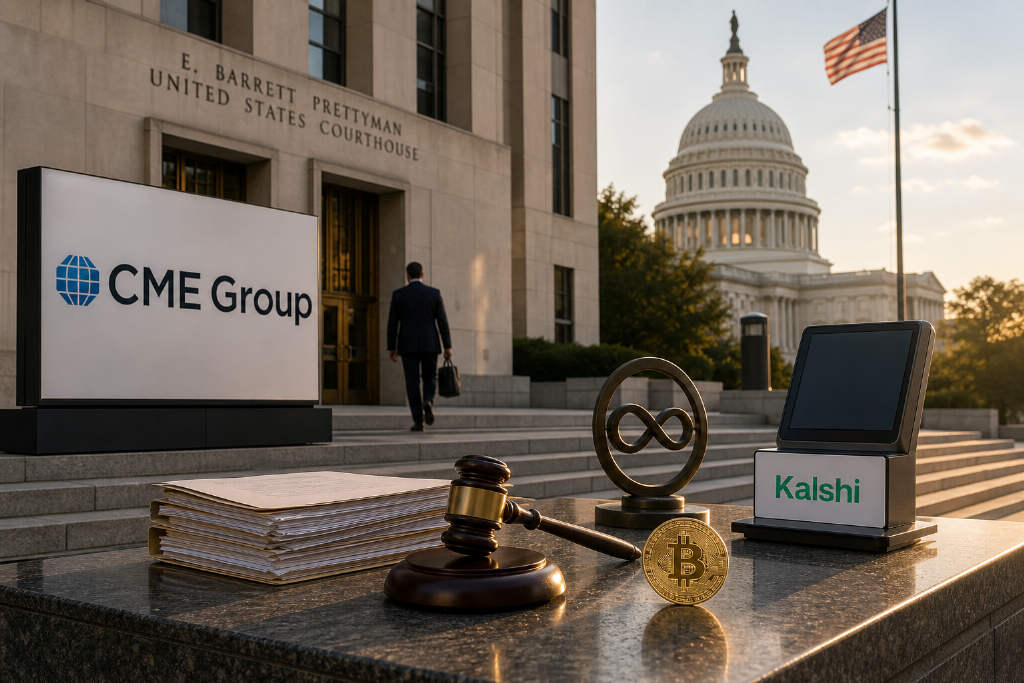
The CFTC has asked a Washington D.C. court to dismiss CME's lawsuit challenging Kalshi's bitcoin perpetual futures. Kalshi's cash-settled BTCPERP was approved in May, with no expiry date and a funding rate mechanism. CME argued the product is a swap rather than a futures contract, but the CFTC called the lawsuit an "overreaction" and noted CME could list similar products itself. CME must file a response by October 2.
The U.S. Commodity Futures Trading Commission (CFTC) has asked a federal court in Washington D.C. to dismiss a lawsuit filed by CME against Kalshi over the latter's bitcoin perpetual futures product, according to a post by Bitcoin News on X.
Kalshi's cash-settled bitcoin perpetual futures contract, ticker BTCPERP, received regulatory approval on May 29. The product has no expiration date, uses a funding rate mechanism, and tracks the spot price of bitcoin.
In its lawsuit, CME argued that a contract without a delivery date and with ongoing payments should be classified as a swap, not a futures contract. The CFTC countered that the lawsuit is an "overreaction" and pointed out that CME is free to list a similar product itself. The commission also noted that CME's own bitcoin futures trading volumes were higher in both June and August than in May.
CME has until October 2 to file its formal response to the motion.
This article was originally published by Bit.Fan. For more cryptocurrency news and market insights, visit www.bit.fan. Disclaimer:
The market information, project data, and third-party content displayed on this platform are for industry information sharing only and do not constitute any form of investment advice or return commitment.
Cryptocurrency trading carries high risks. Users should fully assess their risk tolerance and make independent decisions. All profits, losses, and legal responsibilities are borne by the users themselves.