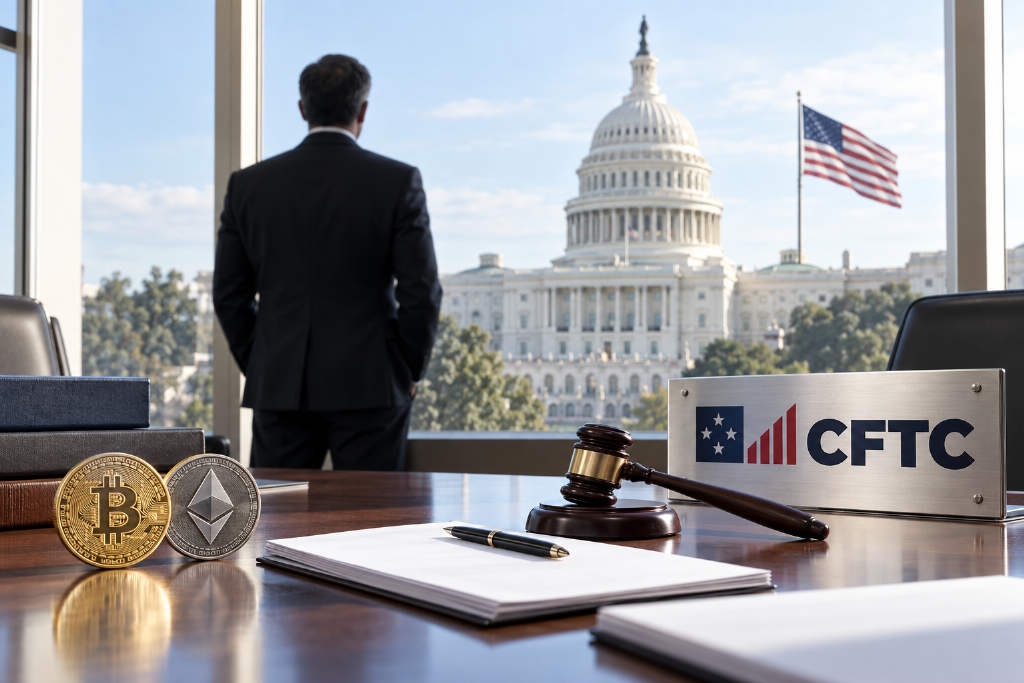
Michael Selig, chair of the U.S. Commodity Futures Trading Commission, said regulators already hold substantial statutory authority under current law and plan to keep issuing crypto-related rules on that basis. He said that while taking part in the president’s digital asset market working group, officials reviewed both existing statutory mandates and powers that could come from legislation. Selig’s remarks point to a regulatory approach that does not wait for an entirely new framework before acting. Instead, agencies are preparing to continue shaping oversight for the crypto sector through authority they already have, while also examining what additional powers legislation could provide. He said the goal is to prepare for the development of new areas in finance tied to digital assets.
Michael Selig, chair of the U.S. Commodity Futures Trading Commission, said regulators already have substantial statutory authority under current law and will continue issuing rules for the crypto sector based on existing powers.
Selig said that during work related to the president’s digital asset market working group, officials examined both statutory authority and powers at the legislative level. He said crypto regulatory rules will continue to be introduced under current supervisory authority as agencies prepare for the development of new areas in finance.
This article was originally published by Bit.Fan. For more cryptocurrency news and market insights, visit www.bit.fan. Disclaimer:
The market information, project data, and third-party content displayed on this platform are for industry information sharing only and do not constitute any form of investment advice or return commitment.
Cryptocurrency trading carries high risks. Users should fully assess their risk tolerance and make independent decisions. All profits, losses, and legal responsibilities are borne by the users themselves.