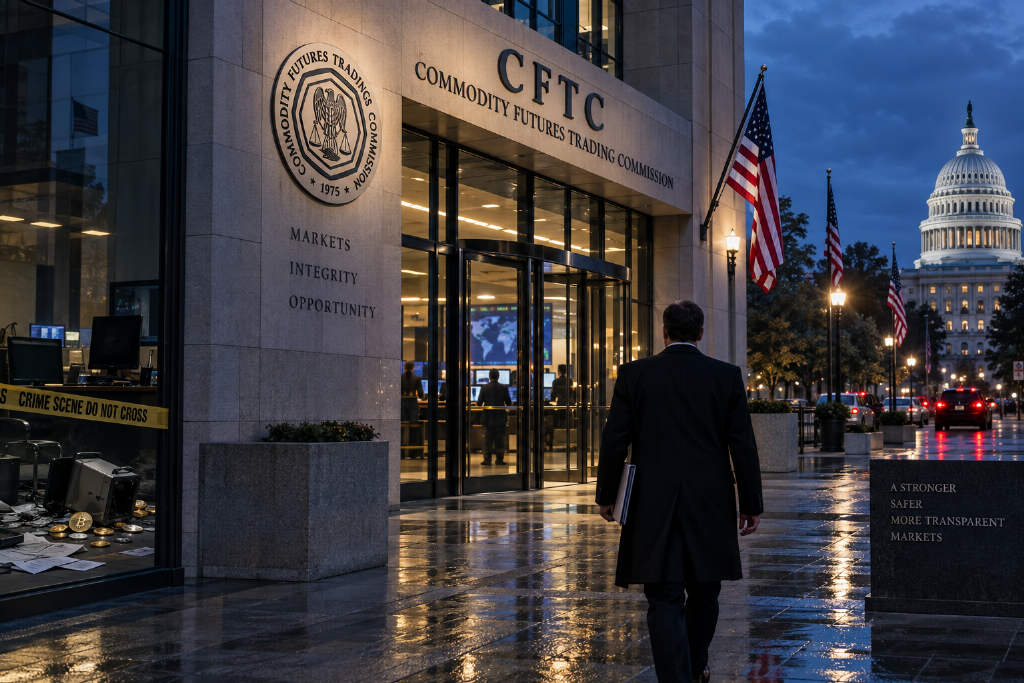
Mike Selig, chair of the U.S. Commodity Futures Trading Commission, said on X that the agency’s proposed regulatory regime for crypto assets would create a federal oversight framework designed to protect exchange customers from fraud, manipulation, and the theft of customer funds. He pointed to the FTX collapse as an example of the harm such rules are meant to address.
Selig argued that critics who oppose the CFTC’s effort to introduce market-based regulation for crypto exchanges while backing the status quo are, in effect, siding with fraudsters, manipulators, and predators. He said that stance risks inviting the next Sam Bankman-Fried to continue harming the American public. The remarks were published in a post linked by Foresight.
Mike Selig, chair of the U.S. Commodity Futures Trading Commission (CFTC), said in a post on X that the agency’s proposed regulatory regime for crypto assets would establish a federal oversight framework aimed at protecting exchange customers from fraud, manipulation, and theft of customer funds, harms he said were seen in the FTX case.
Selig said it was ironic that critics had condemned the CFTC for bringing market-based regulation to crypto exchanges while supporting the status quo. In his view, that position effectively sides with fraudsters, manipulators, and predators, and dangerously invites the next Sam Bankman-Fried to victimize the American public.
This article was originally published by Bit.Fan. For more cryptocurrency news and market insights, visit www.bit.fan. Disclaimer:
The market information, project data, and third-party content displayed on this platform are for industry information sharing only and do not constitute any form of investment advice or return commitment.
Cryptocurrency trading carries high risks. Users should fully assess their risk tolerance and make independent decisions. All profits, losses, and legal responsibilities are borne by the users themselves.