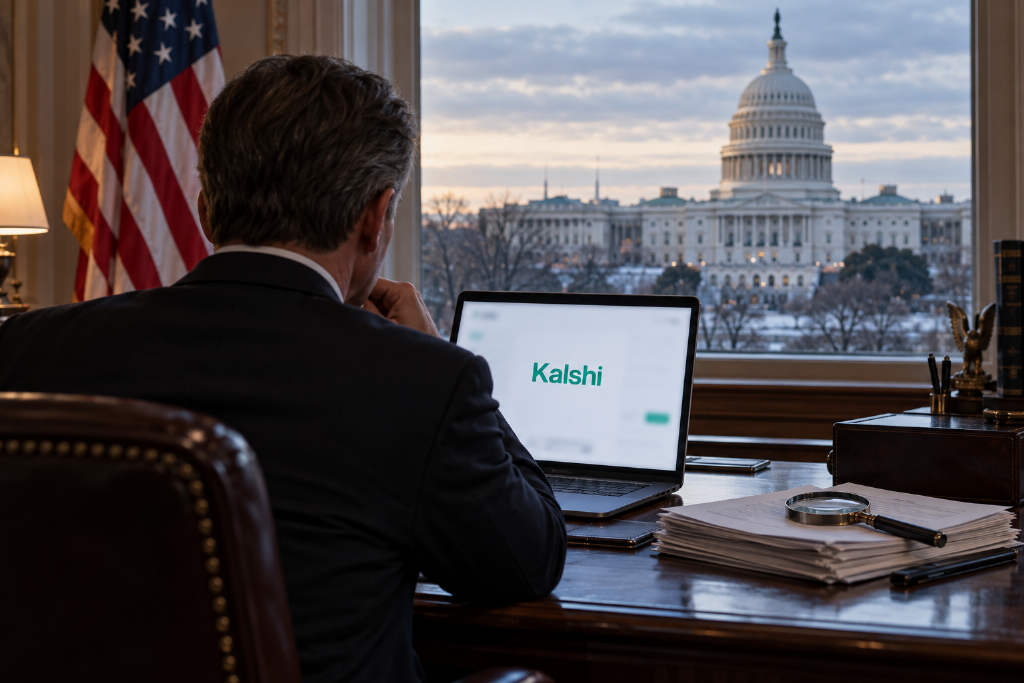
The U.S. Commodity Futures Trading Commission is investigating former Republican Congressman Adam Kinzinger over trades placed through a Kalshi account on contracts tied to whether he himself could receive a presidential pardon. The trades took place between December 2024 and January 2025, according to the report cited by Odaily and attributed to Decrypt. Kinzinger confirmed that he traded contracts linked both to his own possible pardon and to whether President Biden would issue a preemptive pardon. He said he made about 25 trades in total. While most of those trades lost money, he said the activity still produced a net profit of $823. Kinzinger denied any wrongdoing and said he did not have access to non-public information while making the trades. The matter is now under review by the CFTC, putting fresh attention on how prediction-market contracts are used when the subject of the market may also be the trader.
The U.S. Commodity Futures Trading Commission is investigating former Republican Congressman Adam Kinzinger over trades made through a Kalshi account on prediction-market contracts tied to whether he himself might receive a presidential pardon.
The trades were made between December 2024 and January 2025. Kinzinger confirmed that he took part in contracts tied to his own possible pardon and to whether Biden would issue a preemptive pardon.
He said he made about 25 trades. Most of them lost money, but the trading activity produced a profit of $823 overall. Kinzinger denied wrongdoing and said he did not possess non-public information.
The report was attributed to Decrypt.
This article was originally published by Bit.Fan. For more cryptocurrency news and market insights, visit www.bit.fan. Disclaimer:
The market information, project data, and third-party content displayed on this platform are for industry information sharing only and do not constitute any form of investment advice or return commitment.
Cryptocurrency trading carries high risks. Users should fully assess their risk tolerance and make independent decisions. All profits, losses, and legal responsibilities are borne by the users themselves.