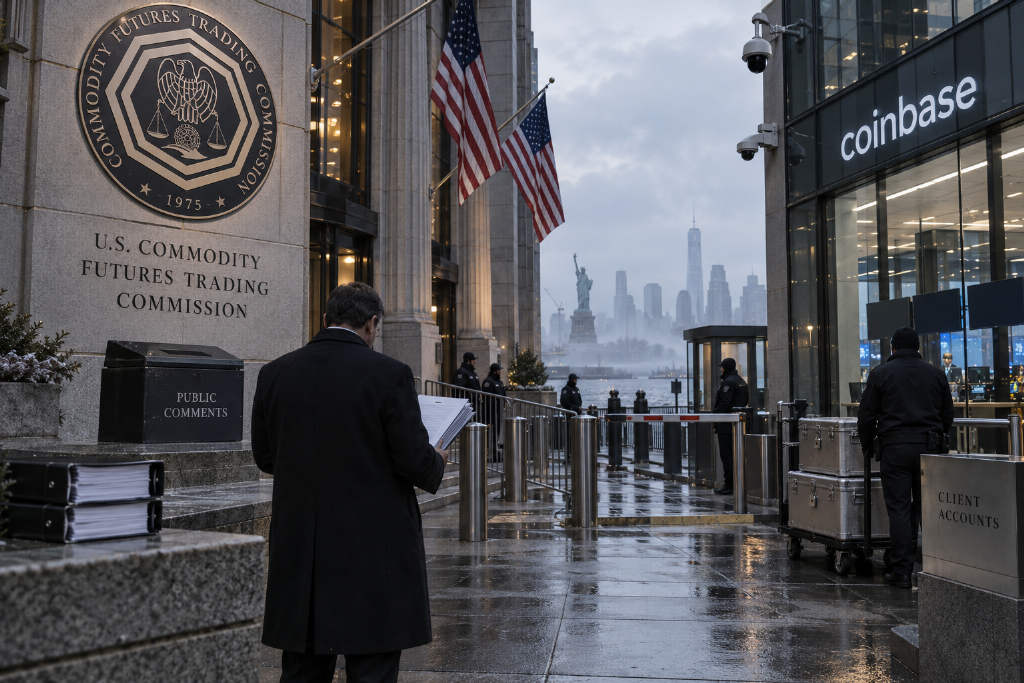
The U.S. Commodity Futures Trading Commission has opened a comment process on a proposed federal framework for crypto exchanges that offer leveraged trading to retail customers, according to remarks by CFTC Chair Michael S. Selig at a blockchain regulation symposium at Fordham Law School in New York. The proposal centers on two rule sets, Crypto Asset Transaction Regulation (CTX) and Crypto Asset Market Regulation (CAM).
Under the proposal, exchanges that offer retail margin, leveraged, or financed crypto trading would fall into a second regulatory category. They could choose to register as a new type of derivatives exchange under CAM and would be subject to requirements covering market surveillance, financial safeguards, and customer fund protections. The framework would also introduce a futures commission merchant, or FCM, role to handle customer accounts and funds, with anti-money laundering and customer identification obligations attached.
Selig said the proposal is an important step toward bringing crypto asset markets under protections in the Commodity Exchange Act. He added that the plan is meant to give companies serving U.S. customers clearer rules while supporting responsible innovation. He also said the proposal does not amount to a full federal crypto regime, and Congress still needs to decide whether all exchanges should be required to register at the federal level.
The U.S. Commodity Futures Trading Commission, or CFTC, has opened a comment process on a proposed federal regulatory framework for crypto exchanges that offer leveraged trading to retail customers. CFTC Chair Michael S. Selig announced the move at a blockchain regulation symposium at Fordham Law School in New York.
The proposal is built around two rule sets: Crypto Asset Transaction Regulation, or CTX, and Crypto Asset Market Regulation, or CAM.
Retail margin and leverage venues would fall under a second category
Under the proposal, exchanges offering retail margin, leveraged, or financed trading would be placed in a second regulatory category. Those venues could choose to register as a new type of derivatives exchange under CAM. They would also need to comply with requirements tied to market surveillance, financial safeguards, and customer fund protection.
Framework adds an FCM function
The proposal would also introduce the role of a futures commission merchant, or FCM, to handle customer accounts and funds. That role would be subject to anti-money laundering rules and customer identification requirements.
Selig says the plan is not a complete federal crypto regime
Selig said the framework is an important step in bringing crypto asset markets under the protections of the Commodity Exchange Act. He said it is intended to create clearer rules for companies serving U.S. customers and to support responsible innovation.
He also said the proposal does not represent a complete federal crypto regime. Congress still needs to decide whether all exchanges should be required to register at the federal level.
This article was originally published by Bit.Fan. For more cryptocurrency news and market insights, visit www.bit.fan. Disclaimer:
The market information, project data, and third-party content displayed on this platform are for industry information sharing only and do not constitute any form of investment advice or return commitment.
Cryptocurrency trading carries high risks. Users should fully assess their risk tolerance and make independent decisions. All profits, losses, and legal responsibilities are borne by the users themselves.