

The summer of 2026 has produced a cluster of events that, taken together, point to a visible shift in China’s entrepreneurial class.
On July 27, CXMT listed on Shanghai’s STAR Market with a valuation above 3.28 trillion yuan, making it the most valuable A-share company. In early trading on July 31, that figure moved past 4 trillion yuan. Founder Zhu Yiming’s holdings were valued at more than 90 billion yuan. The article says Zhu, a Tsinghua University physics graduate, had pledged not to take a salary before the project turned profitable and went seven years without pay.
In the same month, Unitree founder Wang Xingxing appeared on the cover of Time under the headline “The Robot Era Is Here.” The cover featured the company’s 2.7-meter mass-produced manned mech GD01, with Wang standing beside it. Time described him as “an unconventional prophet in the AI era.” The report notes that eight years have passed since the last Chinese entrepreneur to appear on the magazine’s cover, Baidu founder Robin Li.
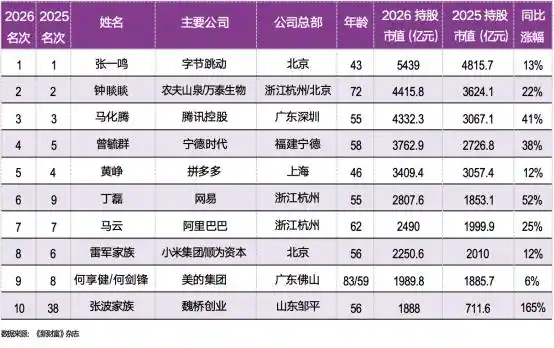
One month earlier, Cambrian became the first STAR Market-listed company to exceed a 1 trillion yuan market capitalization. Founder Chen Tianshi, born in the 1980s, held a stake valued at nearly 300 billion yuan. Around the same time, DeepSeek founder Liang Wenfeng, after the company completed its first financing round, was described as the world’s richest founder in the AI large-model sector with a fortune of $36 billion. ByteDance founder Zhang Yiming, meanwhile, topped the New Fortune rich list again with 543.9 billion yuan.
The article argues that these developments all point in the same direction: China’s entrepreneur class is undergoing a generational transition.
From the internet era to the AI era
One of the clearest ways to read changes in China’s economy, the piece says, is through rich lists. Over the past two decades, the dominant names on those rankings shifted several times, from real estate and retail to internet platforms, consumer brands, e-commerce, social media and mobile internet. Each turnover reflected a change in the sectors driving the broader economy.
Now, the wealth map is being redrawn again.
Zhang Yiming’s continued position at the top reflects ByteDance’s business success, but the article says it would be too narrow to read that only as the victory of an internet company. ByteDance is also moving from an internet-centered model toward AI. In that sense, Zhang’s rise is presented as a sign that new wealth creation in China is relying less on demographic dividends and more on technology dividends, with AI expectations helping support ByteDance’s valuation.
Zhang first appeared on a rich list in 2018, when the value of his stake was put at about 12 billion yuan. The article links the rapid growth in his wealth over the following years to the combined cycle of mobile internet and AI, as well as repeated market revaluations of ByteDance’s global business and AI potential.
That has brought another change: founder wealth now reflects market expectations for future technological competitiveness more directly than before.
The piece says that trend showed up even more clearly in the 2026 New Fortune list. TMT accounted for 114 entrants with a combined equity value of 4.6 trillion yuan, or 26.9% of the total wealth of all people on the ranking, a record high. AI large models, chips, optical modules, embodied intelligence and AI hardware were the most concentrated wealth-creation themes.
The article also cites the 2025 New Fortune 500 list, where DeepSeek founder Liang Wenfeng entered for the first time and landed in the top 10 with a fortune of 184.62 billion yuan. It adds that, according to related institutions, the large-model track has already produced at least 36 billionaires with combined wealth in the hundreds of billions of yuan.
In the author’s framing, this is not only an industrial rotation. It is also a handoff between generations of entrepreneurs. Zhang Yiming, 43, Liang Wenfeng, 41, Wang Xingxing, 36, and Chen Tianshi, 41, are now replacing founders born in earlier decades as the central figures in China’s wealth rankings.
From doing business to doing technology
If the last cycle of Chinese business was defined by markets and business models, the article says the central word today is technology.
Its argument is that many founders in this generation did not start with a business plan. They started in the lab.
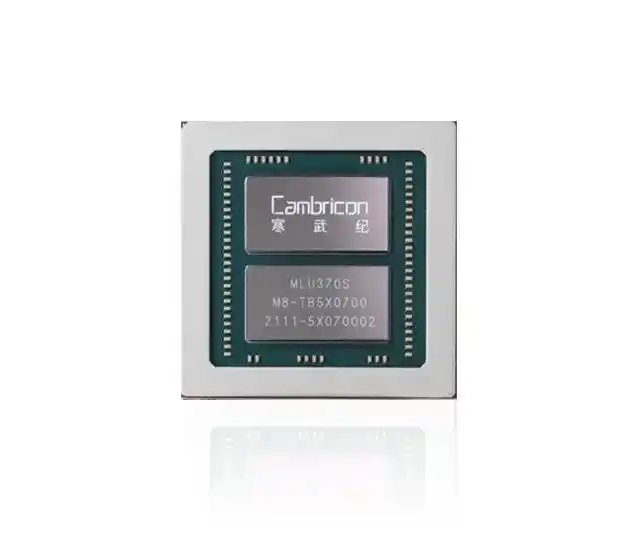
Chen Tianshi is presented as a representative example. Born in 1985, he entered the University of Science and Technology of China’s Special Class for the Gifted Young at age 16, later completed undergraduate and doctoral study, and then joined the Institute of Computing Technology at the Chinese Academy of Sciences, focusing on deep learning and artificial intelligence. In 2016, he and his brother Chen Yunji co-founded Cambrian and chose AI chips, a field that was both cutting-edge and difficult.
Cambrian did not commercialize quickly through a mature business model. Instead, it went through a long investment phase centered on technology. When it went public in 2020, revenue was 459 million yuan and net loss attributable to shareholders was 435 million yuan. In the following years, revenue hovered around 700 million yuan, while net losses widened, reaching a peak loss of 1.257 billion yuan in 2022.
The turning point came in 2025. Cambrian posted 6.497 billion yuan in revenue and 2.059 billion yuan in net profit, its first full-year profit. In the first quarter of 2026, revenue reached 2.885 billion yuan, up 159.56% year over year, while net profit rose to 1.013 billion yuan, up 185.04%. On June 30, its market capitalization crossed 1 trillion yuan for the first time, making it the first company on STAR Market to hit that threshold.
The article treats that trajectory as evidence that China’s AI chip industry has moved from lab-based technology into the stage of scaled industrialization.
Liang Wenfeng is used as a different kind of sample. He studied at Zhejiang University for both undergraduate and graduate degrees, co-founded quantitative firm High-Flyer in 2015, and later moved into large models. DeepSeek, the article says, forced the world to reassess Chinese AI founders.
What made DeepSeek unusual, in this telling, is that Liang did not begin with an AI application. He started from lower-level questions such as model architecture, training algorithms and computing-efficiency optimization. The team was not large. When DeepSeek drew global attention, the core R&D team, including Liang, had fewer than 150 people, a sharp contrast with the scale of OpenAI and other international AI giants.
That startup pattern differs from the traditional internet path. Internet companies often find users first and then look for the right product. Technology startups often work in the opposite order: solve a technical problem first, then see how much industrial space it can open.
Zhu Yiming’s story pushes that point further. He returned to China in 2005 to found GigaDevice. In 2016, he threw himself into domestic DRAM development. After 2018, he focused most of his energy on CXMT and pledged not to draw a salary before the project turned profitable. He went seven full years without taking one.
CXMT also endured a long loss-making period. The company reported a net loss attributable to shareholders of 16.34 billion yuan in 2023 and a loss of 7.145 billion yuan in 2024. In 2025, revenue climbed to 61.799 billion yuan, up 155.60%, while net profit reached 7.144 billion yuan, its first annual profit.
In the first quarter of 2026, helped by rising DRAM prices, growing demand for computing power and capacity releases, revenue rose further to 50.8 billion yuan, up 719.13% year over year. Net profit attributable to shareholders reached 24.762 billion yuan. On its first trading day, July 27, CXMT’s market capitalization jumped to 3.28 trillion yuan.
The article says the more important point is not the market value itself, but the fact that the company has reached a place where few Chinese firms have previously managed to secure a stable global position.
DRAM remains a highly concentrated market with steep technical barriers and has long been dominated by Samsung, SK hynix and Micron. Citing Omdia, the piece says that based on fourth-quarter 2025 sales, CXMT’s global market share rose to 7.67%, making it the world’s fourth-largest DRAM maker.
It has not overturned the global memory market structure, the report says, but it has entered the list of major players. From the launch of the project in 2016 to its first annual profit in 2025, the road took nine years.
The article also cites a UBS report showing that mainland China added 70 billionaires in 2025, with technology as the main engine of wealth creation. Those “engineer billionaires,” in the article’s words, show that the composition of China’s business elite is changing at a structural level. The starting point for entrepreneurship is moving from “doing business” to “doing technology.”
From expanding markets to deepening industry
The article ends by placing this transition in a broader industrial context. Rather than simply describing a changing of the guard among business leaders, it says the Chinese economy is handing entrepreneurs a different problem to solve.
Earlier generations of entrepreneurs laid the foundation. The piece argues that without the urbanization and property build-out associated with figures such as Wang Shi and Wang Jianlin, without the spread of the internet led by founders such as Jack Ma and Pony Ma, without decades of supply-chain accumulation in Chinese manufacturing, without large numbers of engineers entering industry, and without a vast digital consumer market, there would be no soil for today’s AI, chip and robotics founders.
Policy language is folded into that argument as well. China’s 2025 government work report called for developing new quality productive forces based on local conditions, promoting the integration of technological and industrial innovation, fostering future industries including biomanufacturing, quantum technology, embodied intelligence and 6G, and continuing the “AI Plus” initiative.
In 2026, the government work report went further, saying that research and applications in artificial intelligence, biomedicine, robotics and quantum technology were among the world’s most advanced, that domestically developed chips had achieved new breakthroughs, and that Chinese large models were leading the global open-source ecosystem.
Against that backdrop, the article characterizes China’s economy as moving beyond an exploratory phase into a new era driven by innovation, specifically indigenous innovation. In practical terms, that means making possible what others once considered impossible and reaching global leadership in fields once seen as out of China’s reach.
The examples are laid out directly. For Zhu Yiming’s CXMT, the turn from heavy losses to profit came from product competitiveness enabled by technical breakthroughs. For Chen Tianshi’s Cambrian, the move from loss to profit marked not just a financial inflection point but a crossing of a technology threshold. For Liang Wenfeng’s DeepSeek, a low-cost training strategy challenging OpenAI’s heavy-compute route is presented as original work rather than imitation.
That, the author argues, defines a new type of entrepreneur: one with originality, breakthrough capacity and global reach. These founders are no longer stepping onto only China’s domestic business stage. They are entering global industrial competition.
In that sense, the article says, generational succession is not mainly about wealth or titles. It is about the capability structure a country brings into global competition. Earlier generations of Chinese entrepreneurs completed a phase of learning, catching up and commercial expansion. The next generation is being asked to push Chinese technology from keeping pace to creating, breaking through and scaling in industry.
The article’s closing judgment is straightforward: China is moving from business innovation to technology innovation, from traffic-driven growth to technology-driven growth, and from expanding markets to deepening industry.
This article was originally published by the WeChat public account Huashang Taolue and written by Huashang Taolue.