
Circle (CRCL) is scheduled to report its latest quarterly results before the U.S. stock market opens on Aug. 5 Beijing time. Even before the release, Wall Street had already split sharply on how to value the stablecoin issuer.
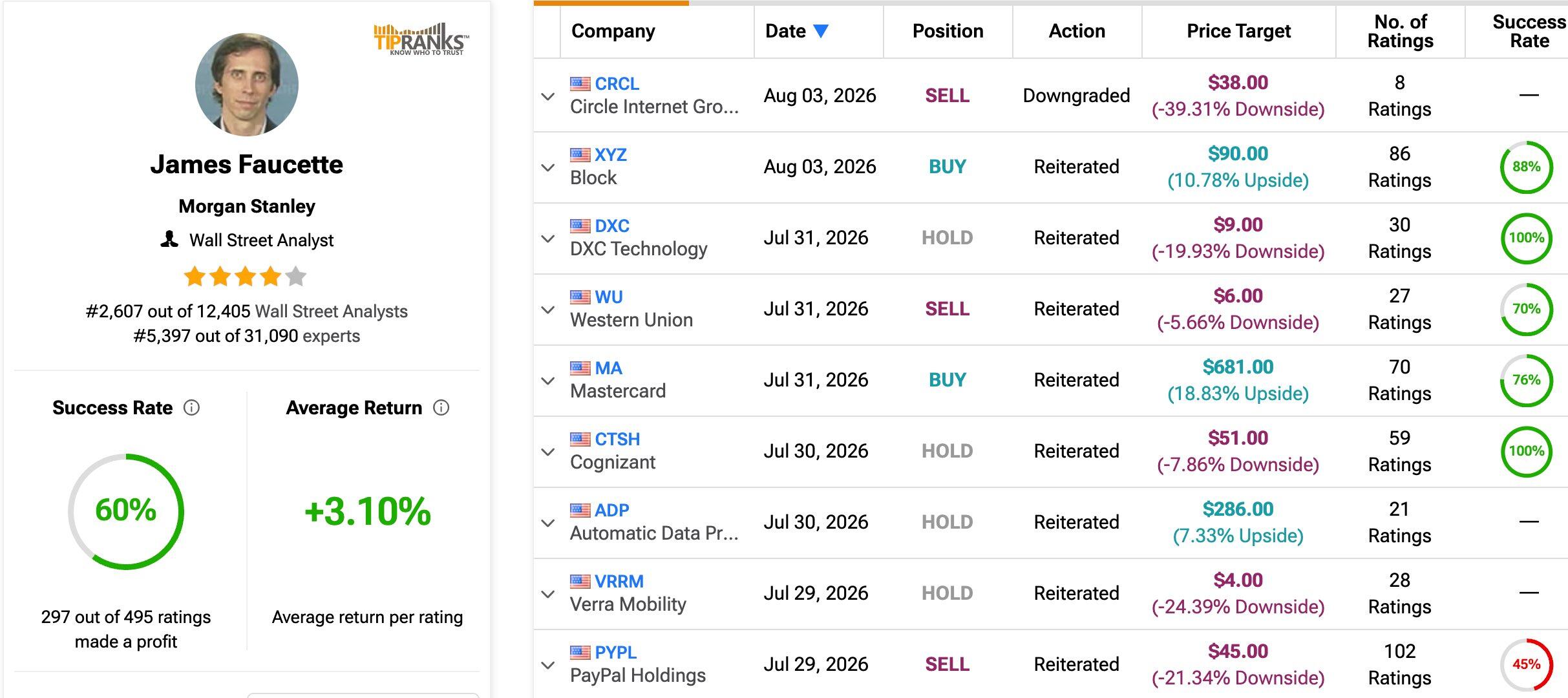
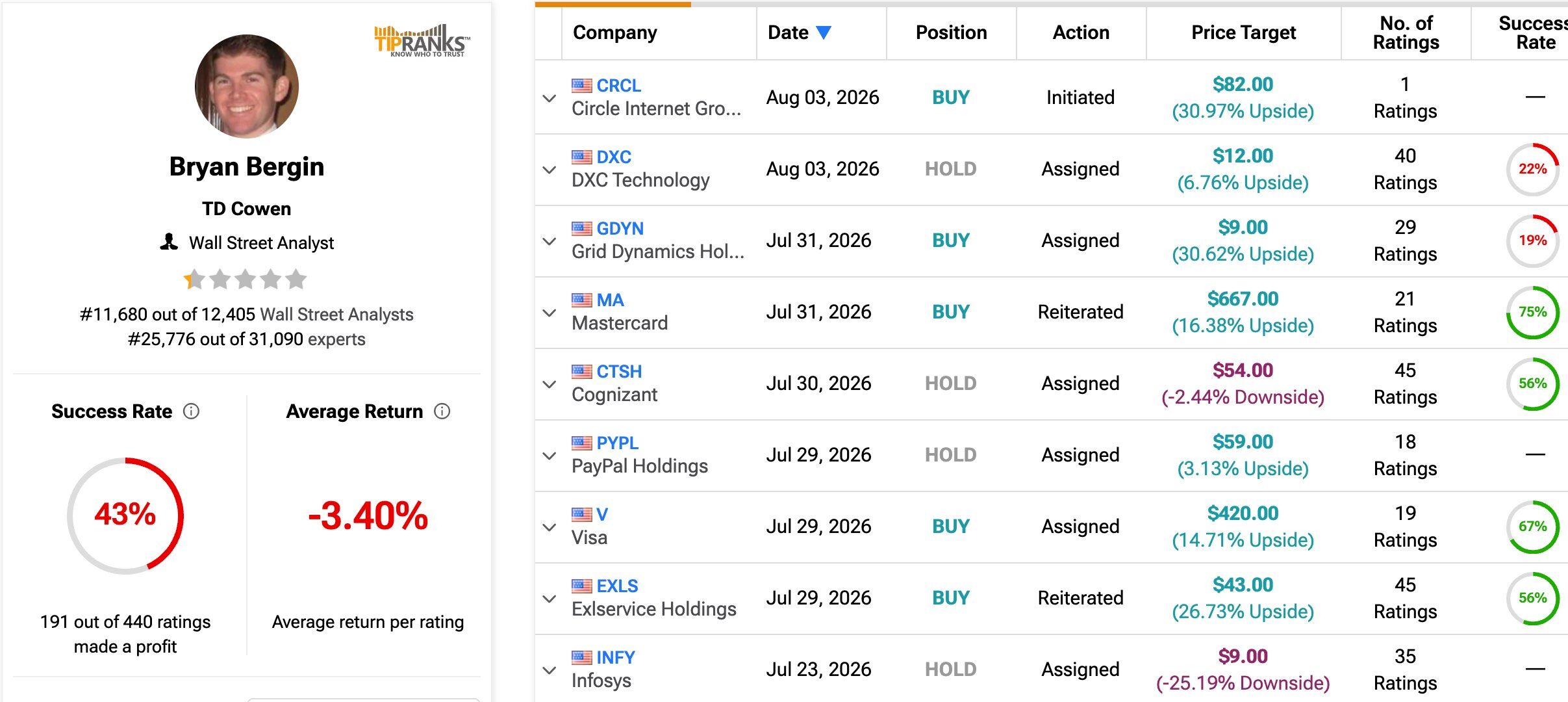
On Aug. 3, Morgan Stanley downgraded Circle to Underweight from Equal Weight and cut its price target to $38 from $106. At the same time, TD Cowen initiated coverage on Circle with a Buy rating and an $82 target price.
The gap between the two calls points to a bigger question: should Circle still be viewed mainly as a stablecoin issuer whose fortunes depend on USDC growth, or as a technology company evolving into a broader digital financial infrastructure platform?
Analysts diverge over USDC growth and platform ambitions
The Morgan Stanley downgrade came from analyst James Faucette. The original report cited TipRanks data showing Faucette with a four-star rating out of five. It described him as a sell-side analyst seen as well above average, with an average return of 3.1% over the past two years and a 60% success rate.
Faucette’s bearish view centers on Circle’s current revenue model. In his view, the market may be overestimating the future growth potential of USDC, while the expansion of stablecoin use cases has been slower than previously expected. Since the third quarter of 2025, USDC circulation has not actually grown, according to his assessment, and outside remittances and stablecoin-linked card spending, USDC has yet to produce a large-scale new use case.
That matters because Circle’s core source of revenue remains reserve income. The company generates most of that by allocating USDC reserves to cash and short-dated U.S. Treasurys and collecting interest income. As a result, growth in USDC circulation is widely treated as a key driver of earnings expansion.
Faucette argued that if USDC growth slows, Circle’s revenue mix could gradually shift toward lower-margin transaction revenue. Based on that view, he expects the company’s future earnings to come in below market expectations and believes the current valuation already reflects growth assumptions that are too high.
A similarly cautious view was also noted from Mizuho analyst Dan Dolev. The original report said Dolev holds a 4.5-star TipRanks rating, higher than Faucette’s. Last Friday, Dolev rated Circle Hold and lowered his target price to $45 from $50.

TD Cowen’s bullish call came from analyst Bryan C. Bergin. The original report, again citing TipRanks, said Bergin’s personal performance rating stands at half a star, with a historical average return of -3.4% and a 43% success rate.
Bergin’s framework is the opposite. He argued that the market may be underestimating Circle’s potential to move beyond stablecoin issuance and become a broader financial infrastructure platform.
In that view, Circle’s future value is not determined only by USDC circulation. It depends on whether the company can build a fuller set of financial services around stablecoins, including payments, treasury management, real-world asset, or RWA, tokenization, developer services and blockchain infrastructure.
Bergin expects USDC circulation to maintain a compound annual growth rate of about 31% through 2030. He also expects fee-based revenue to grow much faster than traditional reserve income. In his view, Circle’s Arc network could also become a future growth driver and extend the company’s reach in digital financial infrastructure.
CLARITY Act progress is another variable in the setup
Circle’s business model is not the only issue shaping market expectations. Regulatory progress is another major factor.
The original report said the market had broadly treated the CLARITY Act as a key catalyst for the next phase of stablecoin industry development. If enacted, the bill would provide a clearer regulatory framework for stablecoin issuance, trading and related financial services, reducing compliance uncertainty for institutions considering adoption.
For now, though, progress appears uneven. With only the last few working days remaining before the Senate’s summer recess, expectations that the CLARITY Act could advance in the near term have dropped noticeably.
The report also referenced two earlier Odaily pieces on the subject: one asking where the bill had stalled at the final step, and another examining what could happen if the CLARITY Act ultimately fails to pass.
If the legislative process is delayed again, the market may have to reassess the pace of commercialization across the stablecoin sector and, with it, the growth expectations built into Circle. Ahead of earnings, that uncertainty has become another factor weighing on sentiment around CRCL.
Earnings will be watched for revenue mix and business traction
At its core, the split on Wall Street is less about one quarter’s numbers than about Circle’s long-term identity.
The bearish side is focused on whether a slowdown in USDC growth would weaken the traditional reserve-income model that supports the current valuation. The bullish side is betting that Circle can use its stablecoin business as the base for a larger digital financial infrastructure platform.
That is why investors are likely to watch more than headline revenue and profit in this earnings release. The report said the market will also focus on reserve income, especially distribution agreements with Coinbase and other partners, along with progress in payments, RWA and related businesses.
Circle is set to provide those answers when it reports before the market opens on Aug. 5 Beijing time.