
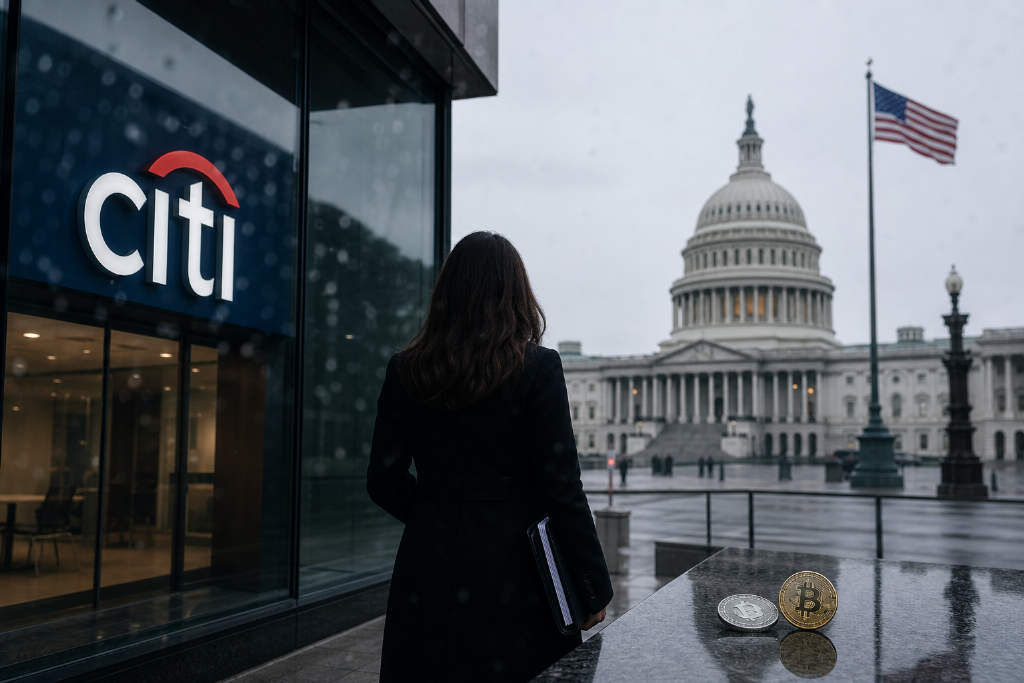
Citigroup CEO Jane Fraser said she wants the crypto Clarity Act to become law, even as she argued that parts of the bill still need to be improved.

Fraser said Citi sees itself as a leader in digital assets and wants regulation that supports innovation while allowing the technology to be adopted safely. 「We want to have good regulation that supports innovation and also encourages the safe adoption of the capabilities of digital assets,」 she said. 「I think it would be excellent for the system.」
Vote delayed until September
Lawmakers had been trying to get a vote on the Clarity Act before leaving for recess last week, but ran out of time. The vote is now expected in September.
Bitcoin Magazine reported on Aug. 14 that Fraser wants the Clarity Act to pass, citing her comment: 「We would like to see a good bill go through.」
Stablecoin yield remains a fault line
A major sticking point has come from the banking lobby, which raised concerns about crypto companies paying customers yield for holding stablecoins.
U.S. banks have said they could lose customers if crypto exchanges offer more attractive products tied to their deposit base. Fraser repeated that point on Friday, saying small banks play an important role in the United States and that a reward system on deposits could have a detrimental effect.
She also said Citi is still pressing for changes. 「We have not given up on pushing to get some improvements made to the bill, but we would like to see a good bill go through.」
Coinbase withdrew support in January
Coinbase, the largest crypto exchange in the United States, pulled its support for the bill in January after clashing with banking chiefs who said earning yield on stablecoins should be banned.
The Clarity Act passed the House of Representatives last year, but has been deadlocked since 2026. Even so, work on the bill has continued across both Republicans and Democrats, despite crypto legislation being an issue pushed by pro-crypto President Donald Trump.
Major institutions including Fidelity and Goldman Sachs, along with crypto lobby groups and politicians, have said the revised bill works in its current form.
The article was first published by Bitcoin Magazine and written by Mathew Di Salvo.