
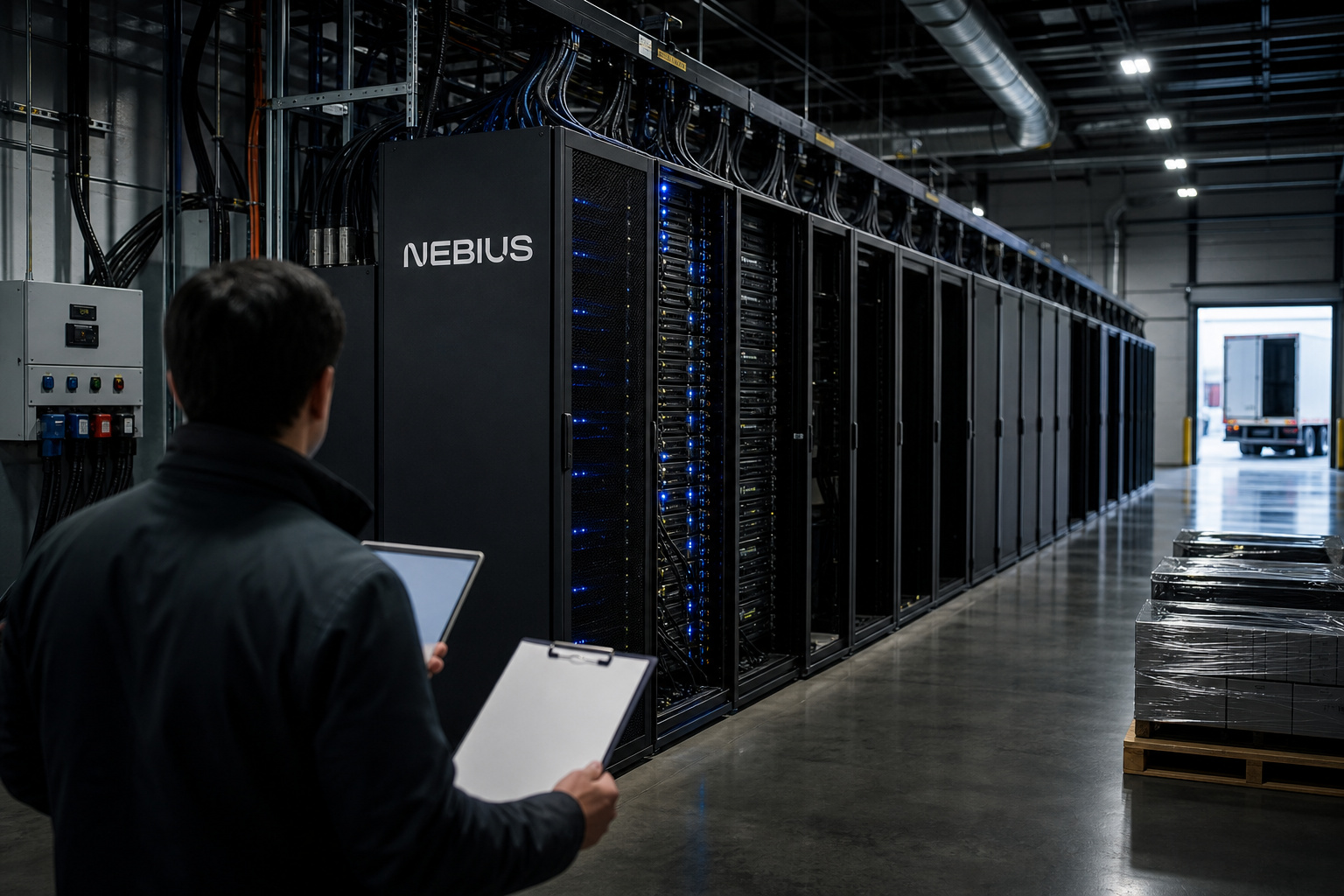
BlockBeats reported on Aug. 13 that Citi said in its latest note that Nebius is not constrained by demand at this stage, but by the pace at which capacity comes online. The bank maintained its Buy/High Risk rating on Nebius and kept its price target at $278.
Strong second-quarter revenue backed by several drivers
According to the report, Nebius posted strong revenue in the second quarter, supported by asset SLA revenue, Token Factory, Tavily, higher utilization, and on-demand demand. Management said market demand remains very strong, with multiple buyers behind every GPU.
Management also said backlog growth has been driven by larger average order sizes and an increase in mid-term contracts in the company’s core AI cloud business.
Neoclouds are drawing fresh attention in the AI trade
In the recent U.S. equity AI trade, neoclouds have become a new area of focus. After NVIDIA’s $500 billion AI infrastructure financing plan, CoreWeave’s earnings report, and Lumentum’s strong guidance, the market has started to focus on which companies can secure GPUs, which can finance data center buildouts, and which can turn computing capacity into revenue.
Citi specifically noted that around 50% to 60% of Nebius’ infrastructure capex is backed by customer prepayments. On a cash basis, project payback can be less than one year, or about 10 months. Citi said this helps address concerns around funding pressure tied to the neocloud model.
The second half will be the real test
Citi said the real test lies in the second half. Nebius expects most of its contracted capacity to come online in the second half of 2026, and Microsoft-related deployments are expected to follow a similar schedule.
The report added that the company’s target of 800MW to 1GW of connected power remains achievable. Still, turning connected power into active power will require network testing, integration, and commissioning, which means revenue recognition will lag.
ARR framework is not tied to a single project
Management also said the company’s $7 billion to $9 billion ARR framework does not depend on a single project. Instead, it is driven by a combination of utilization, pricing, and capacity growth. Most of the 5GW of contracted capacity is expected to ramp gradually over the next two to three years.
Citi still flags Nebius as a high-risk name
Citi said Nebius remains a high-risk stock. The bank listed customer concentration, high capital intensity, uncertain GPU supply, and financing conditions as the main risks.
In Citi’s view, the company’s AI compute story remains intact, but the stock will remain highly dependent on execution and delivery timing.