
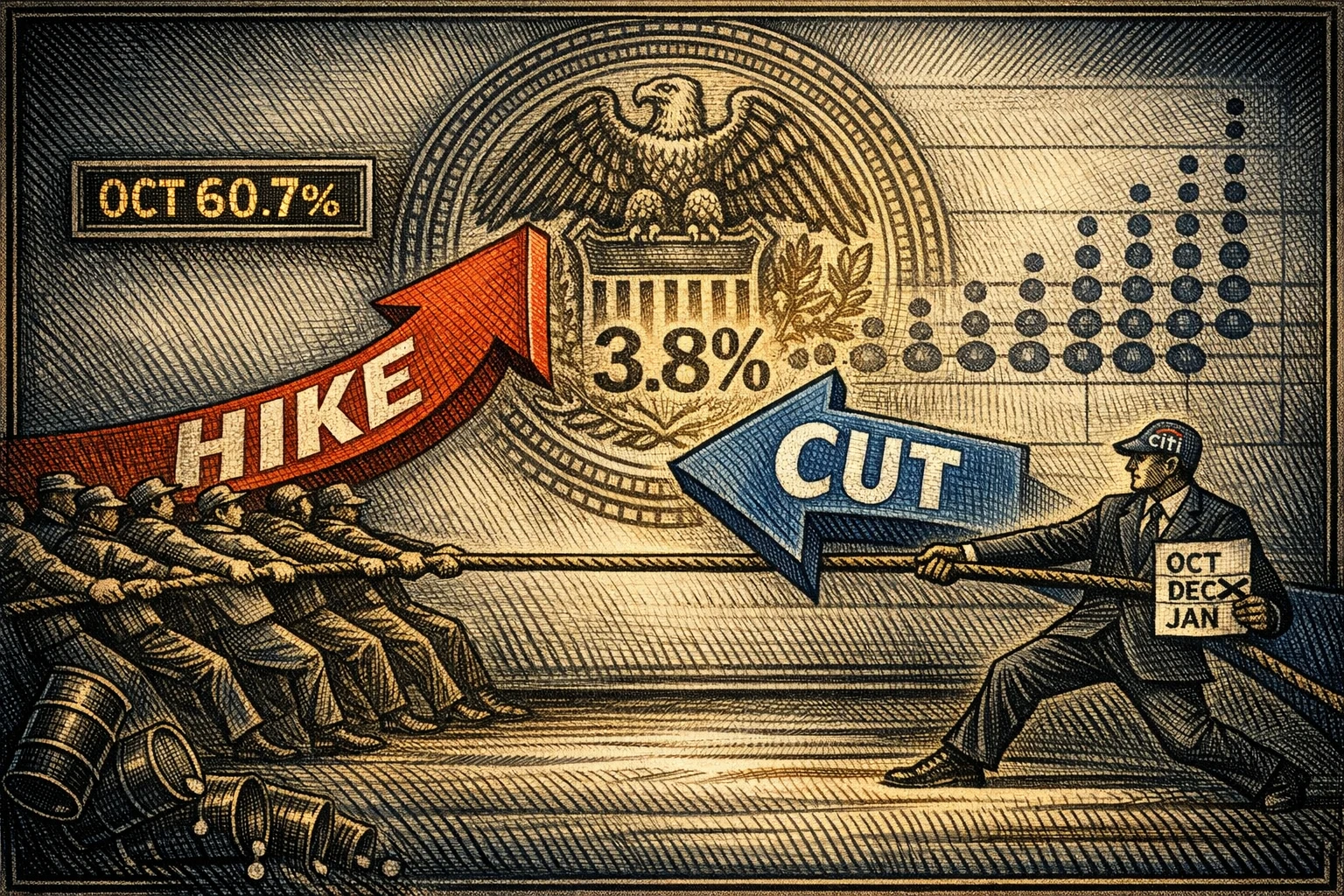
After the Federal Reserve held rates steady in June and released a hawkish dot plot, Citigroup adjusted its rate cut forecast without abandoning the easing narrative entirely—it simply pushed the timeline back by one month. The bank now expects the Fed to cut rates in October 2026, December 2026, and January 2027, delaying the start from its previous September call.
Dot Plot Shock: Median Rate Forecast Jumps 40 Basis Points
The catalyst for Citigroup's revision was the Fed's June decision to keep the benchmark rate at 3.5% to 3.75% while releasing a notably hawkish dot plot. Officials raised the median year-end 2026 rate forecast from 3.4% in March to 3.8%, implying at least one more quarter-point hike this year. Among the 18 officials who submitted projections, nine expect rates to end 2026 above the current range. New Chair Kevin Warsh, presiding over his first FOMC meeting, did not submit his own rate dot but the overall tone was clearly hawkish.
Market Pivots to Hike Bets: CME Probability Hit ~60.7%
Market pricing moved more aggressively than Citigroup. According to LSEG data, traders have largely priced in a 25-basis-point hike before October, while the CME FedWatch tool showed the probability of a hike in October once reaching roughly 60.7%. While most traders shifted from rate-cut to rate-hike bets, Citigroup kept its easing scenario intact, merely delaying the start.
Why Citigroup Still Sees Cuts Ahead
Citigroup's report argues that core CPI is likely to soften between June and August and the labor market will continue to cool. The conditions for rate cuts are slowly falling into place, just being delayed by time. The bank also notes that Chair Warsh may believe that, given more time to digest recent oil price declines, many dot plot projections would have been lower. Nevertheless, forming a consensus among policymakers to begin cutting rates will likely require more time.
The result is a striking divergence: capital markets are betting on a hike while Citigroup bets on delayed cuts. Who will be proven right depends on upcoming CPI and employment data.