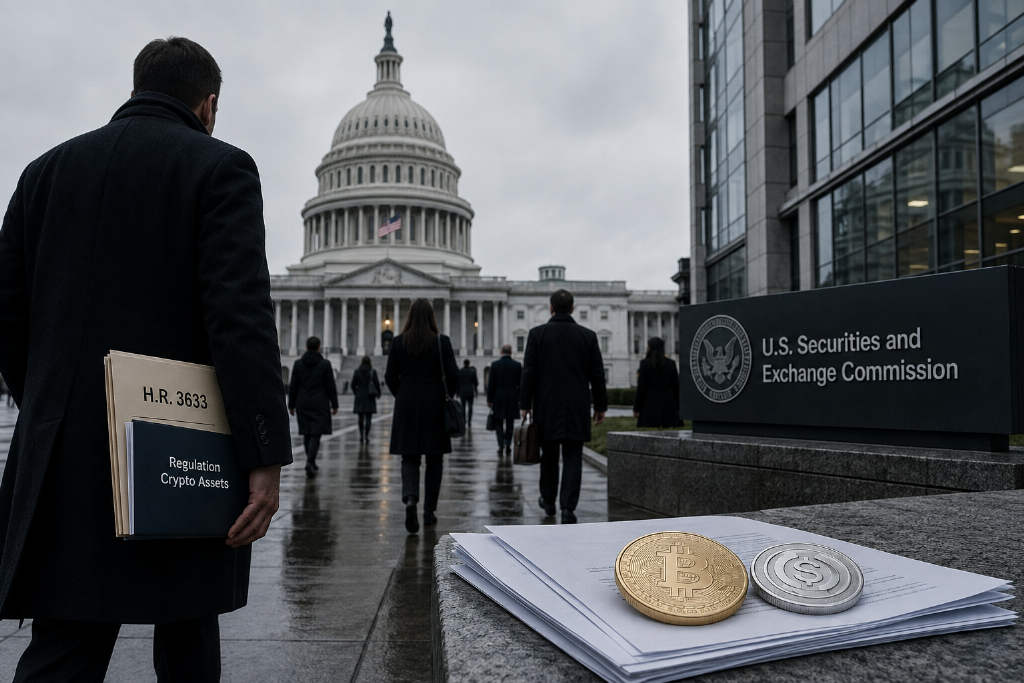
SEC Chair Paul Atkins said the CLARITY Act will face a Senate cloture vote on Sept. 15, where 60 votes are needed to advance debate. The bill, H.R. 3633, missed its pre-recess window in August after disputes over ethics language and stablecoin yield provisions. A successful cloture vote would still leave several hurdles, including final Senate passage, House review and a presidential signature.
Atkins also said the SEC has already moved ahead with its own backup framework. On Aug. 18, the agency proposed "Regulation Crypto Assets," a separate rulemaking track that would create securities-law registration exemptions for certain token offerings and open a 60-day public comment period. That means the legislative track and the regulatory track are now running in parallel.
The Senate is set to reconvene on Sept. 14, leaving only 14 working days before the end of September. If the bill does not clear the Senate by then, the odds of a year-end finish would shrink further. The next key date is Sept. 16, when the Federal Open Market Committee will announce its rate decision.
If CLARITY becomes law, BTC and ETH would be classified as digital commodities under CFTC oversight, while a grandfather clause would treat several spot ETF assets listed before Jan. 1, 2026 — including XRP, SOL, LTC, HBAR, DOGE and LINK — as commodities by default.
SEC Chair Paul Atkins said the CLARITY Act will go before the Senate for a cloture vote on Sept. 15, a procedural test that needs 60 votes to move the debate forward.
The bill, H.R. 3633, cleared the House in July 2025 by a 294-134 vote and later advanced out of the Senate Banking Committee in May 2026 by a 15-9 vote. But it missed its pre-recess window in August after disagreements over ethics provisions and stablecoin yield rules.
Atkins made the comments in a Sept. 2 live interview with Fox Business. He said he expects and hopes the CLARITY Act will pass the Senate and reach the president's desk.
Even if cloture succeeds, the bill would still need to clear final Senate passage, House reconsideration and a presidential signature. Senate Majority Leader John Thune, a Republican from South Dakota, filed the cloture motion on Aug. 10, pushing the measure into September.
The 60-vote threshold is the key hurdle. Republicans hold 53 seats, so the bill would need at least seven Democratic votes to move past a filibuster.
Three disputes remain unresolved. The first is ethics language. Democrats want conflict-of-interest rules for government officials holding more than $1 million in digital assets. The backdrop is Trump's disclosure in 2025 that his family's crypto businesses generated more than $1 billion in revenue, including World Liberty Financial and the TRUMP meme coin. Sens. Thom Tillis, a Republican from North Carolina, and Ruben Gallego, a Democrat from Arizona, drafted a counterproposal at the end of July and sent it to the White House, but no response has been disclosed.
The second issue is stablecoin yield. The Senate version bars interest payments on idle stablecoin balances, allowing only rewards tied to real on-chain activity, such as staking. Coinbase withdrew its support for the bill, saying the language could limit the competitiveness of its stablecoin business.
The third is size. The bill has expanded from 309 pages to 616 pages as it absorbed more than 100 Democratic requests, reflecting a broader fight over banking protections and regulatory jurisdiction.
Prediction markets are split on the odds of passage this year. Kalshi currently prices a 49% chance that CLARITY will be signed into law before year-end. Polymarket's comparable contract is trading at 16%.
Atkins said the SEC is not waiting on Congress. On Aug. 18, the agency proposed "Regulation Crypto Assets," a separate framework that would create securities-law registration exemptions for certain token offerings and open a 60-day public comment period.
In the interview, Atkins said the SEC will keep moving under existing securities law even if Congress does not pass the bill. That echoed his earlier remarks when the proposal was released in August: legislation is still necessary to build rules that can withstand future regulators, but the SEC can begin under current law.
If the schedule holds, the SEC would finish the comment period in late October and then move on to specific rulemaking. The legislative track and the administrative track are now running at the same time.
Timing is tight. The Senate returns on Sept. 14, leaving just 14 working days before the end of the month. Nov. 3 is the midterm election date, and Congress is expected to enter another pre-election recess in mid-October. If the Senate cannot clear the bill by Sept. 30, a year-end finish becomes unlikely.
Sept. 16 is another key date, when the Federal Open Market Committee will announce its rate decision. Some institutional traders are positioning for both a regulatory tailwind and easier monetary policy, which could keep crypto markets volatile in the near term.
If CLARITY clears the Senate and becomes law by the end of September, BTC, ETH and other sufficiently decentralized assets would be classified as digital commodities under CFTC oversight, and the SEC would no longer be able to pursue them as unregistered securities.
The bill's grandfather clause would also treat several spot ETF assets listed before Jan. 1, 2026 — XRP, SOL, LTC, HBAR, DOGE and LINK — as commodities by default, reducing the risk that they are reclassified as securities.
A narrower path remains possible if the Senate passes the bill but the House runs into trouble. In that case, the legislation could go to a conference committee and move through the process again, with the year-end window still open but the political cost higher.
The worst-case outcome is a failed cloture vote. If the 60-vote threshold is not met, the backup SEC rulemaking would still proceed, but expectations for a full legislative framework would fade and attention would shift to the SEC's rules at the end of October.


This article was originally published by Bit.Fan. For more cryptocurrency news and market insights, visit www.bit.fan. Disclaimer:
The market information, project data, and third-party content displayed on this platform are for industry information sharing only and do not constitute any form of investment advice or return commitment.
Cryptocurrency trading carries high risks. Users should fully assess their risk tolerance and make independent decisions. All profits, losses, and legal responsibilities are borne by the users themselves.