
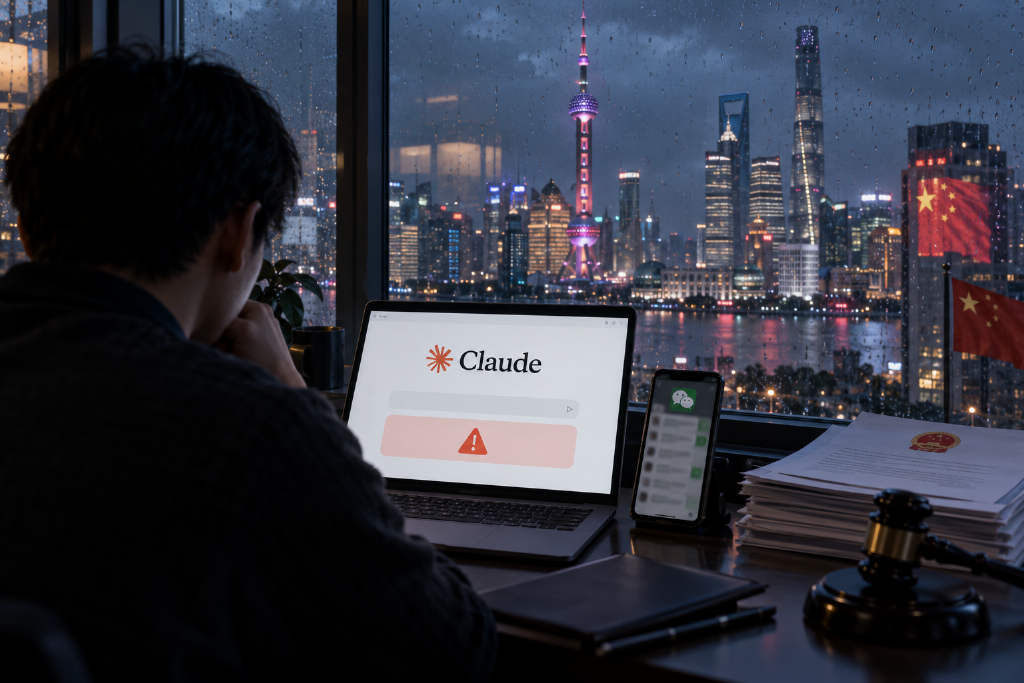
A claim circulating in Chinese social media says users can avoid being banned by Claude if they pretend to discuss suicide with the chatbot. BlockTempo reviewed the rumor and said the crisis-response banner is real, but the broader claim that this creates ban immunity, or that U.S. law would protect such accounts, is not supported by Anthropic’s policies or by any clear legal authority cited in the report.
The rumor centers on access restrictions for users in China
According to BlockTempo, a screenshot shared in WeChat groups described the tactic as a way to avoid account suspension. The post claimed Claude does not currently allow users in China, and argued that if someone appeared suicidal in chat, the platform would trigger an alert and avoid banning the account because of potential legal liability in the United States.
The person in the screenshot also claimed to have operated more than 10 accounts and said Claude had been used to help modify proxy settings and check the user’s real IP address.
Claude does have a suicide and self-harm classifier
BlockTempo said the first part of the rumor is partly true. In an official post dated Dec. 18, 2025, Anthropic said Claude.ai uses a suicide and self-harm classifier, described as a smaller AI model that scans conversations.
If the system detects possible suicidal intent, a banner can appear directing the user to seek human help. The resources referenced in the report cover hotlines in more than 170 countries.
No policy language promises accounts will not be banned
On the second claim, that triggering the banner means an account will not be suspended, BlockTempo said it found no basis. The report said Anthropic’s agreements and terms contain no statement creating any exemption from account action. They do not say such accounts will be banned, but they also do not say they will be spared.
BlockTempo said Anthropic’s help center lists three grounds related to account bans:
- repeated violations of usage policies
- creating accounts in unsupported regions
- violating the terms of service
The report said no exemption scenario is listed there.
It added that some of the confusion may come from a sentence in Anthropic’s policy language: “Claude is designed to remain supportive when users express distress.” BlockTempo said that statement means Claude is built to continue offering support when a user shows distress. It does not amount to a promise that the account will remain untouched.
The report also noted that some Chinese internet users said they had already tested the approach and that one user claimed to have lost a Pro account as a result.
No clear law or case found saying suspensions are forbidden
BlockTempo rejected the third claim as well, the idea that U.S. law makes platforms liable if an account suspension contributes to self-harm. The report said it found no such law and no such court precedent.
The closest measure it identified was California SB 243, signed by the governor on Oct. 13, 2025. As described in the report, the law requires operators of companion chatbots to publish protocols for preventing suicide-related content and to refer users to crisis services when they express suicidal thoughts. Violations can lead to civil claims of $1,000 per incident or actual damages, whichever is higher.
But BlockTempo said the full text does not contain any clause restricting account suspensions, nor does it require companies to keep serving the user. The requirement is referral, not retention.
The report also said the statute excludes bots used only for customer service, productivity, and technical assistance. It said it remains unclear whether a general-purpose assistant such as Claude would fall within that scope.
The “more than 10 accounts” claim could not be verified
BlockTempo said the screenshot’s claim that someone had used more than 10 accounts without issue could not be verified, and that no evidence was attached.
The report pointed instead to official account enforcement figures. Anthropic banned 11.4 million accounts from January to June 2026, received 398,000 appeals, and reversed 42,000 of them. In the previous period, from July to December 2025, the company banned 1.45 million accounts. That implies an increase of about 7.9 times.
BlockTempo added that even if a few accounts were not immediately banned, that would not prove a causal link between suicide-related prompts and account safety. The report said enforcement can be delayed, and cases that remain active are more likely to be cited publicly, which it described as a possible survivorship bias issue.