Developer uses Claude to open-source seven Adobe-style creative apps, but the tools are still far from mature
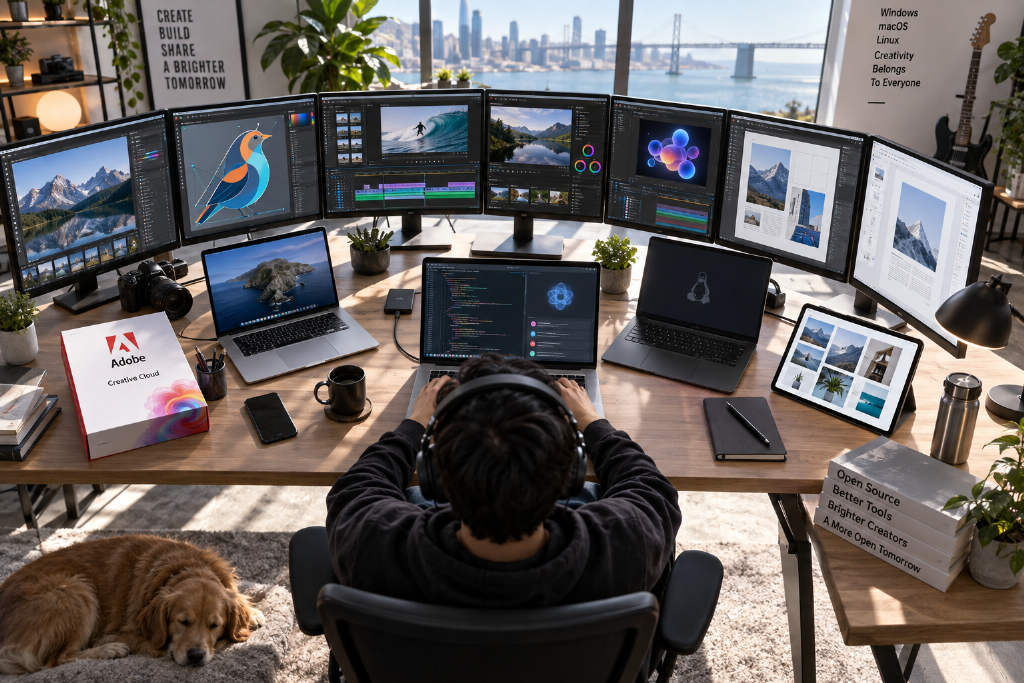
ArtCraft founder Brandon Thomas has open-sourced seven alternatives to Adobe’s creative software suite with help from Claude Opus 5.5. Built from scratch in Rust, the projects cover image editing, vector design, video editing, photo management and color grading, motion graphics, publishing layout, and PDF editing. The apps are named PhotoCraft, VectorCraft, FilmCraft, LightCraft, EffectCraft, DesignCraft, and PdfCraft, each positioned against a corresponding Adobe product such as Photoshop, Illustrator, Premiere Pro, Lightroom, After Effects, InDesign, and Acrobat Pro.
The software is free and open-source, with development targeting macOS, Windows, Linux, and the browser. Thomas said the tools aim to mirror Adobe’s interface, tools, and keyboard shortcuts. They also support MCP integration so AI agents, including Claude, can directly operate the software and edit files.
Still, the project remains early. Thomas said PhotoCraft already covers all Photoshop menu commands, but its real feature parity is still well below 50%. Hands-on testing found that basic background removal and color adjustments work, while functions such as free transform remain unstable. Users on Hacker News also reported missing features and operational issues. Thomas had first said he wanted to reach Adobe-level parity within a month, but later revised that estimate to say near-complete functionality may take several months. He said the software is still far from mature, invited community fixes, and plans to offer bug bounties.
ArtCraft founder Brandon Thomas has open-sourced seven alternatives to Adobe’s creative software suite with help from Claude Opus 5.5. All of them were written from scratch in Rust.
Seven apps mapped to Adobe products
The lineup includes:
- PhotoCraft, positioned against Photoshop for image editing
- VectorCraft, positioned against Illustrator for vector design
- FilmCraft, positioned against Premiere Pro for video editing
- LightCraft, positioned against Lightroom for photo management and color grading
- EffectCraft, positioned against After Effects for visual effects and animation
- DesignCraft, positioned against InDesign for publication layout
- PdfCraft, positioned against Acrobat Pro for PDF editing and processing
Free and open-source, with multi-platform support and AI agent access
The software is free and open-source, with development aimed at macOS, Windows, Linux, and the browser. The apps try to replicate Adobe’s interface, tools, and keyboard shortcuts. They can also connect to AI agents through MCP, allowing tools such as Claude to directly operate the software and modify files.
Still at an early stage
Even so, the applications remain far from mature. PhotoCraft already covers all Photoshop menu commands, but the team said its actual functional parity with Photoshop is still well below 50%.
Hands-on testing found that basic background removal and color adjustments are already usable, while operations such as free transform remain unstable. Users on Hacker News also reported missing features and usability problems.
Timeline expectations have shifted
Thomas initially said he wanted to achieve feature parity with Adobe within one month. He later revised that view, saying near-complete functionality may take several months. He also said the software is still far from mature, hopes the community will help fix issues, and plans to offer bug bounties.
This article was originally published by Bit.Fan. For more cryptocurrency news and market insights, visit www.bit.fan. Disclaimer:
The market information, project data, and third-party content displayed on this platform are for industry information sharing only and do not constitute any form of investment advice or return commitment.
Cryptocurrency trading carries high risks. Users should fully assess their risk tolerance and make independent decisions. All profits, losses, and legal responsibilities are borne by the users themselves.