


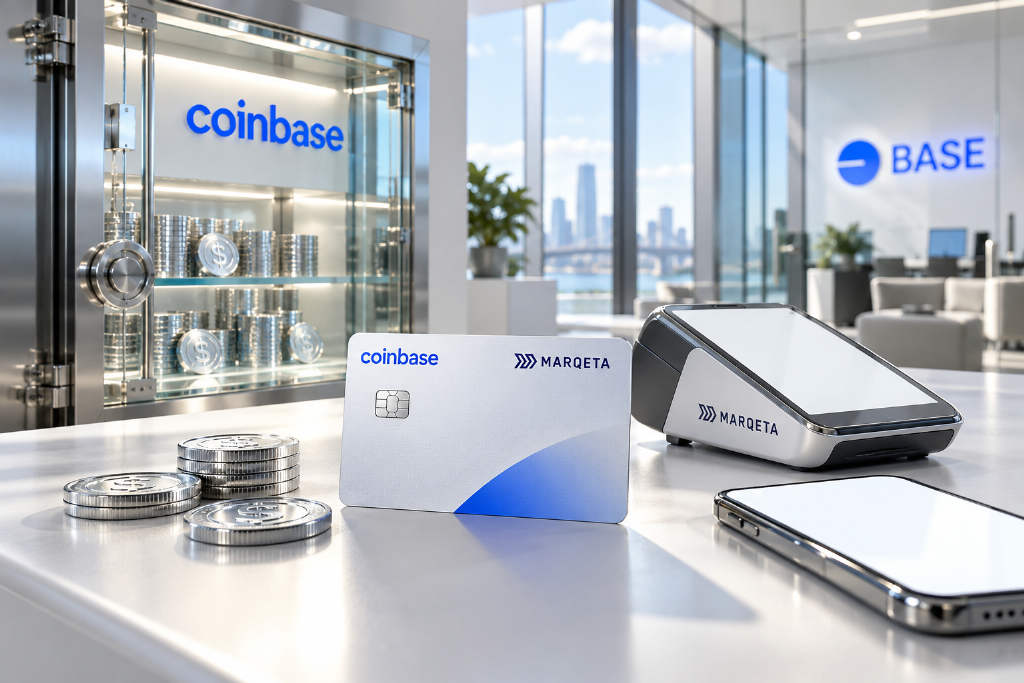
Payments technology company Marqeta and crypto exchange Coinbase said they are expanding a six-year partnership to let business customers issue stablecoin-backed payment cards. Under the new setup, Coinbase will provide custody for stablecoins and handle digital asset and fiat conversion, while Marqeta will take care of card issuing and payment processing. Base, Coinbase’s layer-2 network, will serve as the on-chain settlement infrastructure.
Marqeta announced the move on Friday. The two companies have worked together before: when Coinbase launched its U.S. Visa debit card in 2020, Marqeta handled the backend processing.
Coinbase handles funds, Marqeta handles cards
According to an official BusinessWire release, Coinbase will be responsible for stablecoin custody and conversion between digital assets and fiat currencies. Marqeta will oversee issuing and payment processing. Business customers will be able to fund their card programs 24/7, with settlement on Base.
Alec Lovett, head of infrastructure products at Coinbase, said the partnership combines stablecoin payment rails with Marqeta’s issuing and processing capabilities to support instant global transactions for modern consumers and businesses.
Targeting enterprise clients across crypto and traditional sectors
The service is aimed at Marqeta’s business customers, including crypto companies and traditional enterprises. According to the announcement, cardholders will be able to spend stablecoins at millions of merchants that accept card payments, while businesses will get around-the-clock treasury scheduling capabilities.
The release did not disclose pricing, a formal launch date, or which stablecoins will be supported first, whether USDC, USDT, DAI, or others.
Business model questions remain open
The partnership adds another major entrant to the stablecoin card market. Compared with products such as Ether.Fi and the Binance Card, which are more retail-focused, Marqeta’s B2B2C model allows enterprises to design their own card programs and then distribute them to end users. That structure is closer to the traditional issuing channels used by Visa and Mastercard.
For now, the public details focus on the operating framework and division of responsibilities. Key items such as fees, rollout timing, and supported assets have not been disclosed, and those details are likely to shape enterprise adoption.