
Coinbase is trying to reassure customers that the kind of breach seen at Binance last week would be harder to pull off on its own platform.
In a blog post published Wednesday, the U.S. exchange said it was not affected by the Binance hack, in which attackers drained about $6.4 billion from the rival exchange’s hot wallets.
More than 99% of customer assets are in cold storage
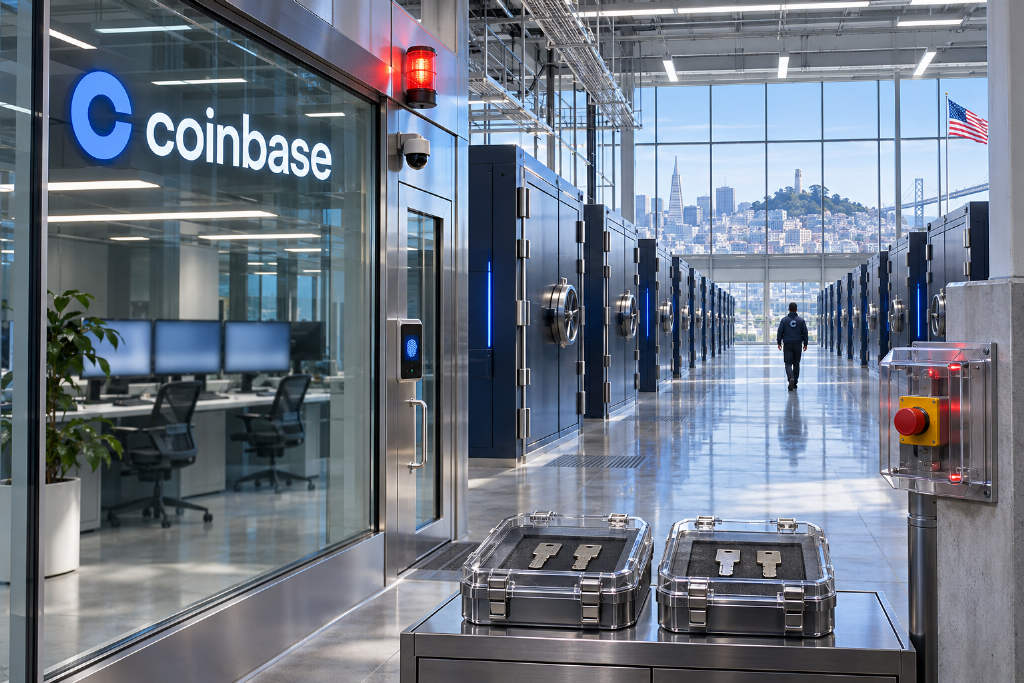
Coinbase said it keeps more than 99% of customer assets in cold storage, meaning offline wallets that cannot be reached over the internet. Funds are moved into hot wallets only when customers need them.
The company said the Binance incident has "understandably left customers asking" how Coinbase protects itself against a similar attack.
Security controls span keys, approvals, and withdrawal checks
Coinbase said its cold-wallet private keys are split into pieces and are never fully reassembled, even when transactions are being signed. It also said no single employee has standing access to the hot-wallet signing service.
The exchange added that strict limits control how quickly funds can move from cold wallets to hot wallets. If withdrawals spike in an unusual way, those requests are held for staff review. Coinbase also said it can activate "kill switches" that take signing keys fully offline.
The company said it assumes employees will be targeted by phishing attacks. Its controls are built so that a stolen password, session, or device cannot be used by itself, and sensitive actions require multiple approvals.
Recent incidents shaped that focus on insider risk
Coinbase said that emphasis carries particular weight given its own experience. In May 2025, the company disclosed that criminals had bribed overseas customer support agents to steal personal data tied to less than 1% of its monthly transacting users. The attackers then demanded a $20 million ransom, which Coinbase refused to pay.
Last week, Coinbase also said a security incident at analytics vendor Amplitude exposed contact data for a "small subset" of customers, though customer funds were not affected.
1:1 custody claim and balance sheet figures
Coinbase said customer assets are held 1:1 and are not lent out unless customers direct it to do so. As of Sept. 30, the company reported $8.6 billion in cash and cash equivalents and $377 billion in assets on its platform.
It also identified artificial intelligence as a fast-changing threat and said it would keep investing in security.
Binance fallout continues across the industry
The Binance theft has continued to shake the crypto industry. The FBI has attributed the attack to North Korea’s TraderTraitor group. Blockchain analytics firm Elliptic said the laundering activity moved through about 12,000 wallets in under four days, while stablecoin issuers froze about 44% of the stolen funds.
Elsewhere, Brazil’s Mercado Bitcoin halted withdrawals after a $40 million hack. French bank Crédit Mutuel Arkéa also recently confirmed a cyberattack tied to a $133 million crypto theft.



