
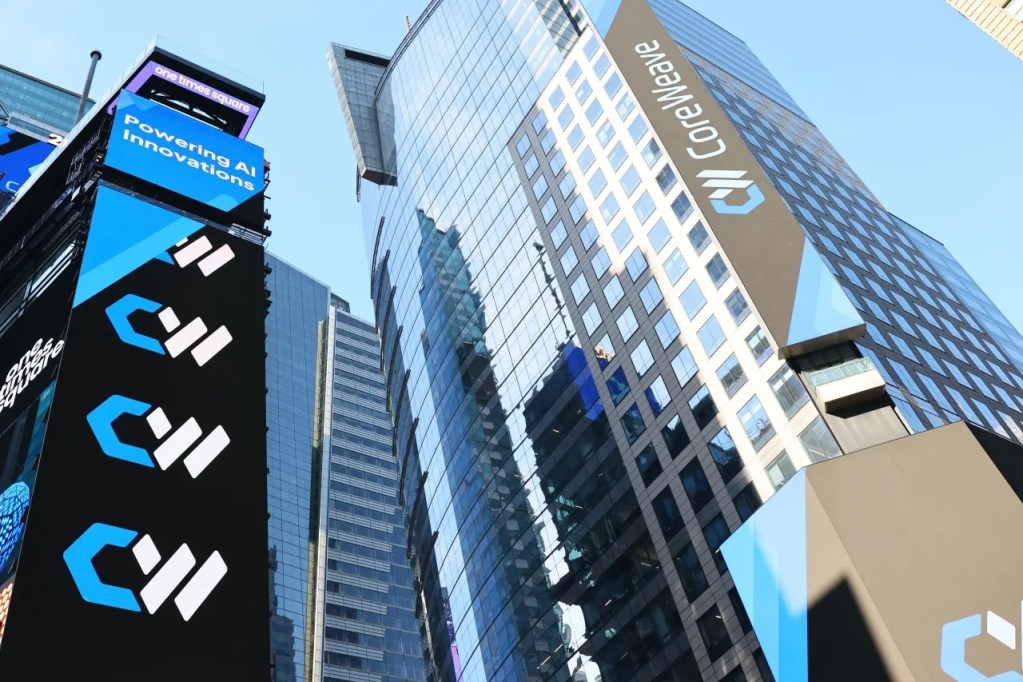
CoreWeave is considering the use of put options and other financial derivatives to hedge against the risk of falling memory and storage chip prices tied to its long-term purchasing commitments. Reuters, citing people familiar with the matter, said the talks are still at an early stage and that the company has not carried out any actual hedge.
The report said this kind of risk management is rare in cloud computing. It also points to how the AI infrastructure boom is pulling cloud operators deeper into the semiconductor industry’s price cycles. Reuters noted that energy and aviation companies have long used similar hedging strategies to manage oil price swings, although several U.S. airlines have also suffered major losses from unsuccessful hedges.
Long-term supply deals secure product, but lock in downside exposure
The reason CoreWeave is weighing a hedge lies in the structure of supply agreements between cloud providers and chip suppliers during the AI spending surge. To secure stable access to DRAM and flash storage during a period of strong demand, CoreWeave and other cloud companies have signed long-term agreements, or LTAs, with Micron (MU) and SanDisk (SNDK). Those contracts include price bands and price floors designed to protect suppliers by allowing them to sell at contract prices even if the market weakens.
That protection cuts both ways. While LTAs shield memory makers from a sharp downturn, they also leave buyers exposed if market prices later fall below agreed contract levels. In that case, CoreWeave would still be required to purchase at prices above the spot market.
Memory volatility remains central as new capacity approaches
The memory industry has long been defined by sharp boom-and-bust cycles. Prices have climbed on the back of AI demand, but the market has also been anticipating the eventual pressure from supply expansion. The source article said both SK Hynix and Micron have indicated that newly built manufacturing capacity is expected to be fully online in early 2028, a timeline that could bring downward pressure on pricing once output ramps.
Analyst view: the signal is in the choice to hedge, not renegotiate
Citrini analyst Jukan argued that the bearish interpretation misses the more important point. Historically, when memory prices dropped quickly, buyers often moved to terminate or renegotiate LTAs. Breach costs were often low, and suppliers tended to have limited leverage during the low point of the cycle, making the contracts less effective in practice.
CoreWeave’s response is different. Rather than seeking to reopen the agreements, it is looking at derivatives as a hedge. Jukan said that choice itself sends the real message: “CoreWeave clearly cannot easily get out of the contract, and the legal enforceability of LTAs is far stronger than at any previous time.” He added: “These LTAs have become more binding and more durable agreements.”
Why suppliers may benefit
On Jukan’s reading, that shift is a structural positive for memory suppliers. For companies such as Micron, SanDisk and SK Hynix, even a future downturn would leave better revenue visibility and stronger confidence that contract volumes and pricing terms will hold.
AI spending is changing supply-chain contract behavior
The episode also points to a broader change in how AI infrastructure spending is reshaping semiconductor supply relationships. Cloud operators appear willing to accept downside market risk in exchange for long-term supply security. And if the contracts are binding enough that derivatives become the preferred tool for managing risk, rather than default or renegotiation, that suggests a deeper level of commitment across the supply chain than in previous memory cycles.
As new capacity comes online, memory pricing and the performance of these LTAs are likely to remain key markers for judging whether the AI infrastructure investment story can continue to hold.