Credit Card Purchases of Memecoins Bypass KYC, Earn Rewards; Transaction Classification Under Scrutiny

Credit Card Purchases of Memecoins Bypass KYC, Earn Rewards; Transaction Classification Under Scrutiny

N
News Editor
2026-09-01 19:36:16
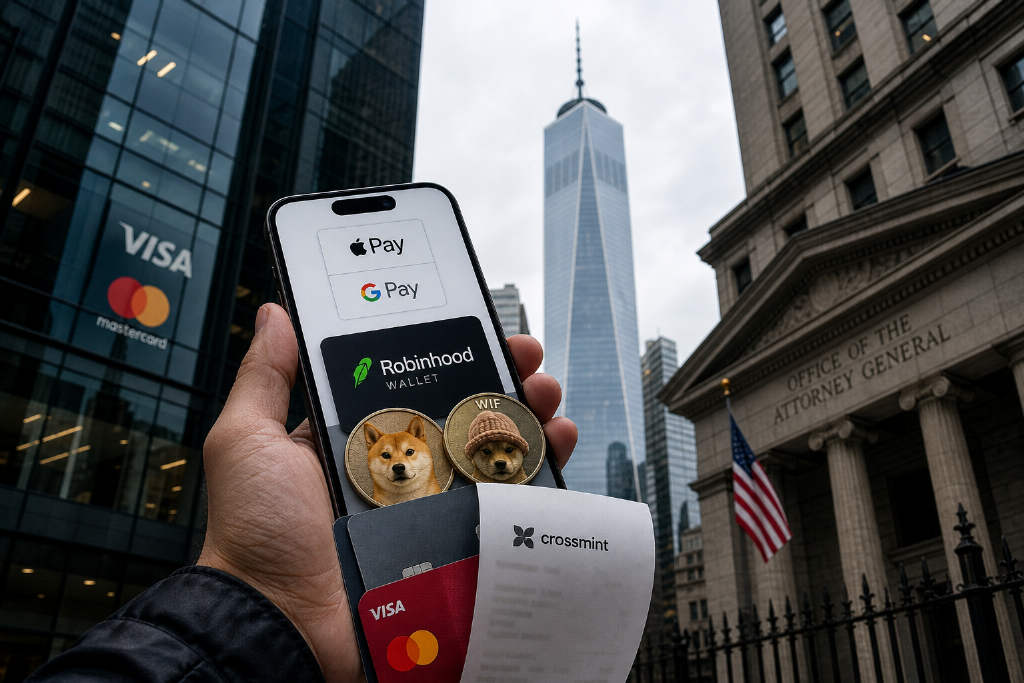
According to an investigation by The Block, users of Fomo and Robinhood Wallet can buy memecoins with credit cards via Apple Pay or Google Pay without separate KYC and still earn credit card rewards. Transactions are classified as MCC 5815 (digital goods) instead of crypto categories MCC 6012 or 6051, which typically prohibit rewards. Crossmint's Token Checkout supports the process. Crossmint defends the classification, citing SEC-CFTC guidance that considers memecoins like WIF as "digital collectibles." However, Chase says the Visa transaction was misclassified and has initiated an investigation with Visa; the New York Attorney General's Office is also reviewing. Experts like Vanderbilt law professor Yesha Yadav note that the SEC's stance and card network rules are "two completely different systems."

The Block’s investigation found that users of the social trading app Fomo and Robinhood’s self-custody wallet, Robinhood Wallet, can now buy memecoins with credit cards through Apple Pay or Google Pay. No separate KYC check is needed. They can also collect standard card rewards, including points and cash back.

Classification Deviation

The Block tested a purchase of WIF. On both Visa and Mastercard, the transactions appeared under merchant category code MCC 5815, used for digital goods media. They did not use the crypto-asset codes MCC 6012 or 6051, which card-network rules require. Those codes usually carry a crypto flag and block card rewards. Crossmint’s Token Checkout product, built for crypto payments, supports the transactions.

Divergent Positions

Crossmint says the classification is correct. Its reasoning: joint guidance from the SEC and CFTC issued in March labels some memecoins, WIF included, as “digital collectibles.” But Chase Bank said the Visa transaction was not marked as a cryptocurrency purchase and that the classification was wrong. The bank has opened a case with Visa. The New York Attorney General’s Office said it is reviewing the matter, too. Yesha Yadav, a Vanderbilt Law School professor, and other payment experts say the SEC’s position and the card-network rules are “two completely different systems.” That gap exposes the mismatch between regulatory frameworks and payment infrastructure.

This article was originally published by Bit.Fan. For more cryptocurrency news and market insights, visit www.bit.fan.
500

Disclaimer:

The market information, project data, and third-party content displayed on this platform are for industry information sharing only and do not constitute any form of investment advice or return commitment.

Cryptocurrency trading carries high risks. Users should fully assess their risk tolerance and make independent decisions. All profits, losses, and legal responsibilities are borne by the users themselves.